The Eastpointer
Alan Greenspan Had My Job
By Richard E. Noble
My editor has advised me that my Eastpointer column should be concerned with local people and local problems or at least have some tie-in to the local community. Soo...
I once knew an oysterman who looked exactly like Alan Greenspan. And speaking of Alan Greenspan, I have several Eastpointer type observations to offer.
Being a student of economic thought and theory, I have been listening to Alan Greenspan give his lectures on TV for years and I even purchased two or three of his past publications. My analysis of Mr. Greenspan has always been: What in the world is that man talking about?
I would sit in front of the TV and make a call for silence in the room each and every time Mr. Greenspan would appear on the TV giving his economic address to the Congress. I would listen to every word assiduously, determined to get “The Message” from the Prophet.
After he would finish, my wife would ask, Richard what did he say? My usual answer went something like this: Well, he said that the economy is good and bad and that it has a tendency to go up and down; those who can afford to wait should and those who can’t shouldn’t; he said that we should all be concerned and worried but that we should retain our faith in the fundamentals of economic thought and the free Market system and not panic; he said that some people will probably benefit and that other people probably won’t.
“And what has all of that got to do with the price of tea in China?”
Well, actually he did mention the price of tea in China and he said that it may go up but that there were extraneous forces that indicated that the possibility of a downward trend due to tea coming from Nairobi could possibly be an influence giving some concern to Chinese tea exporters but Americans who drink primarily black tea which comes from the lower regions of Botswana really have no need to be overly concerned - but of course Britain is an entirely other story.
“So basically he said nothing?”
Exactly.
Now recently Mr. Greenspan has appeared on TV to tell the nation that for his entire stay at the Federal Reserve he has in effect said nothing. He admitted that over the years he has purposely said nothing because for him to say something would have put the onus of responsibility for the future world economy on his shoulders. He admitted that he said nothing for all of these years intentionally.
Now, in response to questions about his job at the Federal Reserve he explained that as head of the Federal Reserve he tried his best to do as little as possible since he is an avid believer in the Laissez Faire philosophy.
So basically as head of the Federal Reserve he did and said nothing and now he has just written a book that is selling by the millions explaining why he did nothing and how his doing and saying nothing has benefited the nation and the world.
I have come to the conclusion that this man had my job. I mean that is the job that I have always dreamed of. Alan Greenspan made big bucks for doing this job where he did and said nothing by his own admission. But he actually earned nothing when compared to what he would have made if he had remained in private enterprise where I imagine he would have had to do and possibly say something. But, of course, he can’t tell us what he would have said and done if he had remained in private enterprise because his revelation of such information would change the course of the economic world.
Where do I apply for that position? I can do that. And I could do it well. I am sure of it. Every place and position that I have ever held in my life others have accused me or said flat-out that I was doing nothing and that what I had to say about what I was doing amounted to nothing whatsoever.
I certainly have the resume’ to fulfill the position as head of the Federal Reserve Bank of America following the Alan Greenspan guidelines. I have no doubt about it. I can do and say nothing with the best of God’s creatures - just give me the chance and stand back and watch me not do anything. Actually, just keep reading this column and see if you can point out where anything that I have ever said has ever accomplished more than nothing whatsoever. Clearly the proof is in the pudding.
Richard E. Noble is a Freelance Writer and has been a resident of Eastpoint for around thirty years now. He has authored several books all are listed on Amazon and B&N and other popular internet sites.
Saturday, June 05, 2010


Friday, June 04, 2010
Capitalism
Does it really Work?
Or Is It Socialism in Disguise
By Richard E. Noble
I am, and always have been a born and breed Capitalist who has done his best to pursue the American Capitalist dream of financial independence and hopeful luxury.
I believe in my rights as an Individual; I believe in democracy and in the Bill of Rights; I believe in my right to own property, to start my own business, to have money in the bank and to get rich - if at all possible. BUT, I don’t believe that people anywhere should starve to death or that anybody anywhere should work for nothing. And I especially don’t believe that the above such things should happen to other people because of my aspirations to become a wealthy Capitalist. I want everybody to live a comfortable life in a just man-made rational Civilization.
I don’t trust government - any government. But I have a dilemma - I don’t trust businessmen either. I have been in business. I consider myself a business-mined type person. And to be totally honest with you, I don’t trust business any more than I do government.
I have never worked for a boss who I like or admire. And the really sad part about that last sentence is that I have been self-employed for the greater part of my working career. When my wife was in my employ she went on strike several times and quite on multiple occasions. She orchestrated both walk-out and sit-down type strikes. She never resorted to picketing but I did think of locking her out several times. We finally negotiated a verbal contract that we both could agree to and live with. I was not entirely happy with the final agreement but neither was she - and, of course, this is what makes for a truly happy marriage. I only wish that I had been smart enough to negotiate such a contract when we first got married. But as you all know, love is not having to negotiate a contract. So where does that leave me? In my opinion that makes me a typical American. I think that is what being an American is all about - not trusting anybody.
I have been studying and reading about Capitalism ever since I can remember. But before we get into that, let’s say what I think Capitalism to be.
Capitalism is where the means of production along with the natural assets of a nation are owned by people - individuals. Corporations? Stock holders?
Capitalism had its birth in the Industrial Revolution - as I understand it. Before the Industrial Revolution there was no such thing as a “Capitalist.” There were rich people and Kings etc., but no Capitalists.
Capitalism, via industrialization made possible by individual invention and personal investment changed the economic world. It changed the whole structure of things. But has it been successful - did Capitalism work?
I don’t think so; and I’ll tell you why. It might take me a few pages here but bear with me.
Let’s start out with one of the first major Industrial enterprises - the textile industry.
The textile industry started here in the U.S. in the northeast in the early part of the 18th century.
It began rather surreptitiously with some of our enterprising citizens going over to England and stealing what they could of British ingenuity. But it was for a good cause - they wanted to get rich. Actually their intentions were more noble than that. They wanted to get rich and they wanted to screw the British. All in all though they were well intentioned, most of the early pioneers in the U.S. textile industry were good, conscientious Christian types. They wanted to make the world a better place. I think one of the very first entrepreneurs was a wealthy Quaker and he offered to give the entire mill to the British citizen who knew the industry well enough and would stab his homeland in the back and come over here and set up what he had learned over there. This was against the British Law at the time and any man who did so was considered a traitor. Getting rich was not against British law; they just wanted people to get rich in England only. The penalty was death. But one man did the dirty deed nonetheless. He is in our history books but I don’t think he got even honorable mention in the British history books.
In Lowell Massachusetts the first textile mill employed mostly women and it was designed to be spiritually beneficial and uplifting to all the poor farm girls who came to work there. And for awhile they say that it was. But then as the Capitalistic system dictates, one free enterprise led to another free enterprise and pretty soon we had not only women working at the mills but children also. Pretty soon the local farm girls had enough and the mill owners began to import immigrant laborers from overseas. And as the foreign laborers flowed in, the wages got lower and lower; the working conditions got worse and worse; the housing became deplorable and all these people began dying - the workers that is; the owners and investors became extremely wealthy. A few foremen and some higher-ups got some pretty good wages also. But all in all things got so bad that social upheaval erupted. Police and militia had to be called in and lots of folks were machine-gunned, murdered and killed. Overall from the Society’s point of view, I would say the textile industry was not working.
Now the few people who owned the textile mills disagreed. They had arguments very similar to the tobacco industry of today. They denied that working in a textile mills was hazardous to anybody health - even though most textile workers were dying before the age of thirty; even though children who started working in the mills at nine or ten were dead before they were twenty or twenty-five.
The bi-products of the textile mills was air pollution, water pollution; housing shortages, overcrowding; poverty; disease; and overproduction. But on the other hand, a man of modest means could buy a pretty neat suit of clothes at Brooks Bros. for a reasonable price and the ladies could buy some nice calico prints cheaper than ever before.
In any case for better or worse the textile mills spread all over the northeast and then the Midwest. When they had finally worn out their welcome in those areas they left. They didn’t pack up and leave - they just left. They left all the pollution, all the garbage, all the disease, all the destitution and poverty, all the dead bodies; all the dying people - they even left miles and miles of old redbrick buildings. They took most of the machinery but they left the rest for the taxpayers or the society or the community or whoever it is that is left when these people go. They took the profits and their fortunes - and they left. And now they were “Capitalists.”
At first they just went a little further south - but they did the same thing there. And after awhile most of them left the South and went even south-ER. They went to South America.
In South America they conducted their business exactly the same as they had done in North America.
Today they are all over the world - in Asia and in China - everywhere. And the same thing that happened in North America in the 1800 is happening over there.
But on the other hand we can all buy T-shirts and underwear at a very reasonable price.
The question is as Dr. Phil would say - Is this working for you?
Well, it is working very, very well for a few; it is working very well for some others; and it is working well for a good many others; but then it is working poorly for several millions of others and it doesn’t look like it is ever going to change or be any different. Is this a “good thing”?
In the United States of America I would say that the Textile Industry was a failure. It didn’t work. For one thing, it is gone; and it left a mess. The individuals and stock holders of that industry took the profits and the taxpayers and the citizens of the United States paid the costs. It was Capitalism for the owners of the textile industry but it was Socialism for America. We the people socialized the cost, while they, the Robber Barons, Industrialists, and super wealthy Capitalized the profits.
Now let’s look at another Industry - the mining industry.
I don’t know if mining in America began with the 49ers but it seems like a good place to start. Nothing could have been more egalitarian than a mule and a bearded Gabby Hayes type prospector setting off to find his treasure. This led to a lot of “regular” guys becoming very wealthy. It also led to a lot of regular guys getting killed, beaten, robbed and whatever - but that has always been the romantic part of the American Spirit of freedom and independence - so what the hell.
But somewhere along the line mechanization, invention, organization and the Capitalist and Industrialist - and bankers - got into it. It wasn’t long before Gabby Hayes and his mule were a part of the nostalgic past and punch clocks, foremen and business mangers had taken over the pits and holes of the wild, Wild West and elsewhere.
It wasn’t long before everything that I just attributed to the textile industry was now part and parcel of the mining industry - only worse.
The miners were of the independent, rugged type and they didn’t just wander off someplace and die peacefully - they fought back. Colorado was a war zone. Utah and Idaho weren’t much calmer. The mine managers had the militias and the federal troops along with the governments and the legal system - but the miners had courage, blood and guts.
The mine owners couldn’t just move their operations south or to another country - so they fought it out. They killed, framed, murdered, lynched, castrated, slaughtered and starved a good many troublesome miners to an early grave. They bribed, cheated, finagled and infiltrated the Governments - local, state and federal. And eventually they got what they wanted.
They got the land from the government basically for free; they got the gold, silver, copper, coal, and whatever out of the ground at the cheapest possible labor cost; they had no obligations to the land, the environment, the streams, the rivers, the mountains, the hillsides, the country or to the people of the United States.
But even so, eventually most of them left the United States and brought their same tactics to foreign lands where the people were less sophisticated and could be duped more readily. Today these industries are busy doing the very same things in Bolivia and China that were so successful for them here in the U.S.
Strangely enough the people who did these horrible things here in the United States are dead and buried and many of the folks who are carrying out the dastardly deeds of these ancient entrepreneurs are not even descendants. They are a new breed of like-minded modern day folks - often homegrown in their own nations. The descendants of many of the murders and killers who had loyal everyday patriots machinegun everyday people right here in America - are now involved in philanthropic trusts, building libraries and funding institutions of higher learning - and some are even running for the Senate and the presidency of the United States of America. And so it goes.
But philosophizing aside, the bottom line is once again, the people of America were left with the pollution and the holes in the ground, the bad memories and the dead bodies, and the managers, investors and Capitalists got the profits. The American Businessmen “capitalized” while the American People Socialized.
From an “individualist” point of view I suppose one could say that this “capitalization” or privatization of natural resources worked. Some individuals did become very, very wealthy. But from a national or democratic perspective; form a societal or national perspective, I wouldn’t say that “we the people” did all that well. I would have to say that mining as well as the textile industry was a failure. They provide few in America with a living today and we the people are still paying for the cleanup or worse yet living with the pollution and ill health effects that these industries left as our “legacy.”
Strangely enough we all - 300 million of us still wear socks and underwear and we still can buy copper tubing at the hardware store - it is just that fewer Americans make any money from the deal. If you use the patriot’s war analogy we could say that all those working people who fought, were starved and died for your right (and my right) to earn a better living here in the U.S.A. - gave their lives in vain.
Let’s quickly review another industry - banking. Banking is a business and it could be considered one of Capitalism’s prime movers.
Banking started off very primitive. In the beginning banks were just that - they were banks. They were vaults and safes situated in secure buildings where people paid a rent for the privilege of having their gold or silver watched over under armed guard. There was no trouble with a bank being a bank; it was when banks got into “banking” that the industry began to stagger.
The problem came with the notion that a banker could have his cake and eat it too. It was not with the idea of being a “savings” institution that brought on the problems. It was when the banks became “savings and loan” institutions.
Even good old Jimmy Stewart was hard to believe when he tried to explain to people in the movies that their money was there in the bank when it really wasn’t.
It wasn’t disgruntled employees that wrought havoc by picketing and striking the banks - it was the bank’s customers. They called this type of uprising a “bank run.”
People ran down to the bank and said; “I want my money.” This wasn’t all that problematic until lots of customers started showing up at a particular bank at the same time. Very quickly the bank in question was forced to refuse the depositors their money and lock their doors. They could not return to the depositors the money that they had loaned out to their clients because they didn’t have it any longer! People just didn’t understand this.
The first solution that banks devised to deal with this problem was to form co-operatives - a number of banks joined together. They pooled their reserves and when one of their member banks had a “bank run” they rushed cash over to their aid.
But if a run persisted and spread into a “panic” - the party was over and once again everybody had to “lock out” their depositors.
Banking co-operatives got bigger and bigger but so did the runs and panics. Finally during the Wilson administration the bankers got the government involved. Mr. Wilson was a college professor but he admitted that he was no banker - but nevertheless the American people ended up with what was called a Federal Reserve System.
Suffice it to say, it was not only President Wilson who didn’t understand the Federal Reserve System because in 1929 the whole thing came tumbling down - Federal Reserve System and all. The banking industry collapsed - it failed. The financial heart of the Capitalistic system flopped. Once again the Capitalist idea had failed.
The catastrophe was finally solved by adding to the Federal Reserve System the Federal Deposit Insurance Corporation (FDIC). This informed the customers who deposited their money in a bank covered under this program that even if your bank doesn’t have your money when you want it - we will give it to you. “We” being the Government ... you and I ... the taxpayer. In more political terms, the banks were socialized.
And even today we had two of the biggest socialistic bailouts in our history - the Savings and Loan disaster followed by the Commercial Bank disaster. We even bailed out Mexico and Japan and if we don’t continue to bail out the banking systems around the world, the whole system could (and it did) have a total collapse. Every banking system in the world including China and Russia, are tied into the “Dollar.”
Now I’m not complaining about this Socialism, I would just like to know what “we the people” are getting out of all of this. It looks to me like we are getting lower wages, fewer jobs, higher taxes, inflation of our everyday costs, more poverty, more homeless and Wal-Mart - and Wal-Mart is the best part.
So once again we have an industry that keeps the profits when things are going well and “we the people” absorb the loses when things go wrong. In fact, they charge us(the people of the U.S.) for the privilege of borrowing our own money from them. It is a real good business. Many very, very smart people love the banking business.
I personally don’t mind that we keep this industry solvent and secure but shouldn’t “we the people” get a kick back here, there or somewhere - as opposed to paying a service charge?
Next let’s take a gander at the railroad industry.
In most of our history surveys we will read briefly about how the railroads opened up the West; how the railroads built towns and communities; how the railroads built factories and technology and on and on and on. But the deeper one delves into the history evolution and eventual demise of American railroads - the bigger the horror story grows.
Some historians are truly optimists - they almost always see the glass as full to the brim. I can imagine the historian of a thousand years in the future writing about the Nazi Holocaust and pointing out its advantages to curbing the over expanding population growth and all the new discoveries that were unleashed in the gas and pesticide industries - not to mention, oven technology.
But let’s try to call a spade a spade here - railroads must go down as one of the most corrupt endeavors in American History. The land grab alone by the railroad barons was off the charts. These guys were given enough land around their proposed railroad tracks to start whole countries. Almost all history books will mention this fact.
In relation to their workers they are right there with the textile and mining industries. Workers were killed and maimed on a daily basis by the hundreds. They were used as long as they were strong and healthy and then discarded - to be picked up by charity and the good will of their fellow workers.
The railroads competed themselves right into the ground. They had more dirty bond issues, stock market crooked deals, inflated shares and unscrupulous financial chicanery and political corruption than one could list. On top of everything else they were totally subsidized by the government and for the most part, they still are today. Without further ado or elaboration I think it could be objectively stated that the railroad industry was another capitalist failure. It was more than a failure it was a disaster. Just start reading about it and find out for yourself - don’t take my word for it. It is all over the pages of your own history books. Even the laying of the railroad tracks was an abortion for the workers involved and the taxpayers. When you read historians that can fluff over all these things you realize how brainwashed we all are.
If it weren’t for the government (socialism) from the beginning to the present day - the railroads would never have come about. And what did “we the people” get out of it? We got miles and miles of dilapidated track stretched across this country; we got old abandoned depots; we got below sustenance wages; we got thousands of dead and injured workers, women and children; and a modest amount of multimillionaires - most of them the exact same folks who prospered from the banking, textiles, and mining.
Once again while the Capitalists capitalized the profits, the American people socialized the costs. We paid for their losses, we paid bonuses for their inadequate tracks; we paid for their cutthroat competition. We paid to get them started and we paid for the clean up when they were done. My God! The American dream!
Where do you want to go next? How about steel? how about oil? how about insurance? how about pharmaceuticals? how about health care? what about automobiles?
Steel and automobiles and oil have been traditional failures in the classical manner that I have just described above. Insurance, healthcare and pharmaceuticals are failures in the making. They are failing right now and my guess is that they will be bailed out in the same old, well-fare (welloff-fare), socialistic manner - “we the people” and the population at large will pay through taxation and inflation while these industries will skim off the profits and leave the losses and the social consequences to us.
At this moment I really don’t see any alternative to socialism. Socialism is what is. It really cannot be denied. It is the a priori fact of the matter. But we should do it all the way, not just in the well-fare tradition; “we the people” should also share in the profits as well as the costs and the losses. I would be in favor of a better idea than socialism - but I haven’t read about any such thing nor have I been able to think up an improvement.
Communism is not good and as we have seen around the world, it is not working. I have read many books offering various alternatives. But when you study these alternatives they are invariably socialist in nature. The so called capitalist alternative invariably amounts to a good life for the few at the expense of the many - here and around the world. It is like Socialism is the Capitalists security blanket or “idea bank” of last resort. It seems that what we here in America call Capitalism is really a bad joke – and the joke is on us.
Does it really Work?
Or Is It Socialism in Disguise
By Richard E. Noble
I am, and always have been a born and breed Capitalist who has done his best to pursue the American Capitalist dream of financial independence and hopeful luxury.
I believe in my rights as an Individual; I believe in democracy and in the Bill of Rights; I believe in my right to own property, to start my own business, to have money in the bank and to get rich - if at all possible. BUT, I don’t believe that people anywhere should starve to death or that anybody anywhere should work for nothing. And I especially don’t believe that the above such things should happen to other people because of my aspirations to become a wealthy Capitalist. I want everybody to live a comfortable life in a just man-made rational Civilization.
I don’t trust government - any government. But I have a dilemma - I don’t trust businessmen either. I have been in business. I consider myself a business-mined type person. And to be totally honest with you, I don’t trust business any more than I do government.
I have never worked for a boss who I like or admire. And the really sad part about that last sentence is that I have been self-employed for the greater part of my working career. When my wife was in my employ she went on strike several times and quite on multiple occasions. She orchestrated both walk-out and sit-down type strikes. She never resorted to picketing but I did think of locking her out several times. We finally negotiated a verbal contract that we both could agree to and live with. I was not entirely happy with the final agreement but neither was she - and, of course, this is what makes for a truly happy marriage. I only wish that I had been smart enough to negotiate such a contract when we first got married. But as you all know, love is not having to negotiate a contract. So where does that leave me? In my opinion that makes me a typical American. I think that is what being an American is all about - not trusting anybody.
I have been studying and reading about Capitalism ever since I can remember. But before we get into that, let’s say what I think Capitalism to be.
Capitalism is where the means of production along with the natural assets of a nation are owned by people - individuals. Corporations? Stock holders?
Capitalism had its birth in the Industrial Revolution - as I understand it. Before the Industrial Revolution there was no such thing as a “Capitalist.” There were rich people and Kings etc., but no Capitalists.
Capitalism, via industrialization made possible by individual invention and personal investment changed the economic world. It changed the whole structure of things. But has it been successful - did Capitalism work?
I don’t think so; and I’ll tell you why. It might take me a few pages here but bear with me.
Let’s start out with one of the first major Industrial enterprises - the textile industry.
The textile industry started here in the U.S. in the northeast in the early part of the 18th century.
It began rather surreptitiously with some of our enterprising citizens going over to England and stealing what they could of British ingenuity. But it was for a good cause - they wanted to get rich. Actually their intentions were more noble than that. They wanted to get rich and they wanted to screw the British. All in all though they were well intentioned, most of the early pioneers in the U.S. textile industry were good, conscientious Christian types. They wanted to make the world a better place. I think one of the very first entrepreneurs was a wealthy Quaker and he offered to give the entire mill to the British citizen who knew the industry well enough and would stab his homeland in the back and come over here and set up what he had learned over there. This was against the British Law at the time and any man who did so was considered a traitor. Getting rich was not against British law; they just wanted people to get rich in England only. The penalty was death. But one man did the dirty deed nonetheless. He is in our history books but I don’t think he got even honorable mention in the British history books.
In Lowell Massachusetts the first textile mill employed mostly women and it was designed to be spiritually beneficial and uplifting to all the poor farm girls who came to work there. And for awhile they say that it was. But then as the Capitalistic system dictates, one free enterprise led to another free enterprise and pretty soon we had not only women working at the mills but children also. Pretty soon the local farm girls had enough and the mill owners began to import immigrant laborers from overseas. And as the foreign laborers flowed in, the wages got lower and lower; the working conditions got worse and worse; the housing became deplorable and all these people began dying - the workers that is; the owners and investors became extremely wealthy. A few foremen and some higher-ups got some pretty good wages also. But all in all things got so bad that social upheaval erupted. Police and militia had to be called in and lots of folks were machine-gunned, murdered and killed. Overall from the Society’s point of view, I would say the textile industry was not working.
Now the few people who owned the textile mills disagreed. They had arguments very similar to the tobacco industry of today. They denied that working in a textile mills was hazardous to anybody health - even though most textile workers were dying before the age of thirty; even though children who started working in the mills at nine or ten were dead before they were twenty or twenty-five.
The bi-products of the textile mills was air pollution, water pollution; housing shortages, overcrowding; poverty; disease; and overproduction. But on the other hand, a man of modest means could buy a pretty neat suit of clothes at Brooks Bros. for a reasonable price and the ladies could buy some nice calico prints cheaper than ever before.
In any case for better or worse the textile mills spread all over the northeast and then the Midwest. When they had finally worn out their welcome in those areas they left. They didn’t pack up and leave - they just left. They left all the pollution, all the garbage, all the disease, all the destitution and poverty, all the dead bodies; all the dying people - they even left miles and miles of old redbrick buildings. They took most of the machinery but they left the rest for the taxpayers or the society or the community or whoever it is that is left when these people go. They took the profits and their fortunes - and they left. And now they were “Capitalists.”
At first they just went a little further south - but they did the same thing there. And after awhile most of them left the South and went even south-ER. They went to South America.
In South America they conducted their business exactly the same as they had done in North America.
Today they are all over the world - in Asia and in China - everywhere. And the same thing that happened in North America in the 1800 is happening over there.
But on the other hand we can all buy T-shirts and underwear at a very reasonable price.
The question is as Dr. Phil would say - Is this working for you?
Well, it is working very, very well for a few; it is working very well for some others; and it is working well for a good many others; but then it is working poorly for several millions of others and it doesn’t look like it is ever going to change or be any different. Is this a “good thing”?
In the United States of America I would say that the Textile Industry was a failure. It didn’t work. For one thing, it is gone; and it left a mess. The individuals and stock holders of that industry took the profits and the taxpayers and the citizens of the United States paid the costs. It was Capitalism for the owners of the textile industry but it was Socialism for America. We the people socialized the cost, while they, the Robber Barons, Industrialists, and super wealthy Capitalized the profits.
Now let’s look at another Industry - the mining industry.
I don’t know if mining in America began with the 49ers but it seems like a good place to start. Nothing could have been more egalitarian than a mule and a bearded Gabby Hayes type prospector setting off to find his treasure. This led to a lot of “regular” guys becoming very wealthy. It also led to a lot of regular guys getting killed, beaten, robbed and whatever - but that has always been the romantic part of the American Spirit of freedom and independence - so what the hell.
But somewhere along the line mechanization, invention, organization and the Capitalist and Industrialist - and bankers - got into it. It wasn’t long before Gabby Hayes and his mule were a part of the nostalgic past and punch clocks, foremen and business mangers had taken over the pits and holes of the wild, Wild West and elsewhere.
It wasn’t long before everything that I just attributed to the textile industry was now part and parcel of the mining industry - only worse.
The miners were of the independent, rugged type and they didn’t just wander off someplace and die peacefully - they fought back. Colorado was a war zone. Utah and Idaho weren’t much calmer. The mine managers had the militias and the federal troops along with the governments and the legal system - but the miners had courage, blood and guts.
The mine owners couldn’t just move their operations south or to another country - so they fought it out. They killed, framed, murdered, lynched, castrated, slaughtered and starved a good many troublesome miners to an early grave. They bribed, cheated, finagled and infiltrated the Governments - local, state and federal. And eventually they got what they wanted.
They got the land from the government basically for free; they got the gold, silver, copper, coal, and whatever out of the ground at the cheapest possible labor cost; they had no obligations to the land, the environment, the streams, the rivers, the mountains, the hillsides, the country or to the people of the United States.
But even so, eventually most of them left the United States and brought their same tactics to foreign lands where the people were less sophisticated and could be duped more readily. Today these industries are busy doing the very same things in Bolivia and China that were so successful for them here in the U.S.
Strangely enough the people who did these horrible things here in the United States are dead and buried and many of the folks who are carrying out the dastardly deeds of these ancient entrepreneurs are not even descendants. They are a new breed of like-minded modern day folks - often homegrown in their own nations. The descendants of many of the murders and killers who had loyal everyday patriots machinegun everyday people right here in America - are now involved in philanthropic trusts, building libraries and funding institutions of higher learning - and some are even running for the Senate and the presidency of the United States of America. And so it goes.
But philosophizing aside, the bottom line is once again, the people of America were left with the pollution and the holes in the ground, the bad memories and the dead bodies, and the managers, investors and Capitalists got the profits. The American Businessmen “capitalized” while the American People Socialized.
From an “individualist” point of view I suppose one could say that this “capitalization” or privatization of natural resources worked. Some individuals did become very, very wealthy. But from a national or democratic perspective; form a societal or national perspective, I wouldn’t say that “we the people” did all that well. I would have to say that mining as well as the textile industry was a failure. They provide few in America with a living today and we the people are still paying for the cleanup or worse yet living with the pollution and ill health effects that these industries left as our “legacy.”
Strangely enough we all - 300 million of us still wear socks and underwear and we still can buy copper tubing at the hardware store - it is just that fewer Americans make any money from the deal. If you use the patriot’s war analogy we could say that all those working people who fought, were starved and died for your right (and my right) to earn a better living here in the U.S.A. - gave their lives in vain.
Let’s quickly review another industry - banking. Banking is a business and it could be considered one of Capitalism’s prime movers.
Banking started off very primitive. In the beginning banks were just that - they were banks. They were vaults and safes situated in secure buildings where people paid a rent for the privilege of having their gold or silver watched over under armed guard. There was no trouble with a bank being a bank; it was when banks got into “banking” that the industry began to stagger.
The problem came with the notion that a banker could have his cake and eat it too. It was not with the idea of being a “savings” institution that brought on the problems. It was when the banks became “savings and loan” institutions.
Even good old Jimmy Stewart was hard to believe when he tried to explain to people in the movies that their money was there in the bank when it really wasn’t.
It wasn’t disgruntled employees that wrought havoc by picketing and striking the banks - it was the bank’s customers. They called this type of uprising a “bank run.”
People ran down to the bank and said; “I want my money.” This wasn’t all that problematic until lots of customers started showing up at a particular bank at the same time. Very quickly the bank in question was forced to refuse the depositors their money and lock their doors. They could not return to the depositors the money that they had loaned out to their clients because they didn’t have it any longer! People just didn’t understand this.
The first solution that banks devised to deal with this problem was to form co-operatives - a number of banks joined together. They pooled their reserves and when one of their member banks had a “bank run” they rushed cash over to their aid.
But if a run persisted and spread into a “panic” - the party was over and once again everybody had to “lock out” their depositors.
Banking co-operatives got bigger and bigger but so did the runs and panics. Finally during the Wilson administration the bankers got the government involved. Mr. Wilson was a college professor but he admitted that he was no banker - but nevertheless the American people ended up with what was called a Federal Reserve System.
Suffice it to say, it was not only President Wilson who didn’t understand the Federal Reserve System because in 1929 the whole thing came tumbling down - Federal Reserve System and all. The banking industry collapsed - it failed. The financial heart of the Capitalistic system flopped. Once again the Capitalist idea had failed.
The catastrophe was finally solved by adding to the Federal Reserve System the Federal Deposit Insurance Corporation (FDIC). This informed the customers who deposited their money in a bank covered under this program that even if your bank doesn’t have your money when you want it - we will give it to you. “We” being the Government ... you and I ... the taxpayer. In more political terms, the banks were socialized.
And even today we had two of the biggest socialistic bailouts in our history - the Savings and Loan disaster followed by the Commercial Bank disaster. We even bailed out Mexico and Japan and if we don’t continue to bail out the banking systems around the world, the whole system could (and it did) have a total collapse. Every banking system in the world including China and Russia, are tied into the “Dollar.”
Now I’m not complaining about this Socialism, I would just like to know what “we the people” are getting out of all of this. It looks to me like we are getting lower wages, fewer jobs, higher taxes, inflation of our everyday costs, more poverty, more homeless and Wal-Mart - and Wal-Mart is the best part.
So once again we have an industry that keeps the profits when things are going well and “we the people” absorb the loses when things go wrong. In fact, they charge us(the people of the U.S.) for the privilege of borrowing our own money from them. It is a real good business. Many very, very smart people love the banking business.
I personally don’t mind that we keep this industry solvent and secure but shouldn’t “we the people” get a kick back here, there or somewhere - as opposed to paying a service charge?
Next let’s take a gander at the railroad industry.
In most of our history surveys we will read briefly about how the railroads opened up the West; how the railroads built towns and communities; how the railroads built factories and technology and on and on and on. But the deeper one delves into the history evolution and eventual demise of American railroads - the bigger the horror story grows.
Some historians are truly optimists - they almost always see the glass as full to the brim. I can imagine the historian of a thousand years in the future writing about the Nazi Holocaust and pointing out its advantages to curbing the over expanding population growth and all the new discoveries that were unleashed in the gas and pesticide industries - not to mention, oven technology.
But let’s try to call a spade a spade here - railroads must go down as one of the most corrupt endeavors in American History. The land grab alone by the railroad barons was off the charts. These guys were given enough land around their proposed railroad tracks to start whole countries. Almost all history books will mention this fact.
In relation to their workers they are right there with the textile and mining industries. Workers were killed and maimed on a daily basis by the hundreds. They were used as long as they were strong and healthy and then discarded - to be picked up by charity and the good will of their fellow workers.
The railroads competed themselves right into the ground. They had more dirty bond issues, stock market crooked deals, inflated shares and unscrupulous financial chicanery and political corruption than one could list. On top of everything else they were totally subsidized by the government and for the most part, they still are today. Without further ado or elaboration I think it could be objectively stated that the railroad industry was another capitalist failure. It was more than a failure it was a disaster. Just start reading about it and find out for yourself - don’t take my word for it. It is all over the pages of your own history books. Even the laying of the railroad tracks was an abortion for the workers involved and the taxpayers. When you read historians that can fluff over all these things you realize how brainwashed we all are.
If it weren’t for the government (socialism) from the beginning to the present day - the railroads would never have come about. And what did “we the people” get out of it? We got miles and miles of dilapidated track stretched across this country; we got old abandoned depots; we got below sustenance wages; we got thousands of dead and injured workers, women and children; and a modest amount of multimillionaires - most of them the exact same folks who prospered from the banking, textiles, and mining.
Once again while the Capitalists capitalized the profits, the American people socialized the costs. We paid for their losses, we paid bonuses for their inadequate tracks; we paid for their cutthroat competition. We paid to get them started and we paid for the clean up when they were done. My God! The American dream!
Where do you want to go next? How about steel? how about oil? how about insurance? how about pharmaceuticals? how about health care? what about automobiles?
Steel and automobiles and oil have been traditional failures in the classical manner that I have just described above. Insurance, healthcare and pharmaceuticals are failures in the making. They are failing right now and my guess is that they will be bailed out in the same old, well-fare (welloff-fare), socialistic manner - “we the people” and the population at large will pay through taxation and inflation while these industries will skim off the profits and leave the losses and the social consequences to us.
At this moment I really don’t see any alternative to socialism. Socialism is what is. It really cannot be denied. It is the a priori fact of the matter. But we should do it all the way, not just in the well-fare tradition; “we the people” should also share in the profits as well as the costs and the losses. I would be in favor of a better idea than socialism - but I haven’t read about any such thing nor have I been able to think up an improvement.
Communism is not good and as we have seen around the world, it is not working. I have read many books offering various alternatives. But when you study these alternatives they are invariably socialist in nature. The so called capitalist alternative invariably amounts to a good life for the few at the expense of the many - here and around the world. It is like Socialism is the Capitalists security blanket or “idea bank” of last resort. It seems that what we here in America call Capitalism is really a bad joke – and the joke is on us.
Thursday, June 03, 2010
Dirty Dancing
Lawrence – My hometown
Dirty Dancing
By Richard E. Noble

Down in the “Catacombs” of St. Rita’s grammar school, between the little boy’s room and the little girl’s room there was an open area which was used for many different things. I think it served, primarily, as an eating area for the kids who rode the bus to school and who couldn’t go home for lunch. But my greatest recollection was its use as a dance floor. The good nuns were the chaperones and the janitor, Mr. Bill Fitzgibbons was the DJ.
Now why the good nuns were indoctrinating all us little angels into the perils of the “Dance Hall” mentality was, to say the least, suspicious. I just didn’t get it. Mr. Fitzgibbons needed a job and was getting paid, so what could the poor man do but go along with the ladies in black. [I would like to point out that the good nuns, the brothers and the priests were dressed in black, long before Johnny Cash came along cash-ing in on the idea.]
There were all these nuns standing up in front of me in their super protective, multi-layered, suits of black armor on a day-in and day-out basis – everything “female” in their natures being covered from head to toe in “black.” And, of course, I knew why. They were ashamed. And rightfully so. After all, how many times had we all been told the story of Adam and Eve?
It was a simple enough story to understand. There was Adam, happy as a lark up in the Garden of Eden. Everything was okeydokey until you-know-who came along and then everything went to hell. Clearly the whole mess was the fault of Eve who lured poor, innocent Adam into sin – and we all know how she did it, don’t we?
This lesson was very clear to me. Just take a look around the neighborhood. There was a barroom on every corner. And who filled these barrooms – not women … men, of course. They had all fallen for the tricks of their individual Eves and now look at them. They were miserable and piling into barrooms to drown their sorrows.
Look at my own house! My dad had fallen for my mother’s tricks, and now look at him! My god, could the story of Adam and Eve be any clearer?
In the light of such revelation why on earth would the good nuns be encouraging young innocent boys to get up close and personal to a bunch of little corrupting Eves? This was insanity … or was it?
Well, maybe not. Under all those heavy penitent black gowns there was really another naked woman, wasn’t there. Ah huh! Yes, it was all a part of the “plan” wasn’t it?
Well, they can fool some of the people most of the time and most of the people some of the time but they weren’t fooling Dickey boy any of the time. I was way ahead of them. While most of the other guys were out there sashaying around on the dance floor, getting sucked into the curse, I would be in the little boy’s room smoking cigarettes and trying to develop cancer.
Beside this biblical house of horrors, I remember this experience being rather a tragedy for many of the little girls also. I didn’t have to be all that sharp to notice that some of the little girls never got asked to dance. Old Bill and the good nuns tried everything. They even had a dance where the girls were allowed to go and ask one of the boys. During these dances, the little boy’s room was mobbed with more future cancer victims.
The biggest tragedy that I remember was the throw-a-shoe-out-onto-the-floor dance. I’ll never forget this one little girl. She had a bad case of acne. My brother had a similar problem so I knew how serious a problem it could be. Every boy did his best to avoid picking up the little acne girl’s shoe. A friend of mine picked her shoe up by accident. When he realized who the shoe belonged to, we both ran into the little boy’s room. Bill Fitzgibbons was sent into the bathroom to drag us out but before he came to get us we ditched the shoe.
Back out in the ballroom, us two clowns sat in our wooden folding chairs staring through the crowded dance floor at two little girls sitting in their wooden folding chairs across the hall. One of the little girls was holding one shoe in her lap. She had obviously retrieved her shoe from the center of the dance floor before it got lost in the shuffle.
She stared at me.
From the look on her face, I felt that I knew exactly what she wanted to do with that shoe.
The other little girl, the one with the acne problem, was sitting there trying to hide her shoeless foot behind the rungs of her chair. She was looking down at the floor too ashamed to look at anybody.
I looked at “one shoe” across the hall and then at my buddy Johnny. He wasn’t looking at anybody. He mostly sat staring up at the ceiling.
“Johnny,” I said. “There is a girl over there with only one shoe who keeps looking over here at you. Don’t you think that you should go get her shoe and give it back to her?”
“Screw you,” he said. “You were the one who made me run into the bathroom and hide it.”
“I did not. I went to have a cigarette and you followed me. I didn’t even know you had her shoe.”
“You did too.”
“I did not!”
After the shoe dance finally ended, the girl with only one shoe got up from her chair and one-shoed her way out of the dance hall. Johnny and I watched as she hobbled up and down, like Chester from Gun Smoke, to the little girl’s room.
“She should take off her other shoe,” I said. “Then maybe she wouldn’t look so bad. It really looks weird for her to be walking around with only one shoe like that. What do you think?”
“Screw you,” Johnny said.
“What? I ain’t saying anything. I just think she looks dumb hopping around with just one shoe. Don’t you? I wonder what her mother is going to think when she comes home with one clean sock and one dirty sock?”
I looked at Johnny.
He glared at me. I decided to shut up.
Another dance or two went by before the girl with one shoe returned to the ballroom. We both watched her as she limped along all the way from the doorway to her seat at the far end of the hall. It seemed to take her an awfully long time.
“God, it’s like she’s turning into a cripple. What’s so hard about walking with one shoe? There are people in China who don’t have any shoes – no socks either,” I said, trying to make Johnny feel a little better.
Johnny jumped from his seat and headed for the boy’s room. Cigarette break, I thought. Good idea, so I followed.
When I got to the bathroom door, Johnny came bursting out with the little girl’s shoe in his hand. He pushed me aside, like I had done something. What was he mad at me for? I went to the ballroom door and watched.
He walked across the floor over to the girl with only one shoe. She saw him coming but kept looking down at the floor. When he got in front of her, he stuck the shoe under her nose. She took her shoe without looking up at him and put it on her foot. The bottom of her sock was really black. Then suddenly she looked up. She was pale and her eyes exhibited a sort of shock. Johnny had obviously said something to her.
She got up from her seat and walked to the center of the dance floor with Johnny following. Then she turned and the two of them started dancing.
Oh my god, I couldn’t believe it. Giving the girl her shoe would have been atonement enough in my book. Johnny had completely flipped out. What had gotten into him?
Then it came to me. It was as clear as could be. Johnny had gotten sucked in. It was the old Eve with acne trick – Another “Adam” bites the dust.
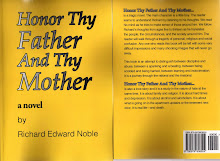
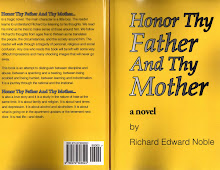
Richard E. Noble was raised in Lawrence, Mass and is now a freelance writer. He has published 16 books. Some of them have Lawrence as their setting, A Summer with Charlie and Honor Thy Father and Thy Mother. A Little Something is a book of poetry partly inspired by life in Lawrence. Hobo-ing America, is a workingman’s tour of the U.S.A. The Eastpointer is selected pieces from his award winning column about life in a sleepy fishing village in the Florida Panhandle and Noble Notes on Famous Folks is history with a bit of humor.
Dirty Dancing
By Richard E. Noble

Down in the “Catacombs” of St. Rita’s grammar school, between the little boy’s room and the little girl’s room there was an open area which was used for many different things. I think it served, primarily, as an eating area for the kids who rode the bus to school and who couldn’t go home for lunch. But my greatest recollection was its use as a dance floor. The good nuns were the chaperones and the janitor, Mr. Bill Fitzgibbons was the DJ.
Now why the good nuns were indoctrinating all us little angels into the perils of the “Dance Hall” mentality was, to say the least, suspicious. I just didn’t get it. Mr. Fitzgibbons needed a job and was getting paid, so what could the poor man do but go along with the ladies in black. [I would like to point out that the good nuns, the brothers and the priests were dressed in black, long before Johnny Cash came along cash-ing in on the idea.]
There were all these nuns standing up in front of me in their super protective, multi-layered, suits of black armor on a day-in and day-out basis – everything “female” in their natures being covered from head to toe in “black.” And, of course, I knew why. They were ashamed. And rightfully so. After all, how many times had we all been told the story of Adam and Eve?
It was a simple enough story to understand. There was Adam, happy as a lark up in the Garden of Eden. Everything was okeydokey until you-know-who came along and then everything went to hell. Clearly the whole mess was the fault of Eve who lured poor, innocent Adam into sin – and we all know how she did it, don’t we?
This lesson was very clear to me. Just take a look around the neighborhood. There was a barroom on every corner. And who filled these barrooms – not women … men, of course. They had all fallen for the tricks of their individual Eves and now look at them. They were miserable and piling into barrooms to drown their sorrows.
Look at my own house! My dad had fallen for my mother’s tricks, and now look at him! My god, could the story of Adam and Eve be any clearer?
In the light of such revelation why on earth would the good nuns be encouraging young innocent boys to get up close and personal to a bunch of little corrupting Eves? This was insanity … or was it?
Well, maybe not. Under all those heavy penitent black gowns there was really another naked woman, wasn’t there. Ah huh! Yes, it was all a part of the “plan” wasn’t it?
Well, they can fool some of the people most of the time and most of the people some of the time but they weren’t fooling Dickey boy any of the time. I was way ahead of them. While most of the other guys were out there sashaying around on the dance floor, getting sucked into the curse, I would be in the little boy’s room smoking cigarettes and trying to develop cancer.
Beside this biblical house of horrors, I remember this experience being rather a tragedy for many of the little girls also. I didn’t have to be all that sharp to notice that some of the little girls never got asked to dance. Old Bill and the good nuns tried everything. They even had a dance where the girls were allowed to go and ask one of the boys. During these dances, the little boy’s room was mobbed with more future cancer victims.
The biggest tragedy that I remember was the throw-a-shoe-out-onto-the-floor dance. I’ll never forget this one little girl. She had a bad case of acne. My brother had a similar problem so I knew how serious a problem it could be. Every boy did his best to avoid picking up the little acne girl’s shoe. A friend of mine picked her shoe up by accident. When he realized who the shoe belonged to, we both ran into the little boy’s room. Bill Fitzgibbons was sent into the bathroom to drag us out but before he came to get us we ditched the shoe.
Back out in the ballroom, us two clowns sat in our wooden folding chairs staring through the crowded dance floor at two little girls sitting in their wooden folding chairs across the hall. One of the little girls was holding one shoe in her lap. She had obviously retrieved her shoe from the center of the dance floor before it got lost in the shuffle.
She stared at me.
From the look on her face, I felt that I knew exactly what she wanted to do with that shoe.
The other little girl, the one with the acne problem, was sitting there trying to hide her shoeless foot behind the rungs of her chair. She was looking down at the floor too ashamed to look at anybody.
I looked at “one shoe” across the hall and then at my buddy Johnny. He wasn’t looking at anybody. He mostly sat staring up at the ceiling.
“Johnny,” I said. “There is a girl over there with only one shoe who keeps looking over here at you. Don’t you think that you should go get her shoe and give it back to her?”
“Screw you,” he said. “You were the one who made me run into the bathroom and hide it.”
“I did not. I went to have a cigarette and you followed me. I didn’t even know you had her shoe.”
“You did too.”
“I did not!”
After the shoe dance finally ended, the girl with only one shoe got up from her chair and one-shoed her way out of the dance hall. Johnny and I watched as she hobbled up and down, like Chester from Gun Smoke, to the little girl’s room.
“She should take off her other shoe,” I said. “Then maybe she wouldn’t look so bad. It really looks weird for her to be walking around with only one shoe like that. What do you think?”
“Screw you,” Johnny said.
“What? I ain’t saying anything. I just think she looks dumb hopping around with just one shoe. Don’t you? I wonder what her mother is going to think when she comes home with one clean sock and one dirty sock?”
I looked at Johnny.
He glared at me. I decided to shut up.
Another dance or two went by before the girl with one shoe returned to the ballroom. We both watched her as she limped along all the way from the doorway to her seat at the far end of the hall. It seemed to take her an awfully long time.
“God, it’s like she’s turning into a cripple. What’s so hard about walking with one shoe? There are people in China who don’t have any shoes – no socks either,” I said, trying to make Johnny feel a little better.
Johnny jumped from his seat and headed for the boy’s room. Cigarette break, I thought. Good idea, so I followed.
When I got to the bathroom door, Johnny came bursting out with the little girl’s shoe in his hand. He pushed me aside, like I had done something. What was he mad at me for? I went to the ballroom door and watched.
He walked across the floor over to the girl with only one shoe. She saw him coming but kept looking down at the floor. When he got in front of her, he stuck the shoe under her nose. She took her shoe without looking up at him and put it on her foot. The bottom of her sock was really black. Then suddenly she looked up. She was pale and her eyes exhibited a sort of shock. Johnny had obviously said something to her.
She got up from her seat and walked to the center of the dance floor with Johnny following. Then she turned and the two of them started dancing.
Oh my god, I couldn’t believe it. Giving the girl her shoe would have been atonement enough in my book. Johnny had completely flipped out. What had gotten into him?
Then it came to me. It was as clear as could be. Johnny had gotten sucked in. It was the old Eve with acne trick – Another “Adam” bites the dust.
Richard E. Noble was raised in Lawrence, Mass and is now a freelance writer. He has published 16 books. Some of them have Lawrence as their setting, A Summer with Charlie and Honor Thy Father and Thy Mother. A Little Something is a book of poetry partly inspired by life in Lawrence. Hobo-ing America, is a workingman’s tour of the U.S.A. The Eastpointer is selected pieces from his award winning column about life in a sleepy fishing village in the Florida Panhandle and Noble Notes on Famous Folks is history with a bit of humor.
Monday, May 31, 2010
The Uncle Joe Memorial

“The Uncle Joe Memorial”
By Richard E. Noble
To me War is Uncle Joe.
When I was a little boy and fascinated with six-shooters and guns, and playing army with my box full of little tanks, and trucks, and infantrymen, I was looking through a photo album with another of my uncles, my Uncle Ray. The album was filled with pictures of my Uncle Ray and my Uncle Joe in their army uniforms. Seeing my uncles all dressed up in their uniforms prompted me to ask;
“Uncle Ray, did you ever kill any Germans?”
My uncle laughed. Why was he laughing, I wondered? I suppose that it was the naiveté of a child enthusiastically talking about War and killing as if these things were positive achievements for mankind. I’m sure that he realized instantly from the gleam in my eye and the thrill in my voice, that if he said, “Darn right, I did. I wiped out a whole platoon of them suckers!” he would have been an instant hero. But, I’m sure, as much as he wanted the admiration and hero worship of a young idol seeker of about six or seven years of age with eyes just burning to hear a tale of war, victory, and brave endeavor - and knowing that he could tell me any number of lies and I’d never know the difference - made him see a humorous situation written all over my little face.
“No, no,” he said still laughing. “I never left Fort So-and-So. The closest that I got to see any war was at a John Wayne movie.”
“But, but. . .” I said pointing to his picture in his army suit, “you were a soldier.”
“Oh yes, yes,” he explained. “But there were millions and millions of us soldiers who never even shot a weapon. I spent most of the war shooting off a typewriter in this far away foreign land called California.”
Needless to say, I was gravely disappointed. My hero, Uncle Ray, was a typewriter shooter assigned to killing enemy file cabinets in California. Boy, you would think that he could have, at least, knocked down a German – or beat one up – or something. But no, unfortunately, my Uncle Ray was one of those guys who could not tell a lie. He probably read too many cheery tree stories.
But then, seeing all the disappointment dripping from my face, he quickly added; “If you want to know about killing and shooting bad guys, you’ll have to ask your Uncle Joe.”
“Uncle Joe?”
“That’s right. Your Uncle Joe is the man who saw the action. He can tell you all about it.”
I was very glad and proud that I had an uncle who saw action and killed a bunch of enemy people – but Uncle Joe?
Uncle Joe was somewhat of a family mystery. He was semi-mystical. When anybody in the family mentioned his name, a look came over them – as if they were talking about someone who didn’t really exist. Someone who had died a long, long time ago. But Uncle Joe wasn’t dead. He was alive and periodically, I would bump into him. He died before I was twelve years old, yet I can describe to you, in detail, every one of the few encounters that I had with Uncle Joe throughout those years.
Uncle Joe lived as a kind of recluse. He lived somewhere in the neighborhood, but I never did know where. I think that he lived in a little apartment up on Center Street. The apartment was above a small neighborhood tavern known as Coza’s Cafe’.
Uncle Joe had these deep penetrating eyes. They seemed to be sunk deep into his skull – like they were trying to hide back inside his head. The skin around his eyes was always somewhat yellow – funny looking. When I asked my mother about it, she told me it was because my Uncle Joe had contracted malaria during the war. He always looked yellow and ... well ... ghostly.
I learned about Uncle Joe, little by little. He got put together in my life like a picture puzzle – a mass of little jagged pieces, frayed, torn and never quite fitting together properly.
Uncle Joe was the brave, warrior guy who saw all the action and killed all the Germans, but Uncle Joe looked like the saddest, most sensitive, all-alone person who I had ever met. He never got married. He never had any children. And, even though he lived just around the block someplace, you very rarely saw him. Whenever my mother or my aunts talked about Uncle Joe, they talked in “used-to-be's.” Uncle Joe used to be like this; or Uncle Joe used to be like that. Uncle Joe used to be something. Uncle Joe used to be someone, but now ... what is he? Who is he?
Uncle Joe popped into our apartment one Christmas. My Dad, who was a man of very few words, loved my Uncle Joe. Whenever Uncle Joe walked in that door everybody laid it onto him. He was the wailing wall of the family. Whenever he popped his head out of his “foxhole” it seemed that everyone in the world came running towards him with their arms wide open. And there would be “crying and the gnashing of teeth” as they dumped all of their petty problems and grips onto his shoulders. My mother could moan and cry and bellyache to poor Uncle Joe for hours. I remember sitting on the parlor floor on this particular Christmas, and saying to myself, “Why don’t these people just shut up; can’t they see that they are just going to scare Uncle Joe away? He is just going to fly off someplace.” Uncle Joe was the butterfly – the delicate, sensitive loving butterfly. Didn’t they realize that they were going to chase him right out of the house and that he might never come back?
From my perspective, Uncle Joe was the one who needed the comfort. He was the one who obviously needed the hug and someone to say; “It’s all right. Don’t worry. You’re safe.” But instead, he got the exact opposite. He was the toxic dumpsite for everybody else’s pent-up frustrations – everybody else’s problems. He was the one who understood everyone, but also the one who everyone else didn’t understand. He was the mystery man.
A week later when my older sister and I were taking down the Christmas tree, we found three envelopes scattered among its branches. They had our name written on them – my name on one, my sister’s on another and my brother’s on a third. When we opened the envelopes we found a dollar bill inside. The name of the giver was not to be found on the envelope anywhere.
My sister and I stood for a moment looking at our dollar bill and the unsigned envelope. Then, we looked at one another. Without hesitation, we both said, Uncle Joe! Who else would give and not want anything in return – not even a thank-you, or a hug, or a kiss. Who else did we know who would leave dollar bills hanging in the Christmas tree anonymously – probably the only three dollars that he had.
I still, to this day, don’t know what Uncle Joe did for a living. He didn’t work at the mill or own a car, or a house, or own anything as far as I knew.
One time, my mother was getting back at me for showing too much attention towards my grandmother. I always liked my grandmother. She would cook the same dish that my mother would prepare, and I would eat my grandmother’s and not my mother’s. My mother would get infuriated.
“1 use the exact same recipe that your grandmother uses; in fact, she is the one who taught me how to make this dish.”
“Sorry Mom,” I’d say. “You can blindfold me or put me into a dark closet; I’ll still be able to pick out grandma’s pirogues over yours every time.”
Well finally, this one day, my mother blew her top; “You think that your grandmother is so darn wonderful; well let me tell you this, sonny boy – that woman is the same woman who threw your favorite Uncle Joe out into the street when he came home from the war.”
Boy, my mother knew how to hurt. Could that possibly be true? I didn’t believe my mother. My grandmother was a round, jolly, barrel full of hugs and kisses and chocolate pudding with milk on the top; and cheek-pinching and smiles and laughter.
“I don’t believe you,” I said. “Why would Grandma throw Uncle Joe out into the street?”
“Because he didn’t have a job – that’s why, smarty pants!”
“So?”
“So, your wonderful grandmother didn’t want your Uncle Joe, war hero, sitting around her house and eating her food, without paying any rent.”
Well, I wasn’t going to argue with my mother, but I also knew that she had a sharp tongue and could often say things without thinking – even make up things, sometimes. But just having this new knowledge made me look at my grandmother differently. Could anybody do that to their child? Work was important, but a son? ... home from the war? Could my grandmother have done such a thing?
One day I was putzsing around helping my Uncle Ray with something. I popped the question; “Did Grandma really throw Uncle Joe out into the street after he came home from the war just because he didn’t have a job and couldn’t pay her any rent?”
My Uncle Ray stopped dead in his tracks. He turned and looked at me.
“Who told you that?” he asked. I lowered my head, shuffled about, and kicked at the concrete at my feet. He could tell that I wasn’t about to squeal. “Well,” he said sitting down on an old crate. “Your grandma did put Uncle Joe out, but your description was not exactly the way that it happened. You see, when your Uncle Joe came back from the war, he wasn’t the same as before he left.”
“I know. He got malaria.”
“Yes, he did have malaria, but he had something else also – something that nobody had a name for; and no cure for either.”
“What was it?”
“Well it is hard to describe. It is something that comes with war and killing people. It makes a man different inside. When your Uncle Joe came back, he was different. He didn’t want to work or even look for a job. He sat in your grandmother’s living room and just stared out the window.”
“So what? I do that sometimes.”
“Yeah, but your Uncle Joe did it day after day after day – for a long, long time. Your grandmother was worried about him. He couldn’t just sit there in the parlor staring out the window for the rest of his life. He was making himself sick inside. Your grandmother tried and tried and tried. She talked and talked, but Uncle Joe just sat there staring out the window and smoking cigarettes. Finally one day she just couldn’t stand it anymore. She packed his bag and brought it to him. She told him that if he wasn’t going to live anymore ... he would just have to find someplace else to die.”
“So what did Uncle Joe do?”
“He left. Then after awhile he got a job, and pretty soon, he was all right again.”
“What is Uncle Joe, anyway?”
“Well,” my Uncle Ray said with a smile. “Uncle Joe is kind of a Jack-of-all-trades. You know, he was always the kind of guy who could do anything – and be good at it too.”
My Uncle Joe is a part of the reason that I don’t like war. It always seemed to me that my Uncle Joe was a casualty of World War II. Somehow his life ended over there in Burma or Bataan or wherever it was, but his name never got carved into a wall or put on a plaque. Unfortunately he was still alive. But what was he? Who was he? Where did he live? What did he do for a living? Who did he care about? Who cared about him?
War sprouts bodies like my Uncle Joe. Guys who make it back, but don’t make it back. They live under bridges, and in flophouses, out in some woods, or in empty apartments. My Uncle Joe fought on the “right” side in World War II. No question about it. He didn’t fight no “Little Hitler”; he fought the real Hitler – the democracy hating, Jew killing, monster who wanted to take over the world and didn’t care who or how many died in the process. No mistake there, my Uncle Joe fought on the right side – for the good guys. But yet he couldn’t find his way back from Burma – and why? He was right; they were wrong. What’s the problem?
War creates a lot of heroes. We get a lot of plaques and a lot of monuments. We get bronze guys on horses – concrete guys with swords. We get statues, and walls, and pillars, and pits, and ponds and lakes, all surrounded by canons, and cartridge boxes and stars and stripes and flags – lots and lots of flags. But war also creates a hell of a lot of Uncle Joes.
There are no memorials to the Uncle Joes. I doubt if there ever will be. How do you carve a ghost out of marble? How do you paint a picture of a man searching for the soul he lost on Pork Chop Hill or in some Vietnam village or on Bataan or at the Battle of the Bulge or in Flanders Field? How do you make a statement about a man who no longer has anything to say?
The Uncle Joe War Memorial? what would it look like?
My guess is that these Uncle Joe types would not want a memorial. They would probably tell the public to keep the money and put it into the hot lunch program at the public schools.
So don’t start up a collection or hire a sculptor just yet. These guys probably like living under the bridges and in those empty apartments – it’s now a tradition; a very, very old tradition.
I don’t know about you but there is a part of me who lives in an empty apartment; a part of me who would rather live under a bridge; a part of me who doesn’t want any hugs and kisses; a part of me who just wants to be left alone – all alone; a part of me who thinks that he has nothing left inside of him – nothing left to give; a part of me who would just like to die – to die in peace; and may they all someday rest in PEACE; someday … somehow, somewhere – may we all rest in PEACE ... amen.
Saturday, May 29, 2010
The Hobo Philosopher
Cattle Theory


By Richard E. Noble
The cattle are all grazing in a pasture not far off from the farmer’s house and barn. One of the cattle wanders away from the herd. He ends up grazing in a patch of tall grass just behind the barn. Suddenly he hears the farmer’s voice. The farmer is talking to the butcher. They are negotiating a price for the cattle. The bargaining is tight and in the debate the butcher bemoans the depressed price of meat and the excess of hides for sale at the market. By the end of the negotiation a price for the cattle is agreed upon. The butcher hauls off a load of squealing pigs, and the farmer returns to the farm house with a freshly killed chicken for supper as a celebration.
The steer, which was silently grazing behind the barn, is in total shock. He can not believe what he has just overheard. He runs back to the pasture where all of his compatriots are grazing peacefully.
“You are not going to believe this!” he screams. “I have just overheard farmer Jones. He is about to sell us all to a butcher. The butcher is going to slit our throats, drain our blood, cut and grind our flesh, and sell it to other humans for food. They are going to pickle our brains and tongues, boil our hooves for glue, make chip dip out of our livers, kill and fry our babies. They are even going to tan our hides and make clothing out of our skins. These humans are insane beasts. It is all a trick! The farmer only cares for us and shows concern for our health to fatten us up for the kill. He feeds us cheep free grass, and then sells our flesh, blood, and bones by the pound to other of his horrid merciless human neighbors. Our friends, the pigs, have already gone off to their deaths, and I saw with my own eyes the slaughter of a defenseless chicken. The farmer grabbed the poor thing up by the feet and then with one blow, lopped off its head on a stump. It was the most horrid thing that I have ever seen in my life. We must do something! We must unite. We must organize against the human beasts before it is too late and we are all hopelessly murdered and slaughtered.”
The cattle in the pasture all simultaneously lifted their heads and moo-oaned...
“Oh no, not another conspiracy theory!”
Cattle Theory


By Richard E. Noble
The cattle are all grazing in a pasture not far off from the farmer’s house and barn. One of the cattle wanders away from the herd. He ends up grazing in a patch of tall grass just behind the barn. Suddenly he hears the farmer’s voice. The farmer is talking to the butcher. They are negotiating a price for the cattle. The bargaining is tight and in the debate the butcher bemoans the depressed price of meat and the excess of hides for sale at the market. By the end of the negotiation a price for the cattle is agreed upon. The butcher hauls off a load of squealing pigs, and the farmer returns to the farm house with a freshly killed chicken for supper as a celebration.
The steer, which was silently grazing behind the barn, is in total shock. He can not believe what he has just overheard. He runs back to the pasture where all of his compatriots are grazing peacefully.
“You are not going to believe this!” he screams. “I have just overheard farmer Jones. He is about to sell us all to a butcher. The butcher is going to slit our throats, drain our blood, cut and grind our flesh, and sell it to other humans for food. They are going to pickle our brains and tongues, boil our hooves for glue, make chip dip out of our livers, kill and fry our babies. They are even going to tan our hides and make clothing out of our skins. These humans are insane beasts. It is all a trick! The farmer only cares for us and shows concern for our health to fatten us up for the kill. He feeds us cheep free grass, and then sells our flesh, blood, and bones by the pound to other of his horrid merciless human neighbors. Our friends, the pigs, have already gone off to their deaths, and I saw with my own eyes the slaughter of a defenseless chicken. The farmer grabbed the poor thing up by the feet and then with one blow, lopped off its head on a stump. It was the most horrid thing that I have ever seen in my life. We must do something! We must unite. We must organize against the human beasts before it is too late and we are all hopelessly murdered and slaughtered.”
The cattle in the pasture all simultaneously lifted their heads and moo-oaned...
“Oh no, not another conspiracy theory!”
Friday, May 28, 2010
The Hobo Philosopher
Some Thoughts On
William Greider's
One World Ready or Not
by Richard E. Noble
I read a book by a Mr. William Greider, “One World Ready or Not”. On the back cover of his book it states that he is the National Editor of the Rolling Stone. I thought that was a magazine about Mick Jagger and other horribly disfigured people who have made a success of promoting the concept of noise around the world.
I consider this book an economics book - but it is not a compilation of difficult theories. It is a vivid and insightful description of what is going on around the world, with chapter after chapter of everyday life descriptions. It is about the New Global Capitalism - the privatization of the world.
Mr. Greider’s book is a primer on getting up to speed on what is presently happening in world economics. I consider it to be very intelligent and well thought; especially for a man who I presume spent the early part of his life following the Grateful Dead - the Rolling Stone Magazine, you will remember.
When I reflect on Mr. Greider’s book one of the many things that comes to my mind is a problem that he pointed out in the conclusion.
In a world of, more or less, dedicated Capitalism where supply and demand and profit-making are the sole motivation for investment and action, how does necessary but non-profitable “good” happen?
For example, you are a Capitalist Doctor in a Capitalist world. You are riding along the highway and you stumble upon an accident. Many people are lying along side the road bleeding and injured. You quickly discover that these people have no insurance and no money to pay for the necessary supplies, never mind your expertise, training and college loan. With Capitalism and supply and demand as your guide, how do you devise a profitable system or method for their care?
Charity is not a system or method of Capitalism, it is a band aid. Charity is a notion that drains off the goodwill of Capitalism. It stands out as a flaw in the Capitalistic dogma, not as a positive attribute. Charity only becomes necessary because Capitalism has failed. Charity doesn’t make a profit. It is not a business. We can’t depend on Charity as an economic tool.
The notion that people should all be pursuing their own personal good does not help our good Samaritan dogmatic Capitalistic Doctor.
As a Capitalist he must devise some sort of rationale whereby he can gain a profit from the suffering and tragedy he has encountered.
How does Capitalism feed the hungry who have no money to buy food, even if the Capitalist can produce sufficient quantities; how does Capitalism provide Aids medication to those with no money to pay even for its manufacture? How does Capitalism provide a profitable avenue for environmental safety when clearly polluting pays? How can profit-making provide living wages to workers when providing living wages means less profit and higher prices? The list where Capitalism has traditionally provided no answers goes on and on.
In the past, governmental socialism has been the safety valve of the Capitalist World. When the going gets tough the taxpayer takes over - that’s socialism, not Capitalism.
In the United States, back in the Wilson days, when the banks kept collapsing, the government and the taxpayer stepped in with the Federal Reserve System (Banker Socialism). When the Depression struck, it was Government Socialist spending that stepped in to save the day. Even if you say it was World War II that saved the economy, it was not the killing and the destruction that saved the world from the Depression; it was the government spending on the war effort that produced the jobs, that supplied the wages, that turned around the spending, that stimulated the investment, that paid the soldiers, that built the middle class, that saved the house that George (Washington - not Bush) built.
We didn’t need World War II to save us from the Depression; we needed unlimited Government spending on a project that satisfied the moral work ethos of the people of the world. Any project would have done the trick, a pyramid or two, an aqueduct, an interstate highway system, a man on the moon.
Why can’t the project to save the world, and stimulate Capitalistic spending be something morally sound; as opposed to something architectural, or industrial or totally destructive, - as War?
When Europe had no money to buy products from the Capitalist world, we gave them the money.
We said that the Marshall Plan was a loan but most of the Marshall Plan money was never paid back. So, in effect, we made TVs and refrigerators - financed Europe’s reconstruction - for people and governments who could not afford to buy these products or materials.
We gave them the money to buy them; we gave them the money to manufacture their own TVs and refrigerators; pretty soon their economies were flourishing and they were selling us TVs and refrigerators. We had to start producing other things here at home to employ our own people to fill new markets from a more demanding world. I even hear Republicans today bragging on this world wide socialistic welfare project called - the Marshall Plan.
Why could this same technique not be used in curing the world of hunger or disease?
If people in Slumbovia need food, we loan (lend/lease) them the money, then sell them the food (deferred loan payback option - lOUs). Once they start eating more regularly, we loan (lend/lease) them some more money and start selling them some tractors. Pretty soon they are growing their own food and manufacturing their own tractors and we are selling them fertilizers, tractor parts and engineering expertise, and they are standing in line to buy tickets to Disney World. And all the while we are paying Henry Ford the II, 3rd. or 4th to manufacture this stuff.
Henry then gives everybody a raise at the factory and takes on more employees - just like we did in World War II. The only difference is we don’t have all the dead bodies and all the bombed out building to rebuild. Instead we start housing developments in Slumbovia. Pretty soon everybody is doing so well, we simply cancel all their debt obligations (call it a tax rebate to stimulate the trade balance, encourage consumption and new investment). The Donald moves to Slumbovia to find a new apprentice and he takes Martha Stewart with him. How can we lose?
There is a lot of world out there to be made prosperous and a lot of money to be made supplying the initial investments, the knowledge and the know how. If it works for war, and the Military Industrial Complex, why can’t it work for peace and refrigerators?
If this concept can work for refrigerators, TVs and even hula-hoops and pac man, then why can’t it work for health care, the environment, science and the betterment of mankind in general?
Some Thoughts On
William Greider's
One World Ready or Not
by Richard E. Noble
I read a book by a Mr. William Greider, “One World Ready or Not”. On the back cover of his book it states that he is the National Editor of the Rolling Stone. I thought that was a magazine about Mick Jagger and other horribly disfigured people who have made a success of promoting the concept of noise around the world.
I consider this book an economics book - but it is not a compilation of difficult theories. It is a vivid and insightful description of what is going on around the world, with chapter after chapter of everyday life descriptions. It is about the New Global Capitalism - the privatization of the world.
Mr. Greider’s book is a primer on getting up to speed on what is presently happening in world economics. I consider it to be very intelligent and well thought; especially for a man who I presume spent the early part of his life following the Grateful Dead - the Rolling Stone Magazine, you will remember.
When I reflect on Mr. Greider’s book one of the many things that comes to my mind is a problem that he pointed out in the conclusion.
In a world of, more or less, dedicated Capitalism where supply and demand and profit-making are the sole motivation for investment and action, how does necessary but non-profitable “good” happen?
For example, you are a Capitalist Doctor in a Capitalist world. You are riding along the highway and you stumble upon an accident. Many people are lying along side the road bleeding and injured. You quickly discover that these people have no insurance and no money to pay for the necessary supplies, never mind your expertise, training and college loan. With Capitalism and supply and demand as your guide, how do you devise a profitable system or method for their care?
Charity is not a system or method of Capitalism, it is a band aid. Charity is a notion that drains off the goodwill of Capitalism. It stands out as a flaw in the Capitalistic dogma, not as a positive attribute. Charity only becomes necessary because Capitalism has failed. Charity doesn’t make a profit. It is not a business. We can’t depend on Charity as an economic tool.
The notion that people should all be pursuing their own personal good does not help our good Samaritan dogmatic Capitalistic Doctor.
As a Capitalist he must devise some sort of rationale whereby he can gain a profit from the suffering and tragedy he has encountered.
How does Capitalism feed the hungry who have no money to buy food, even if the Capitalist can produce sufficient quantities; how does Capitalism provide Aids medication to those with no money to pay even for its manufacture? How does Capitalism provide a profitable avenue for environmental safety when clearly polluting pays? How can profit-making provide living wages to workers when providing living wages means less profit and higher prices? The list where Capitalism has traditionally provided no answers goes on and on.
In the past, governmental socialism has been the safety valve of the Capitalist World. When the going gets tough the taxpayer takes over - that’s socialism, not Capitalism.
In the United States, back in the Wilson days, when the banks kept collapsing, the government and the taxpayer stepped in with the Federal Reserve System (Banker Socialism). When the Depression struck, it was Government Socialist spending that stepped in to save the day. Even if you say it was World War II that saved the economy, it was not the killing and the destruction that saved the world from the Depression; it was the government spending on the war effort that produced the jobs, that supplied the wages, that turned around the spending, that stimulated the investment, that paid the soldiers, that built the middle class, that saved the house that George (Washington - not Bush) built.
We didn’t need World War II to save us from the Depression; we needed unlimited Government spending on a project that satisfied the moral work ethos of the people of the world. Any project would have done the trick, a pyramid or two, an aqueduct, an interstate highway system, a man on the moon.
Why can’t the project to save the world, and stimulate Capitalistic spending be something morally sound; as opposed to something architectural, or industrial or totally destructive, - as War?
When Europe had no money to buy products from the Capitalist world, we gave them the money.
We said that the Marshall Plan was a loan but most of the Marshall Plan money was never paid back. So, in effect, we made TVs and refrigerators - financed Europe’s reconstruction - for people and governments who could not afford to buy these products or materials.
We gave them the money to buy them; we gave them the money to manufacture their own TVs and refrigerators; pretty soon their economies were flourishing and they were selling us TVs and refrigerators. We had to start producing other things here at home to employ our own people to fill new markets from a more demanding world. I even hear Republicans today bragging on this world wide socialistic welfare project called - the Marshall Plan.
Why could this same technique not be used in curing the world of hunger or disease?
If people in Slumbovia need food, we loan (lend/lease) them the money, then sell them the food (deferred loan payback option - lOUs). Once they start eating more regularly, we loan (lend/lease) them some more money and start selling them some tractors. Pretty soon they are growing their own food and manufacturing their own tractors and we are selling them fertilizers, tractor parts and engineering expertise, and they are standing in line to buy tickets to Disney World. And all the while we are paying Henry Ford the II, 3rd. or 4th to manufacture this stuff.
Henry then gives everybody a raise at the factory and takes on more employees - just like we did in World War II. The only difference is we don’t have all the dead bodies and all the bombed out building to rebuild. Instead we start housing developments in Slumbovia. Pretty soon everybody is doing so well, we simply cancel all their debt obligations (call it a tax rebate to stimulate the trade balance, encourage consumption and new investment). The Donald moves to Slumbovia to find a new apprentice and he takes Martha Stewart with him. How can we lose?
There is a lot of world out there to be made prosperous and a lot of money to be made supplying the initial investments, the knowledge and the know how. If it works for war, and the Military Industrial Complex, why can’t it work for peace and refrigerators?
If this concept can work for refrigerators, TVs and even hula-hoops and pac man, then why can’t it work for health care, the environment, science and the betterment of mankind in general?
Tuesday, May 25, 2010
“No Justice”
By Darcia Helle
http://www.quietfurybooks.com
Fiction action/adventure
Book Review
By Richard E. Noble
No Justice starts with a bang. A man is blown to bits. A bomb was placed in his car. The victim was murdered by a … software programmer – a rather unique software programmer by the name of Michael Sykora.
The love of Michael’s life, Christina, had been murdered brutally. But that is not the motive for this particular murder. The death of Christina had led Michael down a very unusual path. In addition to being a software programmer, Michael was now murdering people for money – a paid assassin. What could be lower on the scale of humanity?
Maybe Michael’s victims. Michael murdered only “bad” people – rapist, child porn creeps, gangsters, pedophiles, drug pushers etc.
The reader now has a problem. Is a man who blows people up and shoots people between the eyes any better than the “bad” people that are his victims?
This is a moral dilemma that Michael has already solved. Michael feels that the world is without justice. Hence the title “No Justice.” Not only is society without Justice, but so too this existence. Michael has lost hope for world justice and Divine justice.
I think it was Socrates who said, “When a man surpasses his fellow man in moral righteousness, he then, in effect, becomes a law unto himself.”
Michael Sykora has become a law unto himself. He will be the judge and the jury. He will be the avenging angel … or devil depending on your point of view.
We follow along with Michael as he murders one bad person after another. We wonder if we like Michael or we don’t like Michael. Does he have a point or doesn’t he?
John Brown is considered an historical hero by some because he murdered people and tried to promote a revolution to free slaves – a revolution that resulted in the death of over a million of his fellow countrymen. Michael Sykora kills admittedly evil people who are able to elude the justice system. Is he a mini-hero of sorts or a cold blooded killer?
As this dilemma sits fermenting in the back of our mind we follow Michael in his everyday life. We meet his friends, his personable secretary, her son the cop and his ailing dad. We get to explore his relationships. We get to know Michael up close and personal.
Michael is a tormented man. Michael has had a difficult beginning. Then came the brutal murder of Christina. Michael can not put Christina behind him. He has few intimate friends. And then we meet Nicki.
Michael met Nicki after Christina’s murder. She has a unique background and some serious immediate problems. Michael with his unconventional talents is her only hope.
This is a great action/adventure story with enough intellectual content to keep everybody interested. I see no reason this could not be a production up on the silver screen – Great characters, good dialogue and a gender neutral prose style. This is a very well written and well thought book. And this is coming from a reviewer who took his wife to see Murder on the Orient Express and fell asleep … twice.
By Darcia Helle
http://www.quietfurybooks.com
Fiction action/adventure
Book Review
By Richard E. Noble
No Justice starts with a bang. A man is blown to bits. A bomb was placed in his car. The victim was murdered by a … software programmer – a rather unique software programmer by the name of Michael Sykora.
The love of Michael’s life, Christina, had been murdered brutally. But that is not the motive for this particular murder. The death of Christina had led Michael down a very unusual path. In addition to being a software programmer, Michael was now murdering people for money – a paid assassin. What could be lower on the scale of humanity?
Maybe Michael’s victims. Michael murdered only “bad” people – rapist, child porn creeps, gangsters, pedophiles, drug pushers etc.
The reader now has a problem. Is a man who blows people up and shoots people between the eyes any better than the “bad” people that are his victims?
This is a moral dilemma that Michael has already solved. Michael feels that the world is without justice. Hence the title “No Justice.” Not only is society without Justice, but so too this existence. Michael has lost hope for world justice and Divine justice.
I think it was Socrates who said, “When a man surpasses his fellow man in moral righteousness, he then, in effect, becomes a law unto himself.”
Michael Sykora has become a law unto himself. He will be the judge and the jury. He will be the avenging angel … or devil depending on your point of view.
We follow along with Michael as he murders one bad person after another. We wonder if we like Michael or we don’t like Michael. Does he have a point or doesn’t he?
John Brown is considered an historical hero by some because he murdered people and tried to promote a revolution to free slaves – a revolution that resulted in the death of over a million of his fellow countrymen. Michael Sykora kills admittedly evil people who are able to elude the justice system. Is he a mini-hero of sorts or a cold blooded killer?
As this dilemma sits fermenting in the back of our mind we follow Michael in his everyday life. We meet his friends, his personable secretary, her son the cop and his ailing dad. We get to explore his relationships. We get to know Michael up close and personal.
Michael is a tormented man. Michael has had a difficult beginning. Then came the brutal murder of Christina. Michael can not put Christina behind him. He has few intimate friends. And then we meet Nicki.
Michael met Nicki after Christina’s murder. She has a unique background and some serious immediate problems. Michael with his unconventional talents is her only hope.
This is a great action/adventure story with enough intellectual content to keep everybody interested. I see no reason this could not be a production up on the silver screen – Great characters, good dialogue and a gender neutral prose style. This is a very well written and well thought book. And this is coming from a reviewer who took his wife to see Murder on the Orient Express and fell asleep … twice.
Saturday, May 22, 2010
A Baker’s Dozen
Book Review
By Eve Paludan http://www.evepaludan.com/
[Eve Paludan is a writer and editor. Eve Paludan is an editor of scholarly works by day and a novelist by night, occasionally doing freelance fiction editing on weekends. She is currently attending Arizona State University (online) and is working on earning a Web Developer Certificate from Northern Arizona University. She is also writing another romance novel. Eve has been married for 2.1 decades to a software developer/publisher, Ron Paludan, who is also a 3D (Poster and Google Sketch-Up) artist, as well as a webmaster of commercial sites.]
REVIEW:
"A Baker's Dozen" Short Stories by Richard Noble is not only a treat, it is a feast for the mind, with some of the stories reminiscent of the O. Henry type of plot twists that have captivated readers for generations. Like the proverbial box of fancy chocolates, each story in this collection gives the reader a satisfying taste of a different flavor, and yet a cohesive theme of American blue-collar nostalgia makes a pretty box to contain these 13 delectable story treats.
A consummate storyteller, Richard Noble brings to life both civilized life -- with themes like marriage and running a business and adventures with drinking buddies and unions and such -- and uncivilized life, such as my favorite story in the collection: In "I'm Going Home," an itinerant fruit picker and pot dealer named Jon enjoys the freedom and economy of living in a national park but ponders the suspicious death of an alcoholic Jesus freak known as Pea-Coat. The trouble starts when Jon starts his own investigation of the assumed suicide. Wow, this story grabbed me and didn't let go, nor did it disappoint. Well done.
In "Cain & Bernard's," the author takes the long way to getting his own specialty butcher shop ready to open, which will require a plumber. His hilarious first-person retelling of his guy-centric path to his goals keeps getting diverted to a local bar where he has to drink with a plumber, seemingly for days, before they get down to business. Apparently, all of the regulars have long ago dated many of his aunts and his mom, which causes him some consternation and embarrassment. Oh, and existing on bar food -- mostly pickled eggs -- and alcohol is not a proper diet for a working man.
In "Love is Blind," Diane is a thirty-something spinster with a lovely apartment. She hasn't had a date for years. One night she gets a call from a war vet whose memories of them dancing at Arthur Murray as youngsters sustained him through the worst of times. What happens next left me with a lump in my throat. So poignant and romantic. A what-if that we all think about. Could someone from our past re-surface and...?
In "Gluckman's Poultry," the author goes wholesale meat-shopping on what are possibly the wrong side of the tracks and has a small adventure and a lesson in managing people at the bottom of the blue-collar totem pole.
In "Mussels in Marinara," more adventures in the butchery business ensue in South Miami with the author's friend, Lenny, after their meatpackers' union ditched them. This story is about crackers and beer, and Lenny's wife, who is simultaneously a princess and a shrew. There's something of an urban, blue-collar Shakespeare feel to this short story. Very enjoyable.
In "A Government Job," an ad for a nondescript job for a "coordinator" sends Richard, our hero, into unexplored territory as he bluffs his way through the job interview in some of the funniest b-s-ing I've ever read, as both interviewer and interviewee muddle through in a battle of wits!
"A Corny Christmas Story" presents the author as a little boy possessed of charm and surprising wit as he peddles his mother's hand-crocheted hats door to door, so that the family can buy a Christmas tree while Dad is off fighting a war on the other side of the world. I loved this! It should be a short film for a Christmas special. It's wistful, hopeful and amusing.
There are other great stories in this collection, and each has a sense of place and characters that are unforgettable. The author wrote some stories in first person, others are in third person with protagonists who are likely veiled characters of people he seemed to know well.
If you're looking for an entertaining short story collection with a sense of the past, Noble nails it with 13 gems that will make you laugh, cry, and swear at the adventures of a vivid and down-to-earth Americana.
Five stars for an entertaining short story collection of man stories that even a girl can love. -- Eve Paludan, author of Letters from David, a romance novel.
Book Review
By Eve Paludan http://www.evepaludan.com/
[Eve Paludan is a writer and editor. Eve Paludan is an editor of scholarly works by day and a novelist by night, occasionally doing freelance fiction editing on weekends. She is currently attending Arizona State University (online) and is working on earning a Web Developer Certificate from Northern Arizona University. She is also writing another romance novel. Eve has been married for 2.1 decades to a software developer/publisher, Ron Paludan, who is also a 3D (Poster and Google Sketch-Up) artist, as well as a webmaster of commercial sites.]
REVIEW:
"A Baker's Dozen" Short Stories by Richard Noble is not only a treat, it is a feast for the mind, with some of the stories reminiscent of the O. Henry type of plot twists that have captivated readers for generations. Like the proverbial box of fancy chocolates, each story in this collection gives the reader a satisfying taste of a different flavor, and yet a cohesive theme of American blue-collar nostalgia makes a pretty box to contain these 13 delectable story treats.
A consummate storyteller, Richard Noble brings to life both civilized life -- with themes like marriage and running a business and adventures with drinking buddies and unions and such -- and uncivilized life, such as my favorite story in the collection: In "I'm Going Home," an itinerant fruit picker and pot dealer named Jon enjoys the freedom and economy of living in a national park but ponders the suspicious death of an alcoholic Jesus freak known as Pea-Coat. The trouble starts when Jon starts his own investigation of the assumed suicide. Wow, this story grabbed me and didn't let go, nor did it disappoint. Well done.
In "Cain & Bernard's," the author takes the long way to getting his own specialty butcher shop ready to open, which will require a plumber. His hilarious first-person retelling of his guy-centric path to his goals keeps getting diverted to a local bar where he has to drink with a plumber, seemingly for days, before they get down to business. Apparently, all of the regulars have long ago dated many of his aunts and his mom, which causes him some consternation and embarrassment. Oh, and existing on bar food -- mostly pickled eggs -- and alcohol is not a proper diet for a working man.
In "Love is Blind," Diane is a thirty-something spinster with a lovely apartment. She hasn't had a date for years. One night she gets a call from a war vet whose memories of them dancing at Arthur Murray as youngsters sustained him through the worst of times. What happens next left me with a lump in my throat. So poignant and romantic. A what-if that we all think about. Could someone from our past re-surface and...?
In "Gluckman's Poultry," the author goes wholesale meat-shopping on what are possibly the wrong side of the tracks and has a small adventure and a lesson in managing people at the bottom of the blue-collar totem pole.
In "Mussels in Marinara," more adventures in the butchery business ensue in South Miami with the author's friend, Lenny, after their meatpackers' union ditched them. This story is about crackers and beer, and Lenny's wife, who is simultaneously a princess and a shrew. There's something of an urban, blue-collar Shakespeare feel to this short story. Very enjoyable.
In "A Government Job," an ad for a nondescript job for a "coordinator" sends Richard, our hero, into unexplored territory as he bluffs his way through the job interview in some of the funniest b-s-ing I've ever read, as both interviewer and interviewee muddle through in a battle of wits!
"A Corny Christmas Story" presents the author as a little boy possessed of charm and surprising wit as he peddles his mother's hand-crocheted hats door to door, so that the family can buy a Christmas tree while Dad is off fighting a war on the other side of the world. I loved this! It should be a short film for a Christmas special. It's wistful, hopeful and amusing.
There are other great stories in this collection, and each has a sense of place and characters that are unforgettable. The author wrote some stories in first person, others are in third person with protagonists who are likely veiled characters of people he seemed to know well.
If you're looking for an entertaining short story collection with a sense of the past, Noble nails it with 13 gems that will make you laugh, cry, and swear at the adventures of a vivid and down-to-earth Americana.
Five stars for an entertaining short story collection of man stories that even a girl can love. -- Eve Paludan, author of Letters from David, a romance novel.
Tuesday, May 18, 2010
The Hobo Philosopher
Labor and the Global Economy
By Richard E. Noble
This TV documentary began in India or Bangladesh or some such place. I remember very little of the details but for this short, sad story, the details are not the important thing. You’ll get the point without them. But let me relate the report as best I remember, anyway.
A reporter was taking the viewing audience through a modern day sweatshop in some third world country. The story focused on this one young lady. She was very beautiful with a sweetness in her eyes and expression that couldn’t help but to attract the camera and the viewers. She was dressed in the colorful wardrobe of her ethnic community. She made dresses. We first see her running cloth through her sewing machine in a very businesslike fashion. It is clear that she knows what she is doing and has been doing this job for some time.
She is working in a room with hundreds of other woman – all participating in the same craft. The scene looks like something out of America’s 1860s. We see her working and then we walk home with her.
Where she lives, looks like a cut from “The Gangs of New York” movie - the Four Corners section. Her apartment is on the third or fourth floor of a rickety wooden tenement structure. As the camera pans the building, one wonders what is holding this structure together.
We follow this pretty little thing in her colorful Indian gown as she walks across perilous looking wooden planks and pathways. We finally arrive at a room. This room is filled with people. It looks like Grand Central Station. She walks in and about and around people until she comes to a curtain or blanket that is draped over a cord in a far off corner. She pulls back the artificial drape and we meet her family. I don’t remember the whole family but there are a number of generations living in the 20x20 square behind this blanket. There are mats strewn about where everyone sleeps. I don’t remember what they ate, how they cooked or where the bathrooms were – if there were any. The street leading up to the apartment looked like a giant cesspool anyway. The whole thing was so shocking it was hard to keep focused, but I resisted changing the channel.
The reporter and his crew then explain this young lady’s situation.
She works nine hundred hours a week and makes twelve cents a month and you should be able to make up the rest for yourself. But the reporter now tells us that we are going to go on a journey through the social structure to find out who is responsible for all of this.
First we go and interview the man who owns the sweatshop. For some reason this gentleman does not appear to be from the same culture. He is not an Anglo but an Asian. He is a businessman. He is very businesslike but not totally without compassion – if you can believe what he says. We do not follow him to his home. He says that he is paying his workers as much as he can afford without going under himself. He sounds like all bosses everywhere. I was one for a time myself. My standard line was; “Well, if you don’t like it, just do as I have done. Work your ass off for forty years; save every penny that you can; then open up your own business and get rich – just like me. It’s easy!
So I listen to this Chinese guy tell this American reporter why he can’t pay this Indian lady enough money to buy single ply toilet tissue, and I start thinking.
The reporter asks the Chinese guy why he can’t afford to pay this little lady enough money to live on. He says that it is because of the department store chain that buys his stuff. They tell him what they will pay him for the dresses. “If you will buy these dresses for more money than these department stores are offering, I will buy them from you and give the extra money to the women workers,” he claims. He sounds very sincere. It is hard for a decent person to believe that he isn’t telling the truth.
Next we go to the head of economic development of this whole country. Our American reporter is now at the palace interviewing the King or the General in Charge, or the El Presidente or whatever.
This man is extremely well spoken. He has a very kind and sympathetic look on his face. He bows and bends his head while holding his hands in prayer-like posture. “What am I to do?” he says. “I am but a poor simple King. This woman you tell me about, she is living in an apartment. She has a roof over her head. She has food to eat. She has some money. There are millions of others in this country who have none of these things. We are glad that any business comes here and pays our people anything. We are not in a position to bargain.”
The King seems sincere. We do not interview any concubines and next we are on an airplane heading for New York or Nebraska, Berlin or London or someplace. We are now in the office on the 116th floor of the Ball Mart Department Store chain. “Sir, our policy here at Ball Mart is to provide our customers with the best possible product at the cheapest possible price. We do not operate any sweatshops anywhere in the world. We buy all of our products from independent businessmen. We do not tell them how to run their enterprises. We believe in free competition, individualism and entrepreneurship. These are the virtues that have made America great. These are the virtues that have made the United States of America the idol of the whole free world. What would you like us to do?” We leave this man’s office with a free American flag and everyone singing the Star Spangled Banner.
We go back to the Four Corners of Bangladesh and pick up our little Indian sweetheart. We put her on the plane with us and fly her to the Ball Mart Department Store in Uptown Downtown America. She is very thrilled. She looks rather out of place as she walks through the Ball Mart Parking lot in her native Indian attire.
Once inside the store we take her over to the dress department. She excitedly looks through the racks of clothes and finds a dress that she herself made for three cents. She recognizes it. She shows it to the reporters. She has a big smile on her face. She is quite thrilled and proud to see a product that came from her own hands selling inside this fantastic department store. Everything that she has seen over here in this country is beyond her wildest dreams. She asks the reporters how much her dress is selling for. They tell her the price. Her eyes open wide and her tiny well-worked fingers rush up to cover her open mouth. She is in shock. The price of one of her dresses is equivalent to one whole year of her salary. She is bordering on tears. She tells the reporters that if she could get only five cents more for each of her dresses, she could live a decent life back in her home country.
There is a lady shopping at the store. She is going through the racks of dresses. The reporters bring the little Indian lady over to the shopper and introduce them to one another. They tell the American shopper that this lady made the dress that she is looking at. The American lady tells the Indian lady that she likes her dress and is probably going to buy it. They quickly tell the American shopping lady about this poor Indian lady’s sad life. They explain how little money she makes and how she lives in the most unhealthy and horrid conditions. They explain that this poor woman says that if she could receive one nickel more per dress her whole life would be changed for the better. They ask the American shopping lady if she would be willing to pay an extra nickel for that dress so that this Indian lady could live a better life.
Without hesitation the American lady says no. She says that she is working two jobs herself and that she is also trying to raise three children – without a husband. She tells the Indian lady that she must fight her own battles just as everyone else in this world must do. Then she walks away.
The reporters translate what the American lady had to say. The dark black eyes of the Indian Lady well up with tears as she listens. The tears flow readily down her cheeks as she stands there without moving. She makes no attempt to wipe her cheeks or turn her face away. She stares straight ahead, silent, as the tears flow freely down the front of her face.
Labor and the Global Economy
By Richard E. Noble
This TV documentary began in India or Bangladesh or some such place. I remember very little of the details but for this short, sad story, the details are not the important thing. You’ll get the point without them. But let me relate the report as best I remember, anyway.
A reporter was taking the viewing audience through a modern day sweatshop in some third world country. The story focused on this one young lady. She was very beautiful with a sweetness in her eyes and expression that couldn’t help but to attract the camera and the viewers. She was dressed in the colorful wardrobe of her ethnic community. She made dresses. We first see her running cloth through her sewing machine in a very businesslike fashion. It is clear that she knows what she is doing and has been doing this job for some time.
She is working in a room with hundreds of other woman – all participating in the same craft. The scene looks like something out of America’s 1860s. We see her working and then we walk home with her.
Where she lives, looks like a cut from “The Gangs of New York” movie - the Four Corners section. Her apartment is on the third or fourth floor of a rickety wooden tenement structure. As the camera pans the building, one wonders what is holding this structure together.
We follow this pretty little thing in her colorful Indian gown as she walks across perilous looking wooden planks and pathways. We finally arrive at a room. This room is filled with people. It looks like Grand Central Station. She walks in and about and around people until she comes to a curtain or blanket that is draped over a cord in a far off corner. She pulls back the artificial drape and we meet her family. I don’t remember the whole family but there are a number of generations living in the 20x20 square behind this blanket. There are mats strewn about where everyone sleeps. I don’t remember what they ate, how they cooked or where the bathrooms were – if there were any. The street leading up to the apartment looked like a giant cesspool anyway. The whole thing was so shocking it was hard to keep focused, but I resisted changing the channel.
The reporter and his crew then explain this young lady’s situation.
She works nine hundred hours a week and makes twelve cents a month and you should be able to make up the rest for yourself. But the reporter now tells us that we are going to go on a journey through the social structure to find out who is responsible for all of this.
First we go and interview the man who owns the sweatshop. For some reason this gentleman does not appear to be from the same culture. He is not an Anglo but an Asian. He is a businessman. He is very businesslike but not totally without compassion – if you can believe what he says. We do not follow him to his home. He says that he is paying his workers as much as he can afford without going under himself. He sounds like all bosses everywhere. I was one for a time myself. My standard line was; “Well, if you don’t like it, just do as I have done. Work your ass off for forty years; save every penny that you can; then open up your own business and get rich – just like me. It’s easy!
So I listen to this Chinese guy tell this American reporter why he can’t pay this Indian lady enough money to buy single ply toilet tissue, and I start thinking.
The reporter asks the Chinese guy why he can’t afford to pay this little lady enough money to live on. He says that it is because of the department store chain that buys his stuff. They tell him what they will pay him for the dresses. “If you will buy these dresses for more money than these department stores are offering, I will buy them from you and give the extra money to the women workers,” he claims. He sounds very sincere. It is hard for a decent person to believe that he isn’t telling the truth.
Next we go to the head of economic development of this whole country. Our American reporter is now at the palace interviewing the King or the General in Charge, or the El Presidente or whatever.
This man is extremely well spoken. He has a very kind and sympathetic look on his face. He bows and bends his head while holding his hands in prayer-like posture. “What am I to do?” he says. “I am but a poor simple King. This woman you tell me about, she is living in an apartment. She has a roof over her head. She has food to eat. She has some money. There are millions of others in this country who have none of these things. We are glad that any business comes here and pays our people anything. We are not in a position to bargain.”
The King seems sincere. We do not interview any concubines and next we are on an airplane heading for New York or Nebraska, Berlin or London or someplace. We are now in the office on the 116th floor of the Ball Mart Department Store chain. “Sir, our policy here at Ball Mart is to provide our customers with the best possible product at the cheapest possible price. We do not operate any sweatshops anywhere in the world. We buy all of our products from independent businessmen. We do not tell them how to run their enterprises. We believe in free competition, individualism and entrepreneurship. These are the virtues that have made America great. These are the virtues that have made the United States of America the idol of the whole free world. What would you like us to do?” We leave this man’s office with a free American flag and everyone singing the Star Spangled Banner.
We go back to the Four Corners of Bangladesh and pick up our little Indian sweetheart. We put her on the plane with us and fly her to the Ball Mart Department Store in Uptown Downtown America. She is very thrilled. She looks rather out of place as she walks through the Ball Mart Parking lot in her native Indian attire.
Once inside the store we take her over to the dress department. She excitedly looks through the racks of clothes and finds a dress that she herself made for three cents. She recognizes it. She shows it to the reporters. She has a big smile on her face. She is quite thrilled and proud to see a product that came from her own hands selling inside this fantastic department store. Everything that she has seen over here in this country is beyond her wildest dreams. She asks the reporters how much her dress is selling for. They tell her the price. Her eyes open wide and her tiny well-worked fingers rush up to cover her open mouth. She is in shock. The price of one of her dresses is equivalent to one whole year of her salary. She is bordering on tears. She tells the reporters that if she could get only five cents more for each of her dresses, she could live a decent life back in her home country.
There is a lady shopping at the store. She is going through the racks of dresses. The reporters bring the little Indian lady over to the shopper and introduce them to one another. They tell the American shopper that this lady made the dress that she is looking at. The American lady tells the Indian lady that she likes her dress and is probably going to buy it. They quickly tell the American shopping lady about this poor Indian lady’s sad life. They explain how little money she makes and how she lives in the most unhealthy and horrid conditions. They explain that this poor woman says that if she could receive one nickel more per dress her whole life would be changed for the better. They ask the American shopping lady if she would be willing to pay an extra nickel for that dress so that this Indian lady could live a better life.
Without hesitation the American lady says no. She says that she is working two jobs herself and that she is also trying to raise three children – without a husband. She tells the Indian lady that she must fight her own battles just as everyone else in this world must do. Then she walks away.
The reporters translate what the American lady had to say. The dark black eyes of the Indian Lady well up with tears as she listens. The tears flow readily down her cheeks as she stands there without moving. She makes no attempt to wipe her cheeks or turn her face away. She stares straight ahead, silent, as the tears flow freely down the front of her face.
Sunday, May 16, 2010
The Hobo Philosopher
Global Economy
by Richard E. Noble
I just started reading a book entitled “The Rich Get Richer,” and much of it deals with the World Bank, the I.M.F. etc. It is a lot of boring stuff with a whole bunch of graphs and charts, but I think that I get the idea. Let me see if I can explain to you how it works.
A number of wealthy governments around the world take Taxpayer money from their own countries to invest in the ‘poor’ countries of the world. They loan this money to the poor governments of these poor countries. These Governments use this money to lure the international business community to their shores or prairies. Naturally they provide benefits to these international concerns; like no taxes, and no rent on their property or land etc. These concerns build a factory in the target country. Now, naturally, they don’t manufacture something that can be sold in that poor target country. Why? Because it is a poor damn country and these people don’t have any money to buy anything. So these companies manufacture an exportable product. This is a requirement for these poor-country loans established by the IMF and the World Bank.
The bottom line is this: Some international concern opens a Frisbee factory in Guatemala, Afghanistan or Timbuktu. They pay the workers who get jobs at this Frisbee factory a “competitive wage.” Last year these workers were making nothing, so now they are paid next to nothing which is a 100% increase over their last year’s salary. They manufacture a zillion Frisbees and sell them to businesses back in L.A. or Paris, London, or Rome. These businesses sell the Frisbees to a bunch of little rich kids who have nothing to do but play on the beach and get high. These huge international concerns or subsidiaries there of, or the brother-in-law of the president of Guatemala, Afghanistan, or Timbuktu, make huge profits from these no-interest, no-tax, no-environmental-penalty loans. And why not? They get the money for free. They pay no wages to speak of and the host country charges them no taxes. What a deal!! So then what do they do with all of these profits? Give huge bonuses to the workers at the factory? Ha ha haaaa. Excuse me. I was just joking. No, no, no. You see, the rest of the World has learned the old Swiss bank trick of – hear no evil, see no evil and therefore there is no evil. Other developed countries, including the United States, provide no-questions-asked, special interest, NO TAX, accounts for non-citizen investors or depositors. So they take their huge profits from manufacturing Frisbees in Guatemala, and deposit them back in their favorite bank in the United States, Paris, London, or Rome. So good, you say, at least us tax payers get our money back. NO no no. The money doesn’t go back to the U.S.
Government. The Government only gets money back if the government of the country to which the I.M.F. or World Bank loaned the money, pays back the loan. But, of course the government of this poor country can’t pay back the money, because they didn’t charge anything for the money in the first place. They gave it all out as incentives to their ex-brother-in-law Manuel (who has since divorced, Intrigua, the president of Guatemala’s sister to avoid any collusion or corruption charges.) They do, of course, get the income taxes from the workers at the factory, but unfortunately they invested that money in four hundred Frisbees that they tried to sell to the children of the workers employed at the factory. The kids weren’t interested. They were too busy trying to find food at the local landfill. So now since nobody can pay back the loans, the World Bank, etc. is thinking of canceling all the loans, and starting all over again – but this time no Frisbees, maybe Ree-bucks.
Global Economy
by Richard E. Noble
I just started reading a book entitled “The Rich Get Richer,” and much of it deals with the World Bank, the I.M.F. etc. It is a lot of boring stuff with a whole bunch of graphs and charts, but I think that I get the idea. Let me see if I can explain to you how it works.
A number of wealthy governments around the world take Taxpayer money from their own countries to invest in the ‘poor’ countries of the world. They loan this money to the poor governments of these poor countries. These Governments use this money to lure the international business community to their shores or prairies. Naturally they provide benefits to these international concerns; like no taxes, and no rent on their property or land etc. These concerns build a factory in the target country. Now, naturally, they don’t manufacture something that can be sold in that poor target country. Why? Because it is a poor damn country and these people don’t have any money to buy anything. So these companies manufacture an exportable product. This is a requirement for these poor-country loans established by the IMF and the World Bank.
The bottom line is this: Some international concern opens a Frisbee factory in Guatemala, Afghanistan or Timbuktu. They pay the workers who get jobs at this Frisbee factory a “competitive wage.” Last year these workers were making nothing, so now they are paid next to nothing which is a 100% increase over their last year’s salary. They manufacture a zillion Frisbees and sell them to businesses back in L.A. or Paris, London, or Rome. These businesses sell the Frisbees to a bunch of little rich kids who have nothing to do but play on the beach and get high. These huge international concerns or subsidiaries there of, or the brother-in-law of the president of Guatemala, Afghanistan, or Timbuktu, make huge profits from these no-interest, no-tax, no-environmental-penalty loans. And why not? They get the money for free. They pay no wages to speak of and the host country charges them no taxes. What a deal!! So then what do they do with all of these profits? Give huge bonuses to the workers at the factory? Ha ha haaaa. Excuse me. I was just joking. No, no, no. You see, the rest of the World has learned the old Swiss bank trick of – hear no evil, see no evil and therefore there is no evil. Other developed countries, including the United States, provide no-questions-asked, special interest, NO TAX, accounts for non-citizen investors or depositors. So they take their huge profits from manufacturing Frisbees in Guatemala, and deposit them back in their favorite bank in the United States, Paris, London, or Rome. So good, you say, at least us tax payers get our money back. NO no no. The money doesn’t go back to the U.S.
Government. The Government only gets money back if the government of the country to which the I.M.F. or World Bank loaned the money, pays back the loan. But, of course the government of this poor country can’t pay back the money, because they didn’t charge anything for the money in the first place. They gave it all out as incentives to their ex-brother-in-law Manuel (who has since divorced, Intrigua, the president of Guatemala’s sister to avoid any collusion or corruption charges.) They do, of course, get the income taxes from the workers at the factory, but unfortunately they invested that money in four hundred Frisbees that they tried to sell to the children of the workers employed at the factory. The kids weren’t interested. They were too busy trying to find food at the local landfill. So now since nobody can pay back the loans, the World Bank, etc. is thinking of canceling all the loans, and starting all over again – but this time no Frisbees, maybe Ree-bucks.
Tuesday, May 11, 2010
The Hobo Philosopher
Republicans and Fiscal Responsibility
By Richard E. Noble
My mother-in-law was a Republican. To her Republicanism meant fiscal responsibility. Republicans were more “conservative” in spending the taxpayer’s money, she thought.
I have also considered myself a conservative in these respects. I watch every penny and only spend on what I must spend. In the past I have often pacified my staunch Republican friends by agreeing that I was also frugal and believed in practical, common sense spending.
Today’s Republican Party can no longer be considered the champion of frugal, common sense government spending. Beginning with Ronald Reagan, Republicans have spent taxpayer’s money like drunken sailors.
The Reagan administration outspent all of his predecessors. In fact, Ronald Reagan spent more than all previous presidents combined. And Reagan had no war to deal with – unless you want to count Grenada as a war.
Ronald Reagan tripled our nation’s national debt in just eight years in office. Reagan was the first president to spend taxpayer’s money faster than the growth rate of the GDP. The bulk of Reagan’s excess spending went to the Military Industrial Complex. Huge amounts went to a “Star Wars” program. This program made taxpayer money disappear – and with no compensating rewards. Have you heard anything about Star Wars or its residual benefits recently?
Ronald Reagan would have been classified as the least fiscally responsible president in all of American history, if it were not for the two Republican presidents that followed him. George Herbert Walker Bush DOUBLED Ronald Reagan’s economic misadventure with taxpayer’s money and George W. Bush doubled his father’s horrible record.
The Republican Party can not be considered the champions of fiscal responsibility any longer. There is no party with a worse spending record than our present day Republicans.
What makes the whole situation even worse is that Republicans have spent all of this money while letting our country fall apart. Our infrastructure has been neglected, our education system has been abandon, our health care has deteriorated, illegal drugs have been allowed to proliferate, and the middle class has been bankrupted – the poor have been bludgeoned and left to survive in sewers and back alleys.
What can we make of Republicans speaking out now against the Obama administration’s spending?
It is interesting to note that after the drunken spending of the Reagan administration followed by the unimaginable spending of the George H.W. Bush administration we then had the Newt Gingrish fanatics and their push for frugality. They had a contract with America they told us. Unfortunately this “contract” was to benefit only the rich and the well off – the bulk being Republican Party supporters. The poor were kicked to the gutter and the middle class got the boot.
But what is interesting is that when in office the Republicans spend like drunken sailors and when a Democrat gets elected they morph into “fiscal conservatives” and champions of the taxpayers. I must conclude that Republicans are not against wasteful spending on the part of the federal government. Their case is that if there is any wasteful spending to be done they, the Republicans, want to be the ones to do it. They don’t want any Democrat cutting in on their honey pot.
They pulled this on Clinton and the American public fell for it and now after the nightmare of George W’s psychopathic spending they are back again to fool the American people with what can only be considered as a case of brass balls on their part.
Now to add insult to injury we must kick this up a notch. By examination of the record we must conclude that Republicans are not against excess government spending. They have been the Mother of all government excess spending. So what are they against? They are against Democratic excess spending. Maybe any Democratic spending whether it is excess or not.
We must conclude that they don’t like what the Democrats choose to spend on. The Republicans spent on Star Wars, the Military, and War in general.
The main thrust of Republican excess spending went on military. Not defensive military but aggressive, imperialist military spending. Republicans want to save the world – but what about America?
Whenever there is an investment to be made in America the Republicans kick, scream and yell. “We are going to bankrupt America.” But all the while they were spending every cent they could get their hands on and neither bankruptcy nor the National Debt got a serious mention.
When we finally have a president who wants to invest in America and the American people, the Republicans are crying bloody murder. Our country is on the brink of a 1929 style depression and once again we see the revival of the Party of Herbert Hoover. They have no answers, no solutions. Americans are selling apples on the street corners because it offers them a better economic opportunity than their previous employment, Herbert Hoover told the American people in 1929.
Reagan cut domestic spending while increasing military spending. Newt and the Contract with America people gutted domestic spending. They were opposed to “social” spending – especially to the poor and middle class. The Contract with America was a contract with some of America but not the part I live in.
When in office the Republicans spend every penny they can get out of the pockets of the American people or the American Treasury. They try their best not to leave a nickel for any Democrat who follows. God forbid that there would be any money left in the treasury for some corrupt Democratic president to spend here in America. God forbid that an American should benefit from American taxpayer money. God forbid that the American people should benefit from American taxes. Better to carry bundles of dollars across the seas and dump them into the hands of tribal leaders in Afghanistan or Iraq or India or Pakistan or anywhere but at home here in America. Politicians say that we should not question their loyalty by the political decisions they make. But when a particular political party, decade after decade, refuses to vote in favor of the American people, the American worker, the American family and America in general what is one to conclude.
The Republican Party is certainly not in favor of doing anything that will make life better for the American people. How can this attitude be considered patriotic?
The Democrats are now trying to get the Republicans to spend on America and on things that will directly benefit the American people. The Republicans will not do it. Why?
Richard Edward Noble is a freelance writer and columnist. His local column, the Eastpointer, won the first place 2007 humor award from the Florida Press Association. He has published several books. All of his books can be viewed and purchased on Amazon.com. He can be contacted at 1-850-670-8076 or richardedwardnoble@gtcom.net for bookstore discounts and volume sales.
Republicans and Fiscal Responsibility
By Richard E. Noble
My mother-in-law was a Republican. To her Republicanism meant fiscal responsibility. Republicans were more “conservative” in spending the taxpayer’s money, she thought.
I have also considered myself a conservative in these respects. I watch every penny and only spend on what I must spend. In the past I have often pacified my staunch Republican friends by agreeing that I was also frugal and believed in practical, common sense spending.
Today’s Republican Party can no longer be considered the champion of frugal, common sense government spending. Beginning with Ronald Reagan, Republicans have spent taxpayer’s money like drunken sailors.
The Reagan administration outspent all of his predecessors. In fact, Ronald Reagan spent more than all previous presidents combined. And Reagan had no war to deal with – unless you want to count Grenada as a war.
Ronald Reagan tripled our nation’s national debt in just eight years in office. Reagan was the first president to spend taxpayer’s money faster than the growth rate of the GDP. The bulk of Reagan’s excess spending went to the Military Industrial Complex. Huge amounts went to a “Star Wars” program. This program made taxpayer money disappear – and with no compensating rewards. Have you heard anything about Star Wars or its residual benefits recently?
Ronald Reagan would have been classified as the least fiscally responsible president in all of American history, if it were not for the two Republican presidents that followed him. George Herbert Walker Bush DOUBLED Ronald Reagan’s economic misadventure with taxpayer’s money and George W. Bush doubled his father’s horrible record.
The Republican Party can not be considered the champions of fiscal responsibility any longer. There is no party with a worse spending record than our present day Republicans.
What makes the whole situation even worse is that Republicans have spent all of this money while letting our country fall apart. Our infrastructure has been neglected, our education system has been abandon, our health care has deteriorated, illegal drugs have been allowed to proliferate, and the middle class has been bankrupted – the poor have been bludgeoned and left to survive in sewers and back alleys.
What can we make of Republicans speaking out now against the Obama administration’s spending?
It is interesting to note that after the drunken spending of the Reagan administration followed by the unimaginable spending of the George H.W. Bush administration we then had the Newt Gingrish fanatics and their push for frugality. They had a contract with America they told us. Unfortunately this “contract” was to benefit only the rich and the well off – the bulk being Republican Party supporters. The poor were kicked to the gutter and the middle class got the boot.
But what is interesting is that when in office the Republicans spend like drunken sailors and when a Democrat gets elected they morph into “fiscal conservatives” and champions of the taxpayers. I must conclude that Republicans are not against wasteful spending on the part of the federal government. Their case is that if there is any wasteful spending to be done they, the Republicans, want to be the ones to do it. They don’t want any Democrat cutting in on their honey pot.
They pulled this on Clinton and the American public fell for it and now after the nightmare of George W’s psychopathic spending they are back again to fool the American people with what can only be considered as a case of brass balls on their part.
Now to add insult to injury we must kick this up a notch. By examination of the record we must conclude that Republicans are not against excess government spending. They have been the Mother of all government excess spending. So what are they against? They are against Democratic excess spending. Maybe any Democratic spending whether it is excess or not.
We must conclude that they don’t like what the Democrats choose to spend on. The Republicans spent on Star Wars, the Military, and War in general.
The main thrust of Republican excess spending went on military. Not defensive military but aggressive, imperialist military spending. Republicans want to save the world – but what about America?
Whenever there is an investment to be made in America the Republicans kick, scream and yell. “We are going to bankrupt America.” But all the while they were spending every cent they could get their hands on and neither bankruptcy nor the National Debt got a serious mention.
When we finally have a president who wants to invest in America and the American people, the Republicans are crying bloody murder. Our country is on the brink of a 1929 style depression and once again we see the revival of the Party of Herbert Hoover. They have no answers, no solutions. Americans are selling apples on the street corners because it offers them a better economic opportunity than their previous employment, Herbert Hoover told the American people in 1929.
Reagan cut domestic spending while increasing military spending. Newt and the Contract with America people gutted domestic spending. They were opposed to “social” spending – especially to the poor and middle class. The Contract with America was a contract with some of America but not the part I live in.
When in office the Republicans spend every penny they can get out of the pockets of the American people or the American Treasury. They try their best not to leave a nickel for any Democrat who follows. God forbid that there would be any money left in the treasury for some corrupt Democratic president to spend here in America. God forbid that an American should benefit from American taxpayer money. God forbid that the American people should benefit from American taxes. Better to carry bundles of dollars across the seas and dump them into the hands of tribal leaders in Afghanistan or Iraq or India or Pakistan or anywhere but at home here in America. Politicians say that we should not question their loyalty by the political decisions they make. But when a particular political party, decade after decade, refuses to vote in favor of the American people, the American worker, the American family and America in general what is one to conclude.
The Republican Party is certainly not in favor of doing anything that will make life better for the American people. How can this attitude be considered patriotic?
The Democrats are now trying to get the Republicans to spend on America and on things that will directly benefit the American people. The Republicans will not do it. Why?
Richard Edward Noble is a freelance writer and columnist. His local column, the Eastpointer, won the first place 2007 humor award from the Florida Press Association. He has published several books. All of his books can be viewed and purchased on Amazon.com. He can be contacted at 1-850-670-8076 or richardedwardnoble@gtcom.net for bookstore discounts and volume sales.
The Hobo Philosopher
Dollars and Sense
By Richard E. Noble
There is a popular journalist who wrote recently about the collapse of the dollar and consequently the Great American Empire. Here’s how it will supposedly happen:
The world at large is suddenly going to realize that the U.S. dollar is worthless. Countries like China and Russia and whoever are then going to grab up all of their treasury bonds and run to the Federal Reserve demanding payment. The Federal Reserve will then start the printing presses rolling in order to payoff the demands of these frightened Chinese and others. The increase in the market place of all these new dollars will bring about a hyper-inflation, the United States of America will go bankrupt, the American people will panic and starve to death, and all that will remain of the once late and great American empire will be their bloated and overly aggressive military.I have since read other journalists who are quoting this journalist and confirming his economic “logic.”
I don’t agree.
First of all, the United States doesn’t have to redeem anything and certainly not if it means bankrupting itself. That would be crazy or should I say the obvious … stupid. The countries who have these notes will have to keep them or sell or trade them on the “open” market.
Second: If China loses faith in our treasury bonds or certificates why would they run to the Federal Reserve to get more of the same? Why would the Federal Reserve redeem their certificates? What would they redeem their certificates with? If our, interest bearing, paper treasury notes are no good, why would anyone in their right economic mind want to cash them in for more worthless paper but of smaller or different denomination or texture?
If you think the dollars in your pocket are worthless would you run to the corner bank and cash them in for more new worthless dollars?
I don’t think so. You would spend them as fast as you can. Buy whatever you could get.
What China could do – and has already threatened to do – is cash in their U.S. currency for some other country’s currency. Trade their U.S. treasury bonds on the open market. But why would they want to exchange one country’s paper for another country’s paper? And who out there in the economic wilderness has better paper? Besides these creditors have so much American paper they can’t deal with a little country. And no matter which country they chose or if they choose every country, they are still going to have paper. Paper that is backed by more paper. Europe has as many problems, if not more, than the U.S. Trading paper would be a political move not an economic move. There is still no currency out there that is a better economic bet than the U.S. dollar.
They were threatening to buy up Euros awhile back – probably until they took a good look at the Euro and all of its intrigues. In any case, they will have their vaults filled with European paper as opposed to American paper. They already have lots of European paper in their vaults. China has been the biggest exporter in the world for decades. It has piles of everybody’s money. And if they start buying European paper that will create a shortage of whatever brand of European paper that they choose and those countries will be forced to print up more of their paper to make up for what the Chinese have bought – more inflation problems everywhere. Initially the more franks, or marks the Chinese buy the more expensive those currency will become. China’s purchasing of large amounts of any other country’s currency will cause that country big problems. They will then be forced to print up more of their currency to make up for the drain. The problem remains the same for the Chinese no matter where they try to peddle their paper.
The fact is that no country’s paper is any more valuable than American paper – even now. When others buy American bonds or treasury notes, they have made an investment (read gamble) in the country of America. If they try to sell short, they will lose their investment. Other countries will buy up our notes at reduced prices and reap the rewards that the sellers are forfeiting. All they have to do is sit and wait and they will eventually get their agreed upon return. They’re getting their interest payment right now. No one is reneging.
If the world all feels the same about dollars, as our journalist friends contend, then the entire world will be busted because everybody still has and is still using dollars. All the free world is invested in dollars. They use dollars in Russia and Cuba and everywhere.
When Sadamm Hussein was caught, he had a suitcase of American Dollars. He could have taken diamonds or jewels or gold or Euros or whatever. But he chose dollars because dollars are good all over the world. China uses our treasury notes as collateral for their money. Our treasury notes are their gold. And the same goes for numerous other nations.
The Chinese might not be able to buy any other country’s paper with American paper because nobody will want U.S. interest bearing treasury notes?
Maybe they will have to auction our treasury notes off for half or a quarter of their value? At that price, I’m sure they will sell. The U.S. could manipulate the money exchange market place also and buy back its debt for a fraction of what it is worth in future dollars.
The Chinese and others have billions and billions of U.S. notes. If they rush to the money market place buying other national currencies, they could bankrupt the countries of many European nations – including the home nations of these journalists who are spreading the “panic.” When these countries realize that China or any other country is buying up their currency they will have to put a stop to it. In fact, they may have to put a stop to currency trading altogether. It is a bad deal for any country to have speculators playing with their nation’s medium of exchange. They may have to make new rules on all commodity trading – and futures too.
Small purchases and fluctuations in a country’s paper money supply are fine but large manipulation would have to be stopped.
The fact of the matter is that it is a paper world. Playing with paper on the world market is fun and games for the small time world money hustlers and speculators but countries like China and the U.S. can’t play that game. They are all in on it. They can’t play against the “house” when they are the house. To do so would be to bankrupt themselves, that ain’t going to happen. Unless everybody running these countries is even dumber than I am.
What China and any other nation can do with their treasury notes, is cash them in for commodities. They can buy stuff.
They could by gold. But gold is no more valuable than paper. It is also a faith based medium. And it is subject to chance, loss and gain, just like the paper. If one country had all of the world’s gold, what would they do with it … buy paper? The U.S. has vaults filled with Gold and so does Russia. So what? If they dump all the gold on the market as Britain threatened to do a few years back they could bankrupt all the gold bugs overnight.
There is way, way too much paper out there to even be considering gold. The gold standard is over. One grain would be worth millions. The world is dealing in trillions. Paper is the most acceptable medium of exchange. And every country’s paper is backed by everything they have and are.
America’s money is backed by its people, its land, its businesses, its military, its financial institutions, everything we own or possess. When the world loses confidence in us, our dollar goes down. As the world gains confidence our dollar goes up.
At the moment the U.S. dollar is the only game in town. The Euro has big problems. China is decades, maybe a century, away from having a paper that will exhibit the world confidence of the U.S. dollar. Before any country or group can replace the American dollar, they have to create a group that will win the world’s confidence. All money in today’s world is “faith based.” Pick a nation that you think can win the world’s trust to a greater extent than the U.S.A. Who do you trust? Who would you trust? Not for just a couple of weeks or a month, fast enough to get a quick return, but over the long haul. America needs to clean up its act but it is still number 1 around the world.
Possibly all of Asia combined could develop a unified currency to compete with the dollar. But it would be a hard sell right now and my guess is it will never be negotiated – too many animosities between Asian nations to even consider such a thing. It will take a lot of cooperation and financial success for a new currency to compete with the dollar.
If any country tried to back its money with a precious metal it would be swamped and out of business before it got started. There isn’t enough metal of any kind out there. Countries would have to re-invent paper or something like it or the world will be back to barter and the problems of trading a quarter of a chicken for two pounds of butter. It doesn’t work. That day is over. It is “faith paper” or it’s no more trading and a world collapse.
A tractor or land mover is more valuable than gold or silver to a country like China. They can buy things or places. They can come to America with their American Dollars, as the Japanese have, and start up businesses to make and manufacture things they can sell to the world and use to help themselves. They can use their money to build up America and enhance their holdings and their investments.
They can buy American products or anybody’s products. They can use their foreign money to invest in things around the world.
They can do the same in other countries but China has enough problems of its own. They need to invest in their own country. They need to use their money and other capital they have to make and produce goods to sell to their own people and put their own people to work. They need more rice and hoes for their domestic market and fewer Hula-hoops and Reeboks for the world market.
China has 1.3 billion people. They have the largest potential commodity market in the world. They should start feeding their own consumers. They should take a tip from Henry Ford and start building a middle class by paying their own people better wages. The value of their money is in their people, their country and their natural resources. And it is the same for the U.S. and everywhere else. Countries have to reevaluate and start reinvesting in themselves. Start building, start paying, start designing, start producing NEW things and old things that their people need. China should start worrying about China and not the Global market place. That is what America and the rest of the world has to do too. If everybody competes to just see who can produce the same old goods and services at the cheapest price, then the games will come to an end shortly.
The world needs NEW energy, NEW games, NEW ideas, NEW markets, more products, fair wages and higher wages for the middle class so that people all over the world can buy all these new things. Individuals have to increase their own market base and start selling to themselves. They seem to have forgotten the basics of economic growth – self interest. And national interest is self interest. Adam Smith’s touted invisible hand may once again come into play as the “individual” nations of the world start pursuing their own self-interests in fair and moral ways.
It is time to Come Home America as author William Greider says. Think American, buy American, be American. And China and everywhere else can do the same thing and watch the global community grow. Charity begins at home. Stop fighting and start selling. Start buying. Start producing. Stop hiding. Stop sneaking around. See no evil, hear no evil, and speak no evil. Just do it! And do it by good example, positive persuasion and a smile and not bulletproof vests and AK-47s, and armed personnel carriers. Let’s make a new capitalism – a positive, ethical, moral capitalism.
Dollars and Sense
By Richard E. Noble
There is a popular journalist who wrote recently about the collapse of the dollar and consequently the Great American Empire. Here’s how it will supposedly happen:
The world at large is suddenly going to realize that the U.S. dollar is worthless. Countries like China and Russia and whoever are then going to grab up all of their treasury bonds and run to the Federal Reserve demanding payment. The Federal Reserve will then start the printing presses rolling in order to payoff the demands of these frightened Chinese and others. The increase in the market place of all these new dollars will bring about a hyper-inflation, the United States of America will go bankrupt, the American people will panic and starve to death, and all that will remain of the once late and great American empire will be their bloated and overly aggressive military.I have since read other journalists who are quoting this journalist and confirming his economic “logic.”
I don’t agree.
First of all, the United States doesn’t have to redeem anything and certainly not if it means bankrupting itself. That would be crazy or should I say the obvious … stupid. The countries who have these notes will have to keep them or sell or trade them on the “open” market.
Second: If China loses faith in our treasury bonds or certificates why would they run to the Federal Reserve to get more of the same? Why would the Federal Reserve redeem their certificates? What would they redeem their certificates with? If our, interest bearing, paper treasury notes are no good, why would anyone in their right economic mind want to cash them in for more worthless paper but of smaller or different denomination or texture?
If you think the dollars in your pocket are worthless would you run to the corner bank and cash them in for more new worthless dollars?
I don’t think so. You would spend them as fast as you can. Buy whatever you could get.
What China could do – and has already threatened to do – is cash in their U.S. currency for some other country’s currency. Trade their U.S. treasury bonds on the open market. But why would they want to exchange one country’s paper for another country’s paper? And who out there in the economic wilderness has better paper? Besides these creditors have so much American paper they can’t deal with a little country. And no matter which country they chose or if they choose every country, they are still going to have paper. Paper that is backed by more paper. Europe has as many problems, if not more, than the U.S. Trading paper would be a political move not an economic move. There is still no currency out there that is a better economic bet than the U.S. dollar.
They were threatening to buy up Euros awhile back – probably until they took a good look at the Euro and all of its intrigues. In any case, they will have their vaults filled with European paper as opposed to American paper. They already have lots of European paper in their vaults. China has been the biggest exporter in the world for decades. It has piles of everybody’s money. And if they start buying European paper that will create a shortage of whatever brand of European paper that they choose and those countries will be forced to print up more of their paper to make up for what the Chinese have bought – more inflation problems everywhere. Initially the more franks, or marks the Chinese buy the more expensive those currency will become. China’s purchasing of large amounts of any other country’s currency will cause that country big problems. They will then be forced to print up more of their currency to make up for the drain. The problem remains the same for the Chinese no matter where they try to peddle their paper.
The fact is that no country’s paper is any more valuable than American paper – even now. When others buy American bonds or treasury notes, they have made an investment (read gamble) in the country of America. If they try to sell short, they will lose their investment. Other countries will buy up our notes at reduced prices and reap the rewards that the sellers are forfeiting. All they have to do is sit and wait and they will eventually get their agreed upon return. They’re getting their interest payment right now. No one is reneging.
If the world all feels the same about dollars, as our journalist friends contend, then the entire world will be busted because everybody still has and is still using dollars. All the free world is invested in dollars. They use dollars in Russia and Cuba and everywhere.
When Sadamm Hussein was caught, he had a suitcase of American Dollars. He could have taken diamonds or jewels or gold or Euros or whatever. But he chose dollars because dollars are good all over the world. China uses our treasury notes as collateral for their money. Our treasury notes are their gold. And the same goes for numerous other nations.
The Chinese might not be able to buy any other country’s paper with American paper because nobody will want U.S. interest bearing treasury notes?
Maybe they will have to auction our treasury notes off for half or a quarter of their value? At that price, I’m sure they will sell. The U.S. could manipulate the money exchange market place also and buy back its debt for a fraction of what it is worth in future dollars.
The Chinese and others have billions and billions of U.S. notes. If they rush to the money market place buying other national currencies, they could bankrupt the countries of many European nations – including the home nations of these journalists who are spreading the “panic.” When these countries realize that China or any other country is buying up their currency they will have to put a stop to it. In fact, they may have to put a stop to currency trading altogether. It is a bad deal for any country to have speculators playing with their nation’s medium of exchange. They may have to make new rules on all commodity trading – and futures too.
Small purchases and fluctuations in a country’s paper money supply are fine but large manipulation would have to be stopped.
The fact of the matter is that it is a paper world. Playing with paper on the world market is fun and games for the small time world money hustlers and speculators but countries like China and the U.S. can’t play that game. They are all in on it. They can’t play against the “house” when they are the house. To do so would be to bankrupt themselves, that ain’t going to happen. Unless everybody running these countries is even dumber than I am.
What China and any other nation can do with their treasury notes, is cash them in for commodities. They can buy stuff.
They could by gold. But gold is no more valuable than paper. It is also a faith based medium. And it is subject to chance, loss and gain, just like the paper. If one country had all of the world’s gold, what would they do with it … buy paper? The U.S. has vaults filled with Gold and so does Russia. So what? If they dump all the gold on the market as Britain threatened to do a few years back they could bankrupt all the gold bugs overnight.
There is way, way too much paper out there to even be considering gold. The gold standard is over. One grain would be worth millions. The world is dealing in trillions. Paper is the most acceptable medium of exchange. And every country’s paper is backed by everything they have and are.
America’s money is backed by its people, its land, its businesses, its military, its financial institutions, everything we own or possess. When the world loses confidence in us, our dollar goes down. As the world gains confidence our dollar goes up.
At the moment the U.S. dollar is the only game in town. The Euro has big problems. China is decades, maybe a century, away from having a paper that will exhibit the world confidence of the U.S. dollar. Before any country or group can replace the American dollar, they have to create a group that will win the world’s confidence. All money in today’s world is “faith based.” Pick a nation that you think can win the world’s trust to a greater extent than the U.S.A. Who do you trust? Who would you trust? Not for just a couple of weeks or a month, fast enough to get a quick return, but over the long haul. America needs to clean up its act but it is still number 1 around the world.
Possibly all of Asia combined could develop a unified currency to compete with the dollar. But it would be a hard sell right now and my guess is it will never be negotiated – too many animosities between Asian nations to even consider such a thing. It will take a lot of cooperation and financial success for a new currency to compete with the dollar.
If any country tried to back its money with a precious metal it would be swamped and out of business before it got started. There isn’t enough metal of any kind out there. Countries would have to re-invent paper or something like it or the world will be back to barter and the problems of trading a quarter of a chicken for two pounds of butter. It doesn’t work. That day is over. It is “faith paper” or it’s no more trading and a world collapse.
A tractor or land mover is more valuable than gold or silver to a country like China. They can buy things or places. They can come to America with their American Dollars, as the Japanese have, and start up businesses to make and manufacture things they can sell to the world and use to help themselves. They can use their money to build up America and enhance their holdings and their investments.
They can buy American products or anybody’s products. They can use their foreign money to invest in things around the world.
They can do the same in other countries but China has enough problems of its own. They need to invest in their own country. They need to use their money and other capital they have to make and produce goods to sell to their own people and put their own people to work. They need more rice and hoes for their domestic market and fewer Hula-hoops and Reeboks for the world market.
China has 1.3 billion people. They have the largest potential commodity market in the world. They should start feeding their own consumers. They should take a tip from Henry Ford and start building a middle class by paying their own people better wages. The value of their money is in their people, their country and their natural resources. And it is the same for the U.S. and everywhere else. Countries have to reevaluate and start reinvesting in themselves. Start building, start paying, start designing, start producing NEW things and old things that their people need. China should start worrying about China and not the Global market place. That is what America and the rest of the world has to do too. If everybody competes to just see who can produce the same old goods and services at the cheapest price, then the games will come to an end shortly.
The world needs NEW energy, NEW games, NEW ideas, NEW markets, more products, fair wages and higher wages for the middle class so that people all over the world can buy all these new things. Individuals have to increase their own market base and start selling to themselves. They seem to have forgotten the basics of economic growth – self interest. And national interest is self interest. Adam Smith’s touted invisible hand may once again come into play as the “individual” nations of the world start pursuing their own self-interests in fair and moral ways.
It is time to Come Home America as author William Greider says. Think American, buy American, be American. And China and everywhere else can do the same thing and watch the global community grow. Charity begins at home. Stop fighting and start selling. Start buying. Start producing. Stop hiding. Stop sneaking around. See no evil, hear no evil, and speak no evil. Just do it! And do it by good example, positive persuasion and a smile and not bulletproof vests and AK-47s, and armed personnel carriers. Let’s make a new capitalism – a positive, ethical, moral capitalism.
Subscribe to:
Posts (Atom)