Friday, March 09, 2012


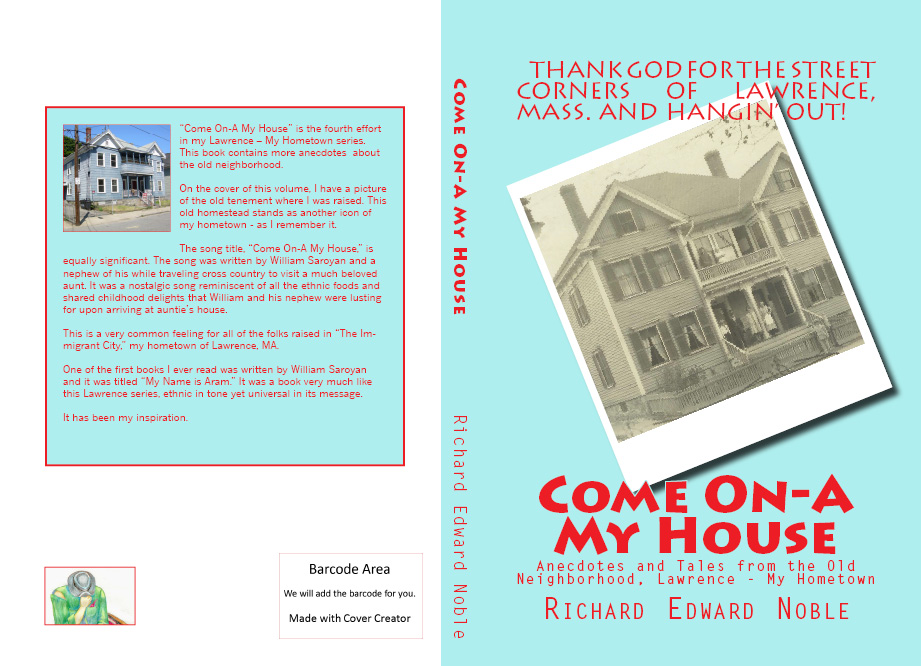
If you enjoyed reading this review you may find my two books pictured above interesting reading also. If so, click on appropriate book cover to the right on this page for more information. Thanks.


The Grand Design
By Stephen Hawking
and Leonard Mlodinow

Book Review

By Richard E. Noble


Stephen has got himself in trouble once again. Mr. Hawking has decided to join in the ancient argument about the existence or necessity of the gods.

Stephen didn’t actually say that there was no God. He merely stated in the manner of Laplace, another infamous mathematician, that he also “had no need for such a hypothesis.”

Stephen is of the opinion that the Universe is the result of a “Big Bang” and that this Big Bang was able to create itself ... from nothing.

Although Christians and many other organized religions also believe that the Universe was created from nothing they disagree with Stephen in their definition of the “nothing” that is somehow responsible for the Universe.

Christians and their counterparts believe that the nothing behind the Universe is God – a supernatural being portrayed in the image and likeness of Man. This God is also nothing because he is yet to be defined credibly. In fact, all attempts at a definition have led to paradox or irrational contradiction. So God remains an unconfirmed suspicion that is only visible to the faithful.

Stephen’s “nothing” is explainable scientific phenomenon which satisfies all his equations without a fallback position of God a la Isaac Newton. The notion of God, in effect, posits the impossible as an explanation for the highly improbable.

Stephen does not add God to his equations because he sees no point in solving a mystery with an even greater mystery nor does he find it necessary to do so. If we suggest that God created the Universe then one must ask who or what created God, states Stephen, philosophically.

This has sent the religious community into spasms of stuttering, stammering and hallucination over fundamentals. Stephen is able to do this because of his reputation as “the most intelligent man alive.”

Whoa, that is scary!

What surprises me is that no one seems all that upset over the fact that Stephen has also denied the concept of free will. Stephen said, rather flatly, that he believed not in free will but in “scientific determinism.”

The denial of free will is equally important to the religious community of theologians because without it how can non-believers and other undesirables be sent off to hell. And furthermore, without the notion of free will how can God be relieved of personal responsibility and become the source of all that is good, free from any evil related to his creation of man.

Stephen tries to back off on his denial of free will by making a qualifying statement. Stephen suggests that because of an infinity of choices man is sorta possessive of a free will … kind of. But to show where this copout leads, we find Stephen later in the book claiming that if a robot could be designed with the ability to make an incalculable number of choices it too could be considered, by Stephens’s definition, to be possessive of free will … kinda sorta.

I should think that the religious apologists would be jumping all over that one also.

And now we come to the Grand Design. The Grand Design has been the goal of the scientific community since Einstein and Heisenberg and the problems created by discoveries in quantum theories.

Scientists have been searching for one theory or one equation that would unite all the four known forces in the universe: gravity, electromagnetism, strong nuclear forces and the weak nuclear forces. So far they haven’t been able to come up with one. But Stephen says he has it. He calls it M-theory.

M-theory is not “a” theory but a scientific series of overlapping theories (models) which take into consideration via a multitude of Richard Feynman “fudge factors” every possible theory conceivable.

To me M-theory is somewhat akin to stating, “I have the answer to existence and why we all exist.”

“And what is that answer?”

“The answer to existence and why we all exist is that there is no answer.”

M-theory is based on Stephen’s definition of reality. Stephen denies that there is such a thing as objective reality or absolute reality. Reality is in the eye of the beholder and if the beholder’s reality can be backed up by scientific experimentation to justify what he thinks he is seeing, one observer’s view of reality is as good as another’s.

We fall into the same trap with this definition of reality as we did with Stephen's definition of free will. Stephen even goes so far as to say that the Ptolemaic view of the solar system is as viable as the sun concentric view. The only difference being the ease of the equations or math involved.

As with his scientific determinism, I find his scientific reality also lacking.
Scientific reality is based on observation backed and substantiated by scientific experiment. Stephen gives an explanation of realism that is about the worst description that I have ever read. It is so bad that I question his motivations in this regard.

But moving right along, Stephen rejects any a priori knowledge or conclusions with regards to reality. To my understanding an object has a reality in and of itself independent of any observers or perception. In other words, if there were no one and nothing to observe any real thing in the universe that thing would remain what it really is. A tree would be a tree even if there was no one or nothing to observe it. The sun would still be the sun and the stars would still be whatever they are. Observers are not necessary to this understanding of reality.

But Stephen is a scientist and not a theorist or a philosopher [Stephen says that philosophy is dead] and he accepts only a reality spawned via observation and corroborating scientific experiment. Models concocted through a plethora of observers and compared and evaluated via scientific experiment and mathematical equations present the only reality possible. It doesn’t really matter if the concluded realities are true or false, since no picture of reality can be determined to be absolutely true. They only have to be computer, model soluble.

So once again Stephen comes to this strange conclusion that a fish in a fish bowl’s confirmed observations are as viable as a human’s scientifically confirmed observation of any particular object. This leaves us with no absolute reality and reduces reality to a matter of opinion … sorta.

From Stephen’s point of view, man’s view and understanding of the things around him become constrained and restricted to the laboratory and mathematical equations that can be diagrammed on his computer.

Stephen’s view of reality may be distorted in this way because of his physical condition. He sees a reality confined and restricted just as he is confined and restricted.

I see an objective absolute reality in a thing’s existence in and of itself with no perspective or point of view necessary. Of course, this absolute reality is indeterminable – but nevertheless it does exist. It is reality and we all know and understand it.

It is the goal of science to discover this absolute reality with its inadequate powers of observation and scientific experimentation.

The average of all the approximate realities of all the various scientific observers is an estimate of reality and not reality, per se.

Reality is not the sum total of all the various and inadequate points of view of the myriad of observers combined and mathematically formulated. It may be the best that man can do, scientifically, at present but these scientific estimations do not constitute a true reality – as of yet. I think the M-theory with all its machinations will come up short in the long run.

A tree is a tree, in and of itself, no matter how it may appear to you or anyone or anything else. A tree is not necessarily what any particular group of observers, no matter how large or scientifically inclined, estimate it to be.

Wednesday, March 07, 2012


If you like this type "pithy wit" you might try one of my selections above. Thanks. Click on the cover of the book on the right of this page for more info.


Dick Cheney and me

By Richard E. Noble


Dick Cheney appeared at a press conference a while back and he made a statement that stuck in my mind. One of the reporters made reference to his accumulated wealth and an implied lack of gratitude on his part. His response was that whatever he had, he had gotten on his own and certainly with no help from the government. He was a self-made man was the implication that I understood.

Many people in the audience applauded his statement. Of course, in Mr. Cheney’s case, I felt it was rather an obnoxious statement. Here was a man who worked for the government most of his career and when he wasn't, he was working for corporations who were tied to the government from their navel to their butt hole. If there was anybody who made their fortune off this government and not despite this government, it was him.

I felt that if Mr. Cheney wanted to meet a real self-made man he should meet me.

I realize that I may not be all that great of a self-made man in terms of total wealth – or any wealth for that matter – but certainly everything that I accumulated was without the help of the government. I might even go so far as saying that it was despite the government in many cases – and even the police department and the IRS in additional cases.

I started working when I was eight or nine years old and nobody gave me anything.

I collected returnable bottles in my old Lawrence neighborhood. I shoveled snow every winter and I set up duckpins at a local bowling alley – all before I was ten years old. That was pretty independent wasn't it?

But how independent is independent?

I mean, if I had no neighbors, I couldn't have collected pop bottles or shoveled out people's driveways in the winter when it snowed. If there was no English Social Club on Center Street with six or eight duckpin bowling alleys, I couldn't have made any money setting up pins. If there were no glassy-eyed, semi-intoxicated patrons who wanted to bowl, even the presence of the alleys wouldn't have done me much good.

When I was eleven I got a paper route. More of the above applies to that job – no neighbors who wanted to read, no newspaper company who wanted to print etc.

Then I went to work at the grocery store – more dependence on my Lawrence neighbors and shoppers and the First National up on Broadway.

On top of all that, before I could make any money at any of the above, I had to know how to count.

When I was just five years old my mother carted me down to the corner school. There were a bunch of "volunteers" there who us kids mocked and ridiculed. We called them penguins and other unflattering things.

They forced me to learn what I needed. And believe me they had to force it into me because from a very early age, I felt that I already knew more than I needed to know. Me and Henry Ford had a similar attitude when it came to book learning – who needed it! “History is a lot of bunk.” I’m with you Henry.

Now these volunteers weren't really trying to help me, as Christopher Hitchens has pointed out in many of his books. They were under the assumption that they were employed by God. They were really trying to save my soul … the poor, sad things.

And all the neighbors and the customers and patrons and the businesses and employers, they weren't trying to help me either. They needed somebody and I just happened to be standing there.

As independent and self-made as I think myself to be, I have never had any job or made a penny that was without the participation of others in my society – not one penny.

And neither has Dick Cheney. Neither of us were a Daniel Boone or Davy Crockett. We didn't survive in a wilderness nor did we make our way in a void.

I don't care what terms you use but we have all gotten what little we have because there were others around us who needed our efforts. No, this doesn't actually constitute love, but it does dispel independence to a degree.

Me and Dick Cheney are about as self-made as R2D2. If the inadequate system that surrounds us shuts down – we shut down. Try living with no electricity and no water. Most of us can't even get by without a TV or cell phone.

Sometimes it is not such a great feeling to realize that we need others in order to survive, but it is a fact of life. We don't have to like this fact, but to deny it is to live in a delusion.

But Dick Cheney and me are not the only humans who are living in a delusion of independence. The world and America have an abundance of them. They are stumbling all over one another but don’t seem to notice.


Monday, March 05, 2012


If you are interested in this subject, you may also be interested in my book "Mein Kampf - Analysis of Book One. Thanks.


The Rise and Fall of the Third Reich

By William L. Shirer

Book Review

By Richard E. Noble


With “The Rise and Fall of the Third Reich” Mr. Shirer achieved the dream of every writer. He wrote himself into immortality. This is one of those great books that will never die. As long as there are people, this book will be read.

I purposely postponed the reading of this work until I finished writing my book “Mein Kampf – Analysis of Book One” because I feared that my work would be unduly influenced by Mr. Shirer’s work. After reading “The Rise and Fall of the Third Reich” by W.L. Shirer I feel I made the correct decision.

I was pleased to find that many of the quotes selected by Mr. Shirer from Adolf Hitler’s autobiography “Mein Kampf” were also selected by me as being important and worthy of additional analysis.

Mr. Shirer’s book is exactly what the title states it to be. It is a detailed and well documented study of the rise and then the fall of the Third Reich.

This book is over 1100 pages long. To write a thorough review would be impossible. So let me simply highlight a few of the things that I learned or found interesting.
One thing that has always been a curiosity to me was why Germany (Adolf Hitler) declared war on the United States after the bombing of Peal Harbor on December 7, 1941. If he had kept his mouth shut he would have had the U.S. occupied in the Pacific while he could have concentrated on his war in Europe. From my reading of the times, it would have been difficult for Roosevelt to win the American people over to an attack on Hitler’s Germany in Europe when we had Japan who just attacked us in the Pacific.

I was told that this was mandatory because Germany and Japan had an alliance.
This was true; Germany and Japan did have an alliance. But this agreement was only called into play if either Germany or Japan were attacked by another nation. The alliance did not come into effect if Germany or Japan were the aggressor and attacked another nation.

This is why Japan did not come to Germany’s aid in its struggle with Russia. Germany requested Japan’s support in this cause several times but to no avail. Germany had attacked Russia. Russia did not attack Germany. Therefore Japan had no mandate to come to Germany’s aid. And Japan never did assist Germany in this effort.

Japan then attacked the United States. Germany had no treaty obligation to declare war against the U.S. but nevertheless it did. Why?

If Germany had not declared war against the U.S. it would then have been up to Roosevelt to declare war against Germany after we had just been attacked by Japan.

I think with all the pro-German sentiment in the U.S. at that time, such a declaration would have been difficult for President Roosevelt to get past the legislature. In which case the U.S. would have been distracted from its efforts in Europe and forced to concentrate in the Pacific on Japan.

Once again it seems that Hitler had gravely underestimated the capacity and spirit of his enemies. It seems that Adolf felt the U.S. to be a paper lion and not ready or capable to form any great war effort. He made the same mistake with the British and then again with the Russians. I suppose it could be said that he overestimated Germany’s abilities rather than underestimated his enemies but either way, he was gravely mistaken in his projections.

Mr. Shirer’s book also corroborates my notion that one of Adolf’s greatest attributes was his ability to dull the compassionate instincts of an entire nation of people.

Unfortunately we have a similar circumstance happening at this time in our own country.

Hitler used patriotism, national pride, the German flag, military prowess and strong appeals to individualism and selfishness to immunize the German people. One can only hope that these tactics which are being pushed relentlessly here and now in our own country by right wing extremists will not be as effective here in the U.S. as they were in Nazi Germany.

I also feel supported by Mr. Shirer in my bias that the Nuremberg Trials were not the great success that they have been portrayed to be, historically. Even Alfried Krupp was let off the hook. As I now know, from other reading, many American businesses who aided, supported, and profited from dealing with Nazi Germany during the war were able to skirt prosecution and investigation via the attention and publicity provided by this event.

Mr. Shirer also puts to rest for me the notion or excuse that “people” were not aware of the slaughterhouses and extermination camps. Somehow Hitler was able to keep it all a secret from everybody, we are so often told.

Well it seems to have been far from any secret. People who lived around the extermination camps were constantly complaining to the local authorities about the “burning flesh smell” emanating from the camps. The public bids from construction companies, with their detailed drawings and explicit instructions and suggestions on clever, new machinery and methods on how to kill the most people and remove any “waste material” and dead bodies at the cheapest cost are ridiculously blatant.

These detailed bids should also be put on display in all nations around the world and specifically to any “free market” capitalists who are presently advocating the moral integrity and the notion of “self-policing” by banks, insurance companies, the stock market and the so called free market system in general.

I also thought it interesting to note in this era of “body art” that tattooed skin was a first priority for those purchasing or collecting “human skin” furniture and lampshades for their homes and apartments.

I could go on and on, chapter by chapter, making comments and pointing out interesting references but better to suggest that if this subject interests you, your time will not be wasted here. This is one of those monumental works that should be and I am sure will be read for years and years by students, historians and all those interested in what we can only hope will be our last ever World War.

Saturday, February 04, 2012


Trading with the Enemy

By Charles Higham

Book Review

By Richard E. Noble


Do you want to read a book that will really rock your boat? Then pick up “Trading with the Enemy” The Nazi-American Money plot 1933-1949.

Since I have taken up as a research project for myself, the investigation of World War II, from the philosophical perspective of ‘The Just War’ notion or concept, I find myself being led down many a strange alley.

After reading much of the conventional literature on the rise of Adolf Hitler, the obvious question occurred to me; Where did Adolf get his money? Nobody gains political power, EVER, ANYWHERE, without money. Anybody who thinks that even our soft spoken, country gentleman Jimmy Carter jumped out of a peanut patch, or Harry Truman out of a Haberdashery store in Missouri, or Abe Lincoln out of a log cabin, or Sun Yat-Sen out of a rice paddy, or even Fidel Castro out of a sugarcane field, is very naive to say the least. Without money, nobody goes nowhere in politics - anywhere in the world - nor throughout the annals of History. It just doesn’t happen - ever.

So as an adjunct to discovering the moral righteousness or immoral iniquity of World War II, I have been led to investigating also, the financing of the Third Reich, and the personal backing for Adolf and his buddies. This is without any doubt a story yet to be written, of unbelievable proportions.

The first name that stands out in this investigation is Henry Morgenthau, who seems to be, very rapidly, turning into a real American hero. You will find his name written all over older American paper money. He has over a thousand volumes of his files stored at the F.D.R. library. This should be some interesting reading. (If you read, sometime in the near future, of the sudden disappearance of the Margenthau files, remember you read it here first.) He had a plan for the demobilization of Germany - forever. Germany was to be stripped of all industry and manufacturing and the entire nation reduced to farmland, raising grapes, sauerkraut or schnitzel.
Morgenthau was also in charge of compiling files on American business and individuals suspected of aiding and abetting the enemy in time of War - treason. The British have similar files and after the war there was a movement accusing the entire upper crust of England of treason. Winston Churchill in his “The Gathering Storm” out-right accuses the Prime Minister, Neville Chamberlain, of acting insensibly and certainly against the proper interests of his Country. I have no doubt that in this book, Winston challenged future historians to an investigation of the true motivations of the Prime Minister Nevelle Chamberlain. I have yet to see anything on the subject in print. And I am told that Neville had refused all offers and resisted all endeavors by biographers.

In “Trading with the Enemy” you will find the names of many well known manufacturers, Industrialist, and bankers suspected, if not known, to have been “trading with the enemy” not before and up until the bombing at Pearl Harbor, but through the entire war. Mister Higham’s accusations are point blank, no pulling punches in this book. I am still shocked and disappointingly amazed.

Saturday, January 28, 2012

B o o k s 4 T o m o r r o w: QUICK REVIEW: "Cat Point and Them Dang Oyster Peop...: “ CAT POINT AND THEM DANG OYSTER PEOPLE ” by Richard Edward Noble REVIEWED BY : David Fritz OVERVIEW In 1976 my wife and ...

Saturday, January 21, 2012


If you are interested in Mr. Watson's book "Mills, Migrants, and the American Dream," you may also find my book, "America on Strike" of equal interest. Thanks.


Bruce Watson

Mills, Migrants, and the American Dream

Bread and Roses - 1912

By Richard E. Noble


My discovery of the Bread and Roses Strike of 1912 in Lawrence, Massachusetts has provided me with an extremely interesting source of intellectual and personal insight.

Although I was born in Baltimore, Maryland my life from a few months old to age 27 was spent in Lawrence, Mass. My father and my mother were ex-mill workers - as were their fathers and mothers. My father was from the established English heritage and my mother descended from the later Eastern European migration. She was Polish.
I only worked briefly as did my older brother in a reconstituted worked-over enterprise that rented old mill space after the mills were abandoned by their textile owners. But even though I never worked in a textile mill, those mills played an ominous and hauntingly important part in my life.

The original mills were the reason for being for the city of Lawrence. First God built the mills and then he sent the people to work them. The mills came first and the people came second - and that is the history of the mills of Lawrence - and maybe mill towns all over America. And it is always interesting to me that when it was all over what was left was row upon row of empty red brick pyramids and mile after mile of drained sapped people and landscape. It was like a war zone where the weapon of choice was not explosives but a psychological sort of Neutron bomb.
Fighting for the jobs and positions at the mills basically determined the social status of the populous. From the 1840s to the 1950s the mills were the heart and soul and supplied the bread and the few roses that might have been scattered here and there throughout the city.

From approximately the time of my birth forward the mills were on a steady decline and by the end of World War II the mills had for the most part abandoned Lawrence. Unemployment through the late forties and onward through the fifties rose to over forty percent. That was a number that I had been seeking for quite some time. The 1929 Depression was only 30% unemployment. I knew the situation was serious because my dad was one of that 40%, but as is always the case - even with 40% unemployed, 60%still had a job. That 60% living at the time knew only too well how lucky they were, but their descendants have long since forgotten – or were never even made aware of the hardship of their neighbors. I found that 40% figure in this book by Mr. Watson.
Another question that had perplexed me is why I had never heard of this strike; why I had never seen any monuments in the city parks; why my parents and relatives never spoke of it; why the Nuns in grade school never mentioned such an event even in passing; why the Brothers didn’t teach it in high school; and the bigger question why the history books ignored the American labor movement almost entirely.

I first got interested in this subject matter by discovering, quite by accident, the Bread and Roses Strike. Researching this strike then led me to the labor movement in the U.S. and then in the world.

For me making this discovery was like finding the missing link or the lost piece of the puzzle. I truly feel now that understanding labor history or the history of the labor movement is the Rosetta Stone for interpreting our modern civilization. This is where our modern history begins - and this period in man’s evolution has not come to an end yet. It is the latest episode in a long continuous battle for freedom, dignity and equality.

Mr. Watson explains in his Epilogue that the history of the Lawrence Bread and Roses Strike was suppressed in the area because it had been a brand of shame for the city as a whole throughout the entire U.S. and throughout the world. Lawrence became a poster child for how not to handle a mill strike and how not to treat new immigrants, working women and children in America. The City (establishment) of Lawrence had been disgraced and shamed and they then proceeded to propagandize a “cover” story or a rationalization to hide and cover over what they had done and what had actually happened. And it worked because all that remained for the rest of the century was their version of the event. It is only until recently that the whole truth of the matter has been seeping out.

It seems to me that this is basically the same story with regards to the American Labor Movement. And the truth about it is also beginning to seep out.
Just as the Germans have been the last to admit the horror of the holocaust and the Japanese the last to accept the Rape of Nanking and their other World War II atrocities, America will be the last to admit its persecution of the working class and the working poor. America hates poverty - and it hates to accept or admit the fact of it even more.

America is filled with poverty, slums and industrial blight and it seems that it always has been - but yet most Americans will deny its very existence - and so it goes on and on and on.

Reading this book was more than a history lesson for me. Since I was raised in the area, every street name brought back an old memory; all the family names brought back friends and neighbors; and the stories brought back reason and insight into many personal mysteries.

I really enjoyed this book and I’m happy Mr. Watson wrote it. I will add it to my collection of Lawrence memorabilia and labor union history.

I am left with the desire to read more about Lawrence and I know from other reading that there is a lot more to read. Every open door leads to another door yet to be opened.

Very surprising to me is the discovery that at Cornell University there is actually a school of Industrial and Labor Relations that offers a four year degree in labor studies. It was started in 1945 and is the only college in the United States offering such a degree. I intend to do a good deal of reading and learning at their web site. It should be fun.

Bread and Roses by Bruce Watson is a great read for anyone interested in history in general, and the Labor Movement in particular. This book should be required reading in every high school in the Greater Lawrence area - but I have no doubt that it is not and will not be in the future.

Monday, January 16, 2012


If you like Mr. Grieder's book, "Who will Tell the People" you might also enjoy "America on Strike" or "Mein Kampf - An Analysis of Book One" both books are written by Richard Edward Noble. Thanks.


Who Will Tell the People?

Book Review

By Richard E. Noble

I have been educating myself for over forty years now. I have chosen many great professors to help me along my path to understanding, but I won’t get into that at this moment, other than to tell you about my most recent selection as professor of Civics.

In high school I had a course called Civics. I never figured out exactly what the word “Civics” meant, but I interpret the word as encompassing an explanation of the society and world currently happening around me – politically, socially, economically.

In my high school Civics class we read the daily newspapers, random magazines, and kept up on the local government issues, among other things.

In trying to understanding the modern day world –governments, societies, and general direction of the civilization – I found myself very confused. I wanted to find a professor who could get me up to speed on what is really going on in the world around me. As you know one must choose selectively because there are “so many books and so little time.” Consequently I have chosen William Greider as my “Civics” professor.

I have finished my third book by William Greider this morning, “Who Will Tell the People.” I thought that to be a wonderful title for a book. I have been asking myself that same questions on many different subjects for many years. If you have also been wondering “Who Will Tell the People,” I think I can tell you quite sincerely that one of the people who will tell the people is certainly William Greider.

It is so rewarding when you find an honest, straightforward voice in this world of obfuscation and – for lack of a better word – pure bullshit.

On Mr. Greider’s web site he calls himself an old journalistic type – but Mr. Greider is much more than a Journalist. He is an educator; he is a teacher, an instructor; he is a professor. He has his Doctorate in personal experience in the affairs of the world – that becomes obvious as you follow along behind him.
In Who Will Tell the People we learn, among many other things, how our Democracy works ... or doesn’t work.

Mr. Greider tells us how the Democracy we think we have, lines up to the Democracy we really have.

He tells us about how the laws are made and then un-made. He tells us about the lobbyists, and the lawyers and the Democrats and the Republicans and the Repubocrats – and who owns each of them.

He tells us about the money, the big businesses, the banks, the international conglomerates.

He tells us about the environment; about the military and the pentagon; about who’s in, and who’s out, and why.

At various points in reading Mr. Greider I say to myself – This guy is giving me more than I really want to know. I mean the more I know, the worse it gets. But then he throws in a suggestion, an idea, a possible solution and once again I’m thinking positively.

I am basically a skeptic and I think of the “Power of Positive Thinking” as a prescription for dilution. But you have got to have some kind of hope, even if it is farfetched, distant and on the borders of impossibility. There must be something!
Mr. Greider brings us to the brink, then pushes us off.

Then half-way down, falling into the abyss of eternal despair, we find there is a bungee cord wrapped around our waist. It isn’t much, and the discovery is a little late and maybe not totally reassuring, but it helps.

This book was published in 1992, when we were beginning to talk of “peace dividends” and cutting back on the Military Industrial Complex. Listen to what Mr. Greider was saying way back then:

“The Defense Department was planning a modest five year reduction in the Cold War mobilization ... If the U.S. defense budget were cut in half, it would still be four or five times larger than that of the next strongest nation ... The next round of demobilization would be for real: bringing home troops that had been stationed abroad since the 1950s, closing scores of domestic military bases, shutting more factories ... A few liberals introduced “conversion” bills that did little more than encourage communities and industries to plan for their post-Cold War future. Conservative thinkers concentrated meanwhile, on trying to devise substitute “threats” – Third World terrorism or nuclear proliferation – that might justify continuing the nation’s permanent war footing.”

Chapter 15 of this book is entitled “Citizen GE.” This chapter alone is worth the entire price of the book.

My tendency is to tell you myself what Mr. Greider has to say, but I couldn’t tell the tale as well or with any greater poignancy. I can only tell you to get the book and read it for yourself.

It is not that GE is any worse or better than any of the others; it is more shocking to understand that they are just one of a bunch of like-acting and similar thinking Mega-mights.

If I wanted to continue quoting from this book, this review would be one hundred pages long.

My advice is to buy Mr. Greider’s books and study them. That’s what I’m doing. I’ve only read three thus far, but I know that I am already a world ahead of where I was less than a year ago. Mr. Greider is more than “a read.” He is an education. I feel so lucky to have found such a treasure.