Sunday, November 27, 2011


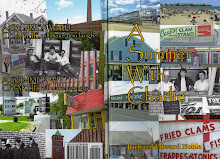
For more information about "Hobo-ing America" click on the cover of the book to the right on this page. Thanks


Hobo-ing America

Book Review

By Richard E. Noble


This was the most exciting adventure in our lives and despite all the conversation, very few people actually do what Carol and I did. We sold everything we owned, including Carol’s little MG Midget; bought a van and hit the road, Jack. We left our secure lives in 1976 and the adventure never stopped. I was managing restaurants and Carol was a reparatory therapist working the emergency room at a Miami hospital.

When our initial adventure capital ran out, we were reading the Grapes of Wrath by John Steinbeck. We were inspired. Why couldn’t we get crazy migrant/hobo type jobs and continue traveling across America? We did. And that is where this book begins – in a farm labor bureau employment office in California. We were signing up to go “top onions” with all the poor contract laborers and illegal immigrants. The interviewer thought we were nuts.

I subtitled this book “a workingman’s adventure.” That is not quite fair to Carol who also lived a “workingman’s” life. She didn’t sit back at the van baking cupcakes (though, she does bake good cupcakes and bread too). She climbed 20 ft. ladders to pluck oranges from the top of thorny oranges trees; she tonged oysters from the bottom of Apalachicola Bay; she topped onions crawling around on her hands and knees in the desert-like sun of southern California. She did a “man’s” work, as they say.

We are both now well into our 60’s and as I review this book and our adventure, I must say I found a girl who was one in a million. Carol can gripe with God over what she was given but I certainly have no justified complaints on the girl he sent to me.
We had so much fun on this adventure that I felt compelled to write a book about it.
Our adventure began in 1976 and ended in an ice cream parlor in Carrabelle Florida in the year 2000. That’s where the book ends but our adventure is still in progress.

Deciding to pack up and leave Fort Lauderdale and our steady, dependable jobs and lives to have a little adventure before we were too old to enjoy it, was truly a monumental decision. It changed our lives and it changed us … for the better.

When I compare this to other travel books and I have read them all – On the Road by Jack Kerouac or Charles Karualt, Mark Twain’s many travel books, the Dove, Walking Across America, Blue Highways, Travels with Charlie by John Steinbeck, Notes from a Small Island by Bill Bryson, I think Hobo-ing America stands out as somewhat unique.

We worked our way around this country. We weren’t on a sabbatical or a scholarship. We weren’t getting a check from National Geographic. We worked and we worked hard doing jobs that better-off Americans wouldn’t do on a dare.

There are only two other books that I think compare with Hobo-ing America in this regard, Two Years before the Mast by William Henry Dana and Pages from a Worker’s Life by William Z. Foster. Those two guys also put in some sweat.

This is a fun book. It is written as Mark Twain advised, without the author forgetting his sense of humor. We had great fun and met bunches of loveable and very interesting people. It was the experience of a lifetime for both Carol and I.

We both hope you will buy a copy and enjoy reading it.

And good luck on your adventure.


You can find more of this type thinking and analysis in either "Noble Notes on Famous Folks" or "Mein Kamp - An Analysis of Book One." For more information on either of these books click on the book covers on the right on this page. Thanks.


The Problems of Philosophy

Bertrand Russell

Book Review


By Richard E. Noble

Bertrand has written on many different subjects and many of his books can often appeal to the general reader. This book is for those interested in philosophy and who enjoy esoteric arguments. It is for the person with and average philosophical interest and not necessarily the Ph.D. candidate. It is not a difficult book but some of the problems discussed seem rather unimportant from my perspective ... but?
The first problem is Appearance and Reality. This gets into the Bishop Berkeley school of thought which has never much appealed to me. I realize that appearances can be deceiving but to jump to the notion that reality and matter really do not even exist is a little much for me. To start talking about things only having existence in the mind of God when no one can establish that a God exists and if he did exist how he could possibly have a mind is out in right field to me.
The chapter begins by asking if there is any knowledge in the world which is so certain that no reasonable man could doubt it. The chapter ends telling us that Leibniz believes that matter is a community of souls and Berkeley tell us that matter is an idea in the mind of God and sober science tells us that matter is a vast collection of electric charges in violent motion.
The conclusion is that maybe matter doesn't exist after all, and is really only appearances or what seems to be … a mirage, a delusion, a conjuring of the human mind.
The second chapter discusses the Existence of Matter. We immediately get into Descartes discovering himself and expand into the notion that maybe only Descartes exist and all else is the product of his imagination.
Bertrand then tells us that if we wish to become philosophers we must be willing to tackle the absurd. Obviously! By the end of this chapter the author assures us that there is something in the universe besides our comprehension of ourselves and our dreams. There does seem to be "reality" or matter even if it is perceived differently or inadequately by each of us.
The next chapter discusses the Nature of Matter. As we try to figure out what matter is, we discover that we cannot separate ourselves and our methods of perception from the investigation. This problem has led some philosophers (i.e. Berkeley and Leibniz) to conclude that matter really does not exist and is more a case of mistaken identity. Bertrand disagrees and promises us his reasoning in the future chapter.
This chapter is entitled Idealism. Bertrand once again warns us about dismissing the apparently absurd. I wonder why? But from my perspective to say that something does not exist because I am not viewing it correctly or with total objectivity or accuracy is rather absurd. But we will persist.
Bertrand goes on to tell us that the Bishop Berkeley made valid arguments that confirm that our sense data cannot have an existence independent of us. (Yeah? But the object of our senses can exist in and of themselves whether we can sense them or not.) Berkeley then concludes that matter can then only exist in the mind of the observer or some Infinite observer.
Once again, in my opinion we are back to the absurd and a rather advanced egocentricity. Bertrand then explains that the Bishop has confused the thing apprehended with the act of apprehension.
No kidding! It seems that Mr. Berkley thinks that his seeing something gives that something its existence. I'm sorry – is this really worth all this discussion? Isn't this just foolishness?
Bertrand then states that Berkeley's notion that the objects apprehended must be mental has no validity whatsoever. I agree but then why are we wasting so much time on Mr. Berkley? I guess that it is because if we want to be philosophers we must not dismiss the absurd.
Sartre also spent a lot of time and space analyzing this confusion in his book Being and Nothingness. After a while he also boarders on the absurd. The trouble with discussing things that are absurd is that eventually you will also become absurd and very possibly irrelevant.
In the next chapter we get into knowledge and how we learn things. We learn of Knowledge by Acquaintance and Knowledge by Description. This seems rather basic – you know something because of your personal experience with that thing or you know of it because it has been described or explained to you.
In the next chapter we get into learning by induction or inductive learning. This is predictable expectation based on past uniformity. The sun will probably rise tomorrow because of our knowledge of what the sun has done in the past. No guarantee but a good indicator.
Next we discuss experience and a priori knowledge. Some things we know because of our experience and others we know because of general principles – nothing can both be and not be; whatever is, is; everything must either be or not be.
Bertrand then states that Immanuel Kant is generally regarded as the greatest of the modern day philosophers. I didn't know that.
How a priori knowledge is possible is the next discussion. This is somewhat difficult when we start analyzing two plus two but that something either is or it isn't seems clear enough. When we get into "numbers" I have a problem.
Numbers are not "things" they are contrived representations of quantities of things. To state that mathematics is a priori knowledge of some sort is confusing to me. Obviously this a priori and synthetic stuff is an area where I need to read more. Numbers are all contrived as far as I am concerned. And any relation between them is learned or gained by previous induction episodes of learning. That numbers or mathematics has some sort of a priori significance, I don't get.
When we get into universals and Plato we seem to be returning to Berkley and the realm of the absurd. Universals can be confusing but once again when we start believing that there actually exists a universal concept of a head or a chair or a wall or a dog or whatever we are going bonkers. What exists is my head, your head and his head not a head. This is another area that has been problematic to philosophers but not to anyone else.
Now we come to intuitive knowledge and things that are self-evident. This chapter I don't understand. Self-evident seems simple enough – something is there or it isn't there. Intuitive knowledge?
Now we come to truths and falsehoods. But for my dollar truth is what is. But I'm talking "matter" and fact. Bertrand wants to talk about statements. This statement is true and this statement is false. In which case truth depends on some correspondence between belief and fact. As we all know this can get very complicated and debatable. "The greater part of what would commonly pass as knowledge is more or less probable opinion," says Mr. Russell.
The next chapter deals with those that think that we can know more than we actually can know and with those who think, on the other hand, that nothing is knowable – Hegel in the first case and Hume in the latter.
Finally we come to the nature of philosophy and its value. Philosophy deals in questioning the unknown and once the unknown becomes known it is no longer called philosophy but science. So philosophy has a rather nebulous list of achievements. Bertrand closes this book with this final paragraph:
"Thus to sum up our discussion of the value of philosophy; philosophy is to be studied, not for the sake of any definite answers to its questions, since no definite answers can, as a rule, be known to be true, but rather for the sake of the questions themselves; because these questions enlarge our conception of what is possible, enrich our intellectual imagination and diminish the dogmatic assurance which closes the mind against speculation; but above all because, through the greatness of the universe which philosophy contemplates, the mind is also rendered great, and becomes capable of that union with the universe which constitutes its highest good."
Well that, of course, states the case better than anything that I could say but for my part I must offer something.
I have always been attracted to philosophy because the philosophers were asking the questions that seemed important to me and by reading and studying their answers I always felt that I was learning how to think and reason intelligently and logically. By being able to think intelligently and logically I felt that I was then better equipped to solve the problems of life – my life in particular.

Tuesday, November 22, 2011

The Big Squeeze


After reading the Big Squeeze by Steven Greenhouse, try "Hobo-ing America" for something a little lighter or "America on Strike" for something heavier. Thanks.

For more information on either of my books click on book covers to the right of this page. Thanks again.


The Big Squeeze

By Steven Greenhouse

Book Review


By Richard Edward Noble


In William Grieder’s book “One World Ready or Not,” Mr. Grieder takes us on a trip around the world. We visit the homes and workplaces of everyday workers of all types. We see up close and personal how they are being used and exploited by the new Globalism and the international business community. We get all points of view but when we see the same thing happening over and over all around the world, we can not help but to realize that these are not the exceptions but the abusive manner in which the world is being operated.

The Big Squeeze by Steven Greenhouse is a door to door stop and visit with workers all over America who are being used and abused in a similar fashion. In this work we see the domestic pattern.

I have seen the same type things and experienced the same disrespect as a workingman all my life. But I always considered it just a matter of my personal bad luck. I realize after reading this book, “The Big Squeeze” that it wasn’t just me. It wasn’t just a bad company here and there. It wasn’t just a selfish employer that I happened to stumble upon. It is the way our country and our world has been heading for most of my life.

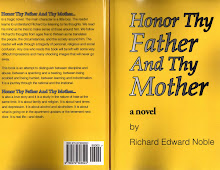
Because of my personal experiences as outlined in, “Hobo-ing America” and “Honor Thy Father and Thy Mother,” I was led to do my own research and produce other works, “America on Strike,” and “Mein Kampf – An Analysis of Book One.”

My own works exhibit different aspects of this same sad story – the abusive treatment and total disrespect for working people that permeates our society and the globe.

I understand clearly that for every dissatisfied worker in any situation there are considerably more who are at the moment contented.

Even during the Great Depression when our nation was experiencing 30 and 40 percent unemployment, 6 or 7 out of every ten workers still had a job. As a consequence FDR was forced to subsidize photographers to go out and take pictures of soup lines and the homeless and unemployed all over America. Men, women and children who were down and out and even starving all over this country were suddenly made visible via newsreels and local newspapers and magazines.

These pictures had to be exhibited to the general public to prove to the working Americans who were lucky enough to still be employed that America was experiencing a serious economic problem.

Today unemployment has not reached Great Depression standards but we may be witnessing the preliminary stages.

In the Big Squeeze we see how the fear of unemployment and falling back from the “middle class” into the ranks of the poor is being used by employers to take unfair advantage of working people. Many of the stories in this book are horrendous. They go beyond just taking advantage and enter into the category of cruel and unusual. These Corporations and Companies are immoral without question.
But people do not go to prison for being immoral in America. All one can do is expose their immoral behavior and polices and hope that a majority will agree and be spurred on to action at the polls or in the streets if necessary.

The names and the companies are documented. The author tells the reader the home addresses of many of the bad guys – not the individuals but the corporations and their policies. You will recognize their names.

The biggest value of this book to me was to read and understand that it wasn’t just me. What I saw throughout my working career was commonplace. My experiences were not individual and unique. I was one among millions of other Americans who were waging their individual wars and fighting for their personal rights and self respect.

I realize now after reading this book, that if we all knew one another and were able to share our individual experiences we could have formed the largest worker rights advocate group that ever existed. But we didn’t … and unfortunately we still don’t. But maybe the time has come.

I have certainly been luckier than many of the people in this book. But I have had equal or worse experiences than some. My Johnny Paycheck philosophy of “take this job and shove it” I now realize saved me many years of potential misery.

The bottom line: the tactics and practices outlined in this book must be stopped. They can only be stopped if more working people know that what is and has been happening to them is not an anomaly but a policy and a practice of many companies in the business sector here and around the world – and these policies and practices are spreading. We can not let all the safeguards working Americans have fought for, for decades be eradicated by the false excuses proffered on behalf of Globalism or some misguided concept of supposed economic reality.

Globalism does not have to be synonymous with immorality and cruelty. There is no excuse for immoral, cruel, abusive behavior no matter what the economic situation.
This has got to stop.

Sunday, November 20, 2011


Another masterpiece from the Bard of Chelmsford off Arlington.

This selection is from my first book of poetry "A Little Something."

For more information on this unique book of poetry click on book cover to the right on this page. Thanks.


I’M A STUBBORN OLD MULE

I’m a stubborn old mule,
As stubborn as they come.
A rail between the eyes is the only thing
That’ll make me run.

He doesn’t pat me gently on the brow,
Or say, “Come now friend, a little further now.”
No, No! It’s a beam between the eyes,
And a roaring scream and cry,
As he pushes and shoves with venom for an eye,
And brutality frothing in his unpatient sigh.

He has no memory of the burden I bore,
When I carried him, his gold, and a mountain of store.

He forgets how on the side of cliffs I trod,
As he cowered and crazed and cursed his God.

He has no memory of the thirst I craved,
Carrying his drink to an early grave.
He’s a brave man, who went down in books,
A crusty determined miner.
And I, who braved his dirty looks,
Hefted the load of gold for my forty-niner.

Ah yes, a brave man was he,
But he wouldn’t have a nickel if it weren’t for me.

But I’m a stubborn old mule,
And as dumb as can be.
But the old bastard wouldn’t have a nickel,
If it weren’t for the likes of me.

Carried him where his pretty horses wouldn’t go,
Through mountains, and deserts, and fields of snow.
But, in his fancies, he dreams of a saddle
And a golden mane,
His pretty little horses,
Dining on sacks of expensive grain.

But for his trusty, dusty steed, forever at his side,
It’s a drunken mumble, and tempered lash,
And another scar in my hide.

Many a day, when I’d had enough,
I sat in the middle of the road,
And laughed as he stammered and huffed and puffed.
Oh, how he wished to shoot me...
But who would carry the load?

Yes, many a time I wouldn’t go on.
But does he remember how I danced
On the edge of a cliff,
As he trembled and gasped, and for his life hung on.
A man of might, and right and power and gain,
And as he drunk his whiskey and barked to the stars,
I stood by quietly in the snow and the rain.


I’m as stubborn as a mule,
As stubborn as they come.
A rail between the eyes is the only thing
That’ll make me run.

I carry his load, sure footed I go,
But when I’ve had enough of his rum drenched batter,
I pull up, take a seat, and listen to his chatter.

The other day, in a fit of rage,
He pulled his rifle from my side.
“Move along, you stubborn old bastard,
Or I’ll shoot you right here,
And then tan your damn hide.”

I yawned, then lifted my head and brayed.
I curled my lips, then bared my broken teeth.
And when he shouldered his gun, I stared into the breech.
I felt the powder as it burnt my eye,
And a dull thud as a jolt from hell pierced my skull,
And I fell there onto my side.

But I’m a stubborn old mule,
As stubborn as they come.
I laid there with his pack and store,
And stared up at his eye.
And I’m proud to say, I hung there waitin’ to die,
Long enough to see the dumb bastard
Put down his rifle and cry.


Yes, I’m a stubborn old mule,
As stubborn as they come.
It takes a rail between the eyes
To get me up to run.
But when you have a load too tough to hold,
It’s a call for the likes of me.
And I bear it well, sure footed and determined,
Right to the rim of hell.
But what he can’t stand,
Is that I’m a bit of a man.
And, as the man, I have my pride,
And how I tried, and tried, and tried.
But, oh how glad I am that when I came to die
I was beast enough to make the bastard cry...
Yes, beast enough...
To make that bastard cry.

Friday, November 18, 2011


For more thoughts and ideas on how to cure the world and learn from historical mistakes consider these two books also: Mein Kampf - An Analysis of book one; America on Strike. Click on covers on right of this page for more information. Thank-you.


William Greider

One World Ready or Not

[Some thoughts for curing the Capitalist World]

by Richard E. Noble


I read a book by a Mr. William Greider, “One World Ready or Not”. On the back cover of his book it states that he is the National Editor of the Rolling Stone. I thought that was a magazine about Mick Jagger and other horribly disfigured people who have made a success of promoting the concept of noise around the world.

I consider this book an economics book - but it is not a compilation of difficult theories. It is a vivid and insightful description of what is going on around the world, with chapter after chapter of everyday life descriptions. It is about the New Global Capitalism - the privatization of the world.

Mr. Greider’s book is a primer on getting up to speed on what is presently happening in world economics. I consider it to be very intelligent and well thought; especially for a man who I presume spent the early part of his life following the Grateful Dead - the Rolling Stone Magazine, you will remember.

When I reflect on Mr. Greider’s book one of the many things that comes to my mind is a problem that he pointed out in the conclusion.

In a world of, more or less, dedicated Capitalism where supply and demand and profit-making are the sole motivation for investment and action, how does necessary but non-profitable “good” happen?

For example, you are a Capitalist Doctor in a Capitalist world. You are riding along the highway and you stumble upon an accident. Many people are lying along side the road bleeding and injured. You quickly discover that these people have no insurance and no money to pay for the necessary supplies, never mind your expertise, training and college loan. With Capitalism and supply and demand as your guide, how do you devise a profitable system or method for their care?

Charity is not a system or method of Capitalism, it is a band aid. Charity is a notion that drains off the goodwill of Capitalism. It stands out as a flaw in the Capitalistic dogma, not as a positive attribute. Charity only becomes necessary because Capitalism has failed. Charity doesn’t make a profit. It is not a business. We can’t depend on Charity as an economic tool.

The notion that people should all be pursuing their own personal good does not help our good Samaritan dogmatic Capitalistic Doctor.

As a Capitalist he must devise some sort of rationale whereby he can gain a profit from the suffering and tragedy he has encountered.

How does Capitalism feed the hungry who have no money to buy food, even if the Capitalist can produce sufficient quantities; how does Capitalism provide Aids medication to those with no money to pay even for its manufacture? How does Capitalism provide a profitable avenue for environmental safety when clearly polluting pays? How can profit-making provide living wages to workers when providing living wages means less profit and higher prices? The list where Capitalism has traditionally provided no answers goes on and on.

In the past, governmental socialism has been the safety valve of the Capitalist World. When the going gets tough the taxpayer takes over – that’s socialism, not Capitalism.

In the United States, back in the Wilson days, when the banks kept collapsing, the government and the taxpayer stepped in with the Federal Reserve System (Banker Socialism). When the Depression struck, it was Government Socialist spending that stepped in to save the day. Even if you say it was World War II that saved the economy, it was not the killing and the destruction that saved the world from the Depression; it was the government spending on the war effort that produced the jobs, that supplied the wages, that turned around the spending, that stimulated the investment, that paid the soldiers, that built the middle class, that saved the house that George (Washington - not Bush) built.

We didn’t need World War II to save us from the Depression; we needed unlimited Government spending on a project that satisfied the moral work ethos of the people of the world. Any project would have done the trick, a pyramid or two, an aqueduct, an interstate highway system, a man on the moon.

Why can’t the project to save the world and stimulate Capitalistic spending be something morally sound; as opposed to something architectural, or industrial or totally destructive, as War?

When Europe had no money to buy products from the Capitalist world, we gave them the money.

We said that the Marshall Plan was a loan but most of the Marshall Plan money was never paid back. So, in effect, we made TVs and refrigerators – financed Europe’s reconstruction – for people and governments who could not afford to buy these products or materials.

We gave them the money to buy them; we gave them the money to manufacture their own TVs and refrigerators; pretty soon their economies were flourishing and they were selling us TVs and refrigerators. We had to start producing other things here at home to employ our own people to fill new markets from a more demanding world. I even hear Republicans today bragging on this world wide socialistic welfare project called – the Marshall Plan.

Why could this same technique not be used in curing the world of hunger or disease?
If people in Slumbovia need food, we loan (lend/lease) them the money, then sell them the food (deferred loan payback option - lOUs). Once they start eating more regularly, we loan (lend/lease) them some more money and start selling them some tractors. Pretty soon they are growing their own food and manufacturing their own tractors and we are selling them fertilizers, tractor parts and engineering expertise, and they are standing in line to buy tickets to Disney World. And all the while we are paying Henry Ford the II, 3rd. or 4th to manufacture this stuff.

Henry then gives everybody a raise at the factory and takes on more employees – just like we did in World War II. The only difference is we don’t have all the dead bodies and all the bombed out building to rebuild. Instead we start housing developments in Slumbovia. Pretty soon everybody is doing so well, we simply cancel all their debt obligations (call it a tax rebate to stimulate the trade balance, encourage consumption and new investment). The Donald moves to Slumbovia to find a new apprentice and he takes Martha Stewart with him. How can we lose?

There is a lot of world out there to be made prosperous and a lot of money to be made supplying the initial investments, the knowledge and the know how. If it works for war, and the Military Industrial Complex, why can’t it work for peace and refrigerators?

If this concept can work for refrigerators, TVs and even hula-hoops and pacman, then why can’t it work for health care, the environment, science and the betterment of mankind in general?

Tuesday, November 15, 2011


If you enjoy reading earthy books about real people, I have written a number of them. Here's two that may interest you.

Click on book covers on right on this page for more information about contents, the author and how to purchase. Thanks.


My Name is Aram

By William Saroyan

Book Review

By Richard E. Noble


William Saroyan who is also the author of the famous song, made immortal by Rosemary Clooney, Come on to My House wrote these great tales. He and a nephew wrote the song in their enthusiasm while on a road trip to visit an Aunt somewhere out west. Rosey Clooney added her seductive slant to the song and we got the famous million seller.
I read this book for the first time over forty years ago. I loved it and never forgot many of the stories.

As I held the book in my hand to write this review, I began relating some of the tales in it to my wife. Then I sat down and read the book again to see how good my memory was. My memory was pretty good … but not as good as the book.

This book was one among many books of short stories that have served to inspire my own writing. Until re-reading this book, I did not realize how much of this book and this writer I had incorporated into myself.

These are all true to life tales of childhood (granting poetic license) and growing up on the west coast, in Fresno, California way back when. The stories are about mom, dad, grandpa, and uncle Khosrove and the author’s unique immigrant heritage.
I grew up decades later on the East Coast in an old industrial mill town – nothing like the rural settings in this book. But other than replacing a “borrowed” car with a stolen pony, the humor and the sentiments are all universal. Today as I review this book, the movie My Big, Fat Greek Wedding comes to mind. The immigrant nature, the humorous relatives, the contrasting values and the crazy antics and situations brought together by life in the new country are common to the book and the movie.

Two of the stories that I never forgot are The Summer of the Beautiful White Horse and Old Country Advice to the American Traveler. A Nice Old-Fashioned Romance isn’t bad either. The only thing bad about this book is maybe you haven’t read it yet.

The writing is cleaver, entertaining, humorous and spun through with simple wisdom. In this modern copy I have, I have noticed that the punctuation is rather radical. There are no quotation marks used. Rather strange but easily readable nonetheless. I didn’t notice that 50 years ago when I read this book the first time. But there are many things quite evident today that I didn’t notice 50 years ago.

Not many people write books like this these days. Writing has become too sophisticated. There are no monsters from outer space, no demons, no devils, no spirits or ghosts. There are no serial killers, perverts or criminal insanity. Nobody eats any children in this book. No one flies on a broomstick in this book. There are no spells or even “little people.” I suppose the younger crowd would find it boring.

I have always loved it ... and still do.

Sunday, November 13, 2011


I have two books that I would recommend to accompany or counter the thoughts and Ideas of Ayn Rand: "Mein Kampf - An Analysis of Book One" and "America on Strike" both books written by Richard Edward Noble.

Click on book covers on the right on this page for information and instructions for purchasing. Thanks.


The Virtue of Selfishness

Ayn Rand

Book Review

By Richard E. Noble


Ayn Rand, I interpret to be a political propagandist for the extreme right. She was interested in philosophy and included the ideas of some philosophers in her fiction – but she was not a philosopher in my view nor in the view of my 8 volume Encyclopedia of Philosophy.

I have read certain of Nietzsche’s works and summaries of his ideas. I find that there are obvious similarities in style, temperament, presentation and overall superiorist attitudes between him and Rand.

Nietzsche had his superman and Rand had her super-capitalist.

Both writers are belligerent and hateful of organized religion and the common man.

Rand refers to religious thinkers as “witch doctors.”

Nietzsche is, of course, infamous for his declaration that "God is dead."

Nietzsche eventually went mad and was institutionalized. I think he was mad long before he was actually declared mad and locked away.

Rand was never declared officially mad and was not institutionalized. She was clearly suffering from delusions of grandeur and was not able to distinguish between success and intelligence. There is often very little connection between the two.

I have read Adolf Hitler’s Mein Kampf and published my own analysis of book one. His belief and confidence in the superiority and righteousness of the individual and the capitalist, rings through Rand’s written works.

He has his Arians and Krupps; once again, she has her glorified wealthy capitalists.

His flamboyant braggadocio with regards to the superior few and their right to rule is also a theme running constantly through the ranting of Rand. And the same disrespect for the “common herd” and the principles of democracy are prevalent in Rand and Mein Kampf.

Her family’s wealth was wiped out by the Russian Revolution. It is quite obvious that this event affected her psychological development. She actively joined on the bandwagon of the disgruntled exiles (White Russians and others) and pursued an anti-Red-Russia philosophy. She found much support among Russia haters and the rabid ranks of the Cold Warriors.

Although I can sympathize with some of her positions, I must take her political writing and opinions with a grain of salt and a lot of dubiousness.

She wrote political and economic fantasies that appealed to the selfish and the egotistical. Her goal was clearly to make the better-off feel comfortable with their wealth and their prejudices.

She was another of the many champions of the comfortable and powerful who ran off gallantly to defend the rights and privileges of the rich and famous. There has never been a shortage in this group of comfortable “revolutionaries.”

Her biggest mistake was the same made by the communist in her mother Russia – she attacked God and religion. This was the most daring of her positions.

Thursday, November 10, 2011


My book "America on Strike" is very important in understanding business and management, the stock market and the State and Corporate Capitalistic system we live in. After reading "Devil Take the Hindmost" you might want to consider "America on Strike." Thanks. Click on book cover to the right on this page for more information.


Devil Take the Hindmost

By Edward Chancellor

Book Review


By Richard Edward Noble

This book makes it extremely clear that the stock market is a dangerous place. The author begins with the speculator and the ethics of speculation.

“Speculation is a divisive topic. Many politicians – several of them in Asia – warn that the global economy is being held hostage by speculators. In their opinion, the speculator is a parasitical figure, driven by greed and fear, who creates and thrives on financial crises … Western economists take a radically different line. They argue that speculation is fundamentally a benign force, essential to the proper functioning of the capitalist system.”

In the last paragraph of the book the author gives us his conclusion on this speculative debate.

“Speculation undermined the Bretton Woods system of fixed currencies and, more recently, it has destroyed the state managed capitalism of Japan and other Asian nations. As an anarchic force, speculation demands continuing government restrictions, but inevitably it will break and chains and run amok. The pendulum swings back and forth between economic liberty and constraint.”

That conclusion in my estimation gets a 10 on the Alan Greenspan scale of economic mumbo-jumbo. But it is standard fare from those versed in economics. After reading the book I actually understand what the author is trying to say in this self-contradictory statement. That’s a little scary, in itself.

But in truth I did not buy this book to get the author’s answers to anything. I bought it to get historical information on panics, bubbles and crises. I got a good deal of information. I’m satisfied.

I was actually looking for a book discussing U.S. panics beginning with colonial times and coming forward to the present. More than half this book discusses pre-colonial panics and countries other than the U.S. So I’m still in the market for something more specific and more detailed.

But what about investing in the stock market? What kinds of people have been involved in this enterprise? And how should an average person look at the stock market for his personal investments.

The answers for me, after reading this book are: Do not invest in the stock market. It is filled with crazies, manipulators and the clinically insane – not to mention outright gangsters and criminals. And an average person would be better off investing their life’s savings in their retarded son-in-law than giving their money to a stock broker.

The author takes his readers on a tour of the many famous speculative bubbles and manias of the past going back to the “Tulipomania” of 1630 and carrying us through the Japanese crisis of the 1980s. He even dabbles into present day derivatives and hedge funds. The book was published in 1999 so it predates the current fiasco. But this book makes it very clear that the historical information was there. Japan should have been an obvious example.

For Alan Greenspan to state before Congress that he couldn’t imagine that prominent bankers and brokers would act in such a “negligent” unprofessional manner is beyond naiveté. Alan was obviously joking. It is difficult to determine when Alan Greenspan is joking.

But Alan was not the criminal. He did nothing wrong. He did nothing right either. As J.K. Galbraith stated in many of his books, the Federal Reserve and its bosses did exactly what they should have done … nothing. If they let the bubble go until it collapsed they are blamed for the collapse. If they put on the brakes and tighten up the money in the middle of a “boom” they will be blamed from killing the growth and crippling the prosperity. For us here at home the big questions are where were the inspectors, the regulatory agencies and the Congress and the Senate with the proper rules? And even bigger question …Where was the moral conscience of all those thousands who participated in all the scamming and falsifying? We had more than an accident here. We had a moral and ethical calamity.

What this book makes clear is that what has happened has happened many times before –not on such a great a scale as today. This current speculative extravaganza was a major moral earthquake.

Galbraith said in his book Money, Whence it Came, Where it Went that the time between speculative insanities or panics is directly proportional to the time it takes for everyone to forget the last speculative bubble or panic.

Galbraith also had much the same confusing type answer as offered by Mr. Chancellor.
For the present, rules and regulations need to be put in place but as time goes on these rules or any rules will be undermined. There will then be another collapse and a new need for newer rules. Galbraith suggested a five year term for new rules and new regulators. Then all bureaus should be abolished and new ones established. In other words, the new rules must be kept ahead of the old rule breakers and manipulators. Keep changing the game.

This answer seems to indicate that the problem is endemic to the system. So we need a new system. But is that possible? And what will it be? And will it have other flaws equal to or worse than the present system?

Maybe the same system could be continued and we should concentrate on developing some better human beings.

Wednesday, November 02, 2011


When you finish reading Mr. Rifkin's great book, please take a look at my book "America On Strike." Between the two you should have a good picture of what is going on in America today. Just click on "America on Strike" book cover at the right of this page.


The End of Work

By Jeremy Rifkin

Book Review


By Richard E. Noble

The End of Work by Jeremy Rifkin is an extraordinary work. It opens to the reader a whole new world of thought and ideas.

I read the first 100 pages with my jaw hung open in horror. Mr. Rifkin’s revelations were not above and beyond my own thinking on the subject but I had never before come to realize the full scope of the matter. I had joked in my book Hobo-ing America that all my working career, as fast as I learned a new skill I was replaced by a new method or machine. I joked that I couldn’t be retrained fast enough to keep up with those who were out to replace me.

I am also familiar with the workers’ plight here in America. I have a book of my own dealing with the history of the American Labor Movement America on Strike. So I am not naive when it comes to discussions of this sort. But all my research and background did not prepare me for what Mr. Rifkin had to reveal. I was shocked.
According to Mr. Rifkin my joke with regards to being constantly replaced and retrained was not a joke but a fact of life in the evolving new global world economy.

The point of Mr. Rifkin’s work is that the day when workers will become obsolete is appearing on the capitalist horizon – and it is not creeping along but racing towards each of us no matter what our job status.

Mr. Rifkin is not presenting a theory that may or may not happen … someday. He lists in descriptive detail all the jobs that are disappearing from the market place, never to return.

The scope of this problem is bigger than I had ever dreamed.
I have heard people suggest over and over that jobs were leaving the shores of America and would never return. But like Donald Trump, I said in my innocence, Why can’t they return. Let’s just change a few laws and incentives and make America once again an appealing spot for the steel mills, shoe and sneaker factories, textiles etc.

It never occurred to me nor was it ever explained that these jobs would not and could not return to America because they no longer existed.
Mr. Rifkin details the millions and millions of jobs that are totally disappearing due to technology, automation, advanced software, and labor saving management programs.

He points out that this is happening in all business sectors. The service sector is now on the road to job loses as great as those that have been plaguing manufacturing, construction and all other work avenues, public and private.
Jobs in management, middle management and in other once secure areas are being eliminated. No longer are jobs being picked up by the service sector or even the public sector. Everybody is cutting everywhere. They have been and will continue to do so, blindly and at their own peril and future destruction. It all seems so insane.
He carries these practical observations off into the theoretical and speculates on an inevitable semi-jobless world and how such a world could be run.

The last few chapters of this book outline his theoretical solutions to a jobless world and/or society.

I find Mr. Rifkin’s analysis of the problem and his predictions of dread for the workers of the world credible and inevitable if no action is taken to offset this realistic scenario.

His solutions to this problem I find self-contradictory and impossible. But that solutions must be offered and new roads taken in undeniable.

Every workingman in America should read this book and become aware of the true battle that is looming up before us as I write this very review.

This book was published in 1995 but it is far from outdated. It is a work that is decades ahead. Now is the time to read it and get the picture of the future in perspective. For me a large piece of a very big and confusing puzzle has just been put in place.

Buy this book and read it. You will not regret it.

Wednesday, October 19, 2011


When you finish reading "Who Will Tell the People" take a look at "America on Strike" by R. E. Noble. Thanks.


Who Will Tell the People?

By William Greider

Book Review


By Richard E. Noble

I have been educating myself for over forty years now. I have chosen many great professors to help me along my path to understanding, but I won’t get into that at this moment, other than to tell you about my most recent selection as professor of Civics.

In high school I had a course called Civics. I never figured out exactly what the word “Civics” meant, but I interpret the word as encompassing an explanation of the society and world currently happening around me – politically, socially, economically.

In my high school Civics class we read the daily newspapers, random magazines, and kept up on the local government issues, among other things.
In trying to understanding the modern day world –governments, societies, and general direction of the civilization – I found myself very confused. I wanted to find a professor who could get me up to speed on what is really going on in the world around me. As you know one must choose selectively because there are “so many books and so little time.” Consequently I have chosen William Greider as my “Civics” professor.

I have finished my third book by William Greider this morning, “Who Will Tell the People.” I thought that to be a wonderful title for a book. I have been asking myself that same questions on many different subjects for many years. If you have also been wondering “Who Will Tell the People,” I think I can tell you quite sincerely that one of the people who will tell the people is certainly William Greider.

It is so rewarding when you find an honest, straightforward voice in this world of obfuscation and – for lack of a better word – pure bullshit.
On Mr. Greider’s web site he calls himself an old journalistic type – but Mr. Greider is much more than a Journalist. He is an educator; he is a teacher, an instructor; he is a professor. He has his Doctorate in personal experience in the affairs of the world – that becomes obvious as you follow along behind him.

In Who Will Tell the People we learn, among many other things, how our Democracy works ... or doesn’t work.

Mr. Greider tells us how the Democracy we think we have, lines up to the Democracy we really have.

He tells us about how the laws are made and then un-made. He tells us about the lobbyists, and the lawyers and the Democrats and the Republicans and the Repubocrats – and who owns each of them.

He tells us about the money, the big businesses, the banks, the international conglomerates.

He tells us about the environment; about the military and the pentagon; about who’s in, and who’s out, and why.

At various points in reading Mr. Greider I say to myself – This guy is giving me more than I really want to know. I mean the more I know, the worse it gets. But then he throws in a suggestion, an idea, a possible solution and once again I’m thinking positively.

I am basically a skeptic and I think of the “Power of Positive Thinking” as a prescription for dilution. But you have got to have some kind of hope, even if it is farfetched, distant and on the borders of impossibility. There must be something!
Mr. Greider brings us to the brink, then pushes us off.

Then half-way down, falling into the abyss of eternal despair, we find there is a bungee cord wrapped around our waist. It isn’t much, and the discovery is a little late and maybe not totally reassuring, but it helps.

This book was published in 1992, when we were beginning to talk of “peace dividends” and cutting back on the Military Industrial Complex. Listen to what Mr. Greider was saying way back then:

“The Defense Department was planning a modest five year reduction in the Cold War mobilization ... If the U.S. defense budget were cut in half, it would still be four or five times larger than that of the next strongest nation ... The next round of demobilization would be for real: bringing home troops that had been stationed abroad since the 1950s, closing scores of domestic military bases, shutting more factories ... A few liberals introduced “conversion” bills that did little more than encourage communities and industries to plan for their post-Cold War future. Conservative thinkers concentrated meanwhile, on trying to devise substitute “threats” – Third World terrorism or nuclear proliferation – that might justify continuing the nation’s permanent war footing.”

Chapter 15 of this book is entitled “Citizen GE.” This chapter alone is worth the entire price of the book.

My tendency is to tell you myself what Mr. Greider has to say, but I couldn’t tell the tale as well or with any greater poignancy. I can only tell you to get the book and read it for yourself.

It is not that GE is any worse or better than any of the others; it is more shocking to understand that they are just one of a bunch of like-acting and similar thinking Mega-mights.

If I wanted to continue quoting from this book, this review would be one hundred pages long.

My advice is to buy Mr. Greider’s books and study them. That’s what I’m doing. I’ve only read three thus far, but I know that I am already a world ahead of where I was less than a year ago. Mr. Greider is more than “a read.” He is an education. I feel so lucky to have found such a treasure.
Monday, October 17, 2011


Secrets – A memoir of Vietnam and the Pentagon Papers

After you read "Secrets" by Daniel Ellsberg, try "Mein Kampf - An Analysis of Book One" by Richard E. Noble. It is also a book that tackles the question ... "Why War?"


Daniel Ellsberg

Book Review


By Richard E. Noble

“But, it is just history,” Daniel Ellsberg was told. Over and over Senators and Congressmen told him, “It is just history.” Four thousand one hundred pages of history. Who’s got time for it? Who would ever read it, never mind publish it in a newspaper?

Daniel Ellsberg was/is clearly an intellectual, or he never would have even considered the notion that anyone would be concerned about “history.” He was and still is concerned with all those foolish things that most of us do not have the time for. Things like principle, right and wrong, injustice, the difference between killing and murder, is napalm a weapon or a terrorist act?

It is difficult to believe but there was a time when the “world” was actually debating the morality of dropping a hand grenade from a biplane. What if the random grenade hit a civilian, was the concern.

Today even the good guys are launching “unmanned” rockets all over the world just like the Nazis did in World War II to the horror of the British and everyone else … for a moment or two. These days when they blow up some unintended people the launchers apologize. The innocent dead are referred to as collateral damage. Oops … Sorry.

Wash your salmonella drenched chicken before you eat it. Why can’t I eat rat poison if I want to? Isn’t this a free country? If she and her children choose to sleep in a sewer, that’s their business. So what if automobiles are responsible for the deaths of more Americans than all of our wars combined. I like my car. Pollution … smulution, who cares?

Daniel was wondering about a soldier’s responsibility to follow orders. If a soldier is ordered to shoot his mother, must he comply? Is there a personal responsibility in agreeing to pick up a weapon? Is shooting into a bush or a hut in an enemy village … reconnaissance? Or is it killing … murder maybe?
Is slitting a non-combatant’s throat because he has seen you in an area that you shouldn’t be in, an acceptable act of war?

Intellectual gibberish?

And Secrets is a history of our time … my time. And I wonder how many of my contemporaries have read it? I wonder how many younger people have read it – this is going to be their world shortly, you know.

This book was printed in 2002 – after 9/11 and before Iraq and Afghanistan. Again Daniel was asking us to read more history. Once again he thought that he could stop a war. Once again it didn’t happen. Some guys never learn. I think Daniel needs to read some more history.

He called the book Secrets. I think there is a reason he called his book Secrets and not The Pentagon Papers Revisited or Vietnam II and III. He did it because there is still the misconception that in this day of 24 hour 7 days a week news coverage “Secrets” can’t be kept from American citizens. This book stands as a testament to the notion that “they” can always fool the people and it can be done ALL of the time.

I read your history book, Daniel, and I got your message. I got it last time back in the 60’s also … even though I didn’t read the Pentagon Papers. It “trickled” down. I got the non-intellectual version – the street version. “This is all a bunch of crap,” is what I heard. “They’re all a bunch of liars and crooks,” is what I heard. “Hell no; I won’t go,” is what I heard.

But aside from learning anything “behavior changing” this rendering is a trip through a human conscience. It is a blow by blow description of how a very intelligent soldier and confirmed cold warrior is transformed into a war resister and a “peacenik.”

It is quite a story. It could be a movie … and it was. The Pentagon Papers is what it was called. I watched the movie too.

I’m reading a lot of history of my own times these days. This is a good one. Sure it is only history … but what else are you doing?

Friday, October 14, 2011

Bill O'Reilly


Find out where Bill is really coming from. Read my analysis of book one of Adolf Hitler's Mein Kampf. Click on cover of book to the right of this page to make purchase or get more information. Thanks.


Bill O'Reilly

“Culture Warrior”

Book Review


By Richard E. Noble


A friend of mine sent me “Culture Warrior” by Bill O’Reilly. He said his son gave the book to him after he had read about twenty pages. His son who is in his thirties or forties said; “Dad, maybe I’m too young for this guy; I don’t know what he is talking about. See if you can figure it out.”

My friend, the father, said that he read about fifty pages and he gave up. He said why don’t you give it a try. So I started reading.

I’ve reached page 98 but I have decided to quit. I feel rather lazy minded to just quit – after all I am the same person who has written nearly 800 pages, a page by page analysis of Adolf Hitler’s Mein Kampf. If I could finish that certainly I should be able to complete a little 200 page rant by a modern day right-winger with an ax to grind or a bat to swing. Adolf had a big ax to grind but Bill seems even angrier than Adolf – if that’s possible.

But I hate to spend as much time as I have reading Bill and not getting something out of the experience to write about. So here is my review of the first 98 pages of Bill O’Reilly’s million seller book “Culture Warrior.”

The cover of the book is red, white and blue on a black background. Bill is sitting in the foreground with an American flag waving behind him – he is wearing an American-flag-blue windbreaker. He has a very familiar Irish looking face. He has those “twinkling” Irish blue eyes and a warm friendly altar boy smile. He could easily have been walking a beat in my old neighborhood. He has the well-known Irish temper – as he admits himself throughout the book – or the first 98 pages.

Bill has discovered a conspiracy. Now I’m a true believer in conspiracies so I can’t knock him on that one. It seems that there are a group of people, living right here within the borders of the United States who are presently involved in the overthrow of “our” government. They are not doing this by means of a revolution or violent overthrow. They are too cleaver to come right out and fight like men. They are doing it by guile and persuasion and trying to sway voters and by real sneaky, underhanded, dirty methods like using their money to twist the media and the “truth.” Bill has a lot of terrible names for these people but overall he benignly refers to them as Secular Progressives or S-Ps.

These S-Ps are a very cleaver group of evil and vile people and they have a horrible anti-American agenda; wait until I tell you about it, you won’t believe it. It is truly beyond your widest dreams.

In the beginning of this book he has a fictitious spokesperson mouth the future as seen according to these S-Ps. This spokesperson is an imaginary future American President. She is a female and her name is Gloria Hernandez.

Gloria and her friends it seems have some horrible ideas – like right out of George Orwell’s 1984.

First and foremost these S-Ps do not believe in God; they are very anti-Judeo/Christian. They want to take all the money from the rich people and use it to make their version of a “better world.” For example they want everybody to have their own home – with no mortgage; they want all children to have an education – for free! And that includes college if they are that cleaver; they think that everybody should make a living wage – whether they deserve to be alive or not! (my God! these people are horrible); they want businesses and corporations to act and conduct themselves in the world market place with a moral conscience (what a pernicious method for undermining capitalism and the American way); they want prisons to be reformed and drug crimes to be looked upon as an addiction to be treated as a sickness and not simply incarceration; they want any and all sick and even healthy people to have access to health care – even if they don’t have a penny!; they actually want the United States to be attacked before the United States attacks anybody else; and one can only conclude from all of the above that these S-Ps would probably try to outlaw war if they could get away with it.

In contrast or in opposition to this group of S-Ps there are the Traditionalists.
Traditionalist love Christmas, and Santa, and lots of presents and Christmas trees and Christmas shopping. They particularly like the word “Christmas.” They love their country and support their country in whatever it chooses to do – especially war.
Charles Dickens and Tiny Tim were both traditionalists who would have liked Bill O’Reilly, Bill claims. Charles Dickens was a traditionalist says Bill. You remember, he wrote that great book about celebrating Christmas, “A Christmas Carol.” As you will remember in that wonderful tale a man named Scrooge (an S-P no doubt) was poo-pooing Christmas and all the other characters, including some ghosts, tried to educate Scrooge to the wonders of Christmas (Traditionalist’s Holiday). And as you will recall in that story, Tiny Tim and his mom and dad and Scrooge’s nephew and all the Ghosts and everybody but Scrooge were strongly in favor of patriotism and war, and capitalism. They were adamant on the rich being able to do as they damn well pleased with their money and that the poor should be damned and get up off their lazy butts and get a job. After all, didn’t Scrooge pay his taxes and support the prison system? What more could anyone ask of him and his rich friends? And that dirty old Scrooge wanted to open orphanages and feed the poor and do all sorts of kind things with his money. But Tiny Tim and his mom and dad and all the other characters and all the ghosts of Christmases past, future and present would have none of it. They all said; So what if we are poor, sickly and crippled. We are in this condition because that is the way we choose to be. And we want to be free. You take all your damn money, Mr. Scrooge, and shove it! If God wanted us to be rich also he would have had us born in a welfare state – not in a country like this one where we can all be poor, crippled, and homeless if we choose to be. That’s freedom, man!

John F. Kennedy and Robert Kennedy were both traditionalists, says Bill. They loved their county and thought that rich people should have everything that they wanted – remember Fiddle and Faddle and Marilyn Monroe. Teddy Kennedy is kind of like the diseased afterbirth of the Kennedy family – he is an S-P and Bill cannot figure out how that happened. Teddy may be the only Kennedy who is not really Irish. Bill didn’t say this but I have heard the rumor that Rose Kennedy may have actually had an affair with Eugene Debs or possibly Norman Thomas that resulted in Teddy “the social dwarf.”

Bill is fearless in exposing this underground of S-Ps in the U.S. population – he names names and shows their pictures. You will not believe who some of these people are. I will list a few but you should buy the book to get them all and see for yourself.

Many S-Ps are or have been in the media – Walter Cronkite has just recently come out of the closet. He was probably an S-P since day one but he fooled all of America for about 80 years. Tom Brokaw, Bill Moyers, Jim Lehrer, Meredith Vieira, Matt Lauer, Katie Couric are all definite S-Ps. Dan Rather and Peter Jennings are wannabes but tried their best to keep their S-P nature secret.

But some of the worst S-Ps who have ever been born are celebrities and appear on TV regularly. Wait until you hear this! Two of the biggest are Jay Leno and David Letterman – Jon Stewart ... of course, is another. S-P people are all over Hollywood – just tip over any rock or slime covered growth and you will probably find one of them.

And Bill, who looks to be over six feet tall and a couple of hundred pounds, keeps getting tricked and beat up by these little, ethnic, anti-American, intellectual types with glasses and speech defects. These people have been harassing Bill to no end. He has even had to go so far as to buy himself a multi-million dollar mansion and hibernate and take respite. He has been forced to hire bodyguards because these S-Ps are the type of people who will resort to anything.

There is one among these riffraff who is a billionaire. He was born a Jew in Germany but to escape being baked in an over he went so far as to change his name and maybe even pretend to be a Protestant. The cowardly S-P then escaped to Hungry or some place where the Russians discovered his S-P tendencies and he had to escape to America. When he got to America – just like all the rest of his kind – he somehow tricked everybody and became a billionaire. But now that he is a billionaire he has finally come out of the closet and is attempting to get all the money from all the other rich people in the world and give it to the poor. Isn’t that just like a rich billionaire – I should have known it.

So that’s how it has been going up to page 98. There are a lot more of these pictures of angelic looking people who are really S-Ps and are out to steal from the rich and give it all to the poor and ... and heal the sick ... and ... and clothe the naked and feed the poor and put a chicken in everybody’s pot and a car in everybody’s garage. You will not believe it! You must read this book for yourself. And don’t worry because Bill has these peoples’ number and each week on the Fox News Network (of which he is an executive producer) you can see him expose all these vermin. The only thing is that now most of these people are afraid of Bill and they keep refusing to go on the air with him and have an intelligent conversation. You may have seen Bill and Geraldo having an intelligent conversation just the other day on the news.

I agree with Bill. I can not understand why any person would not want to come on to his show and discuss their political perspectives. These S-Ps are like roaches. They just want to stay hidden in the dark and sneak around at night eating all our crackers and hors d’oevures. I don’t know about you but I think these roaches need to be exterminated. OOPS ... wrong book. That was Adolf. I’ve read Adolf’s book four times now but I don’t remember if he liked Christmas or not. He was a Catholic but I don’t think that he was a good Catholic. He wasn’t Irish; I know that for sure.
Keep up the good work Bill. Keep that light shinning! And don’t you worry, I’ve got your back, buddy. You are a true American and don’t let any of them commie, Jew, atheist, fascist, pussy, cowardly, treasonous, manipulative, tricky, lying, drug-addicted, parasitic (I don’t think he used that one – Adolf really liked that one), scum sucking pigs get you down. I know how depressing it can get for sensitive, kind, generous, fair-minded types like you and me. Gosh, oh golly gee, sometimes I just want to go over into a corner or lock myself in my room and cry. But whatever you do Bill – Don’t let them see you cry.

Tuesday, October 11, 2011

Please check out my books of colunms too: "The Eastpointer" and "Cat Point - And Them Dang Oyster People.


I Have Words to Spend

By Robert Cormier

Book Review


By Richard E. Noble

Robert Cormier is a writer/journalist/columnist from Leominster, Massachusetts. Mr. Cormier who has authored an array of children’s Novels which include “I Am the Cheese”; “We All Fall Down” and “Chocolate Wars” also wrote “Now and at the Hour” a rather serious adult novel which I reviewed recently. I liked the man’s style of writing so I tried another of his works.

I Have Words to Spend – reflections of a small town editor caught my eye for a number of reasons. It was listed as his only non-fiction. It was an accumulation of newspaper columns. And it was from the “Fitchburg Sentinel and Enterprise.” These things attracted me because I too have worked for a small town newspaper. I also write books. I have been a columnist. And Fitchburg, MA is not far from the area where I was raised in Lawrence, MA.

Mr. Cormier also fit my penchant for reading writers who are no longer living. Reading too many modern “live” writers can be detrimental and lead to a disappearance of one own style and natural writing inclinations. I don’t want to give that happenstance any quarter.

Since Mr. Cormier was rather well known at the time, he wrote the column under a pseudonym. He wanted to speak freely and not gain the ire of the community or embarrass anybody. The book was edited by his wife.

It is a very, very nice book. It can very well be called reflections. The columns are simple and down to earth. Mr. Cormier is clearly a small town guy with no grandiose expectations from life. The stories are sensitive, warm, thoughtful and often subtly humorous. The reader will find himself smiling coyly or wearing a little smirk very often. Belly laughs were few but there were some. His story about speeding through the local car wash got to me pretty good.

There are numerous stories about his family and children, especially his youngest daughter.

I also was intrigued by the title. It still has me thinking. What did he mean by having words to spend?

I think it had something to do with his anonymity and maybe for the first time he was not restricted by his subject matter.

The column was considered “human interest” and he could write on whatever he pleased. So now instead of buying and selling his words as he felt he must with his books and novels, he was free to spend his words as he chose.

I feel that it is easy to get trapped as a writer and begin conforming to what the writer thinks my be the expectations of his audience. I think this happens to all artists and most don’t like it.

So this may have been a reach or stretch for Mr. Cormier. As far as I am concerned he did just fine.

His page presentation was also interesting. There were one line "paragraphs" everywhere. This gave the impression of a very non-wordy type individual. It was very unusual and clearly a good technique. I liked it. Short, staccato sentences with not many excess words. The point is made ... period.

Saturday, October 01, 2011

Democracy for the Few - Michael Parenti


Democracy for the Few

By Michael Parenti

Book Review


By Richard E. Noble


On page 295 of Democracy for the Few the author, Michael Parenti, political scientist and historian, states: “More than half a century ago the great sociologist Max Weber wrote: ‘The question is: How are freedom and democracy in the long run at all possible under the domination of highly developed capitalism.’ That question is still with us. And the answer suggested in this book is that freedom and democracy have at best a highly tenuous and marginal existence in capitalist society.

“In a democratic socialist social system the factories, mills, mines, offices, educational institutions, newspapers, hospitals, etc. will not be privately owned for private gain but will be controlled by and for their clients and workers. That is the goal towards which our efforts should be directed ... This commitment is, or should be, towards communal, collective and responsible decision making …”

Okeydokey! Now where have I read that before? I think it was in a book called Das Capital by some obscure writer whose name slips my mind at the moment.

But this does not bother me. The greatest champions for the rights of the working class in American history have come from the American Communist and Socialist Party. This fact has been credited by famous labor leaders from the AFL, CIO and documented by labor historians. It is an historical fact.

But regardless of the author’s conclusions, remedies and recommendations, I think this book is an invaluable read for anyone interested in the problems that face both capitalism and democracy.

This book was published in 1974 and the author’s analyses of the problems of our democratic system are as prevalent in today’s American democratic system as they were back in the 70s. Not much has changed. In fact, any changes that have taken place have only served to enhance Mr. Parenti’s analysis.

This same book could have the publication date 2010 and with a few name changes and an update here and there it would be on time and on the money. It is amazing to me how Mr. Parenti was able to achieve this. Few social critics have mastered this talent. Most political analyses become obsolete after months. Very few hang around for years and only the greatest for decades. The superstars are the ones we are still reading centuries later.

Democracy for the Few is packed with rather shocking facts and comparisons. For example on page 282 we have this interesting juxtaposition of random information: “… by the end of the 1960s upper income Americans were spending 2 billion a year on jewelry – more than was spent on housing for the poor – and no less than $3 billion on pleasure boating – half a billion more than what the fifty states spend on welfare. Over the years greater sums have been budgeted by the government for the development of the Navy’s submarine rescue vehicle than for occupational safety, public libraries and daycare centers combined.

“The total expenses of the entire legislative branch and the judiciary branch and all the regulatory commissions combined constitute a little more than one half of 1 percent of the Pentagon’s budget.”

This book is filled with such information.

As the title, Democracy for the Few, implies, we have a contradiction in terms with regards to our understanding of American democracy says Michael Parenti, college professor and educator. The gap between the democracy that most of us think we have and the democracy that is our national reality is Grand Canyon-like.

In light of the author’s detailed critical analysis can we seriously claim that we have a democracy – even a representative one, or a democratic republic for that matter?

The author points out every scam, every trick, and every deception. He explains why our democracy isn’t a democracy – with footnotes and easily understood facts and figures.

He tells us why our legislature isn’t working; how our executive and judicial branches have failed us; how our free press has turned news into propaganda; how our freedoms and constitutional rights have been undermined; how our legal system and our prisons have been diverted from the cause of true justice to protective institutions for the criminal wealthy; how our military has been twisted from defensive to aggressive – boarding on the fascist … Well, actually he doesn’t explain how the “system” has been diverted; he explains how it was designed that way from the very beginning. He shows us the Forefathers’ intentions and how our government of the rich, for the rich and by the rich has evolved according to plan.
Mr. Parenti does not think that “the system” can be tweaked. He sees our problems as endemic to our capitalist, corporate state. The old solution of switching corporate controlled Democrats for corporate controlled Republicans will not bring viable change nor will it institute true representative democracy.

This does seem to be the case, but Mr. Parenti, as with others who espouse his solution to these “endemic” problems, seems to be of the opinion that only the wealthy, elitist, current ruling class is capable of deceit and corruption. My question to Mr. Parenti would be, Are these problems endemic to capitalism and its ruling class or endemic to human nature. If capitalists, rich and poor alike, could be injected with a strong dose of the good old, Christian Golden Rule – do unto others as you would have them do unto you – could this not be a more apt and suitable solution? I would even support laws being enacted along the Golden Rule line of thinking. The Golden Rule solution may be naïve but I find it more acceptable than bombs, bullets and a blood stained revolution in the streets of the U.S.A. Revolutions don’t seem to be working all that well either. Look at what ours has wrought, Mr. Parenti – reed your own book!

Republicans and Democrats alike should read this book. I doubt that either group will benefit from it.

This book by itself could easily serve as the text for a two semester college graduate course in American Democratic Government.

Buy it. Read it and weep.

Tuesday, September 20, 2011


If you will click on the book cover to the right on this page, you will get more information on this selection. Thanks.


A Baker’s Dozen

Book Review

By Richard E. Noble


I have been writing and reading short stories since I was a teenager. I have always loved the short story format and it is right up my alley. This book is a sample packet of my efforts over all these years.

Most of my old buddies – or the few that are still hanging out on this planet – have been aware of my reclusive writing habits forever. After publishing this volume, I heard from a few of them. They all complimented me on how much my writing has matured and improved. Interesting enough, when I asked them which stories they enjoyed the most, invariably they chose one of the stories that I had written when in my teens or twenties. That’s funny. There is a lesson there somewhere – but I’ll look for it some other time.

I’m not going to tell any of you which of my tales are from my “early” period or which are from my “mature” period. You will have to guess. But I can tell you one thing, if I thought the story was poor, I discarded it years ago. I have thrown away more stories than I’ve kept in my files. The same goes for my poetry.

I put together this volume with the intention of presenting to the reader a variety of what like I do. As a result, the book has no theme other than all the stories were written by me. Half the stories evolve from life in my hometown. The other half from my life and travels "Hobo-ing America." The "Cain and Bernard's" story, I consider the perfect short story. I laugh everytime I read it. "A Government Job" I feel is one of the funniest true life adventure stories I've written. Unfortunately, it did really happen.

Some of the stories are what is termed “creative non-fiction,” others are totally contrived. Some are funny, others are not funny. Some are third person, others are first person. Some are idealistic, others are realistic. There should be something in this volume for every type reader. My personal opinion is that there isn’t a bad or poorly written story in the bunch.

I’m a traditionalist. I like stories with a beginning, middle and end. I don’t like babbling just to fill the page. I don’t write for the sake of writing, I write with the intention of saying something. Each of these stories says something and each in a different way. I hope you will give this book a try. Your investment will go to a “Noble” cause. That noble cause is to help me publish another of my books. I have many, many stories not yet published. But with a little help from some friends, old and new, I'll get them all out there one day. Thanks for listening.

Thursday, September 15, 2011

The Life and Ideas of Robert Owen

By A. L. Morton

Book Review


By Richard E. Noble

I stumbled across the name Robert Owen cross-reading for my book, America on Strike. My book is on the American Labor movement and deals with various famous strikes throughout American History.

Mr. Owen was most notable for operating a factory in New Lanark, Scotland that was opened by David Dale and Richard Arkwright in 1785.

Robert Owen took the factory over in 1800. Prior to that time he had been running a successful textile factory in Manchester, England. And thus began one of the most unique experiments in industrial history. With about 2000 poor and destitute – drunks, homeless, poverty stricken, criminal, uneducated rabble – including 500 children from various poor houses, Robert Owen built a successful and quite prosperous Mill town community.

This experiment in social engineering was so successful that people came from around the world to see with their own eyes this, thought to be impossible, miracle. My hometown of Lawrence and its sister city of Lowell were supposedly fashioned via inspiration from Mr. Owen and his ideas and example.

Robert Owen was born May 14, 1771 and died in November of 1858. He is the quintessential model for the self-made man. Born to a large working family he set off at the age of ten to make his fortune. And he did.

He went to London and then to Stamford in Lincolnshire. There he apprenticed himself to a well established draper.

By the time he was a young man of just twenty years of age and now experienced in business and factory work, he made his boss, Mr. Drinkwater, a proposition to take over and manage his factory and run it more profitably than ever before. The boss accepted and Robert fulfilled his boast and was bought into the firm as a partner.
In 1779 he went on a business trip to Glasgow and met Anne Caroline Dale, daughter of mill owner David Dale. He ended up marrying Caroline. And in time, he became manager and partner in the Manchester factory and then talked his partners into purchasing the factory in New Lanark.

His success at New Lanark astounded the world. He became very wealthy and well respected.

He had “discovered” a philosophy. Men were the product of their circumstances. Their characters were not made by them but for them. Provide men, women and children with positive circumstances and they will live positive productive lives. Men are not to be judged or to be praised. They are therefore not responsible and should be treated reasonably and fairly whatever their actions. Clarence Darrow had a similar philosophy.

He became a philanthropist and a Utopian. He attempted colonies or communes in the New World. One was called New Harmony and was attempted in Indiana.
He was a man of unlimited self confidence. He loved children and dreamed of creating a perfect world. He made written plans for this New World and even named it. It would be called New Jerusalem. Talk about being a man with a plan.

He supposedly coined the word Socialism. It was designed to be contrasted with the word Individualism. Individualism to Owen had grown to represent selfishness and indifference to one’s neighbors and the community. Socialism would be the opposite of individualism and it would represent the spirit of social responsibility – man’s love and sense of obligation to one another.

This book is a patchwork of writings and ideas of Robert Owen. It is bits and pieces and slices from the writings of Mr. Owen. It provides a good overview of Mr. Owen and his ideas and philosophy but I find it somewhat disjointed and bumpy. Owen wrote an autobiography in his later days. Unfortunately he went over the deep end as an old man and fell off into the world of spiritualism and talking with “spirits.” He was not a fan of organized religion and spoke openly and publicly about the perils of religious thinking. I will be checking it out but in any case, I am sure someone has written a good biography.

Robert Owen was a giant in the advancement of Labor and fair play for the poor in Britain. He was a talker and a doer. He put his money where his mouth was. I’m not a fan of communal life but Owen and his ideas on cooperative businesses and social structures may be having a comeback. I will be looking into his thoughts. He was quite a character too. From what I’ve read so far he was a man worth knowing and I want to learn more about him.