The Eastpointer
Taking the Bite out of your Dental Bills
By Richard E. Noble
Sometimes we conservatives take our innate propensities a little too far.
I have always considered myself a conservative and as everyone knows, conservatives are extremely protective of their money. My personal fascination with money is truly extreme. In fact, sometimes I value my money more than your life itself.
Yes, I am sorry but it is true. For example, if someone says to me; Give me your money or your next door neighbor’s life - you’re gone my friend.
But that flaw in my character doesn’t bother me all that much; most people, both liberals, and conservatives, seem to have that same flaw. What really bothers me is when my love of money turns around and bites me that I get especially annoyed.
I have a neighbor who also considers himself a conservative and he bit himself pretty badly not too long ago. My neighbor is a Snow Bird. Each year his vehicle would suddenly appear next door and I would go wandering over and visit. We would drink some cheap wine and eat some ham and cheese and talk about how dumb the rest of the world was/is.
Well, this one year I go wandering over and there’s my good buddy sitting there in his bathrobe watching a Do-wop DVD and eating a bag of marshmallows.
“How’s it going?” I say. He gives me a big grin and right off I notice that there is something different about my friend this year.
“What the heck happened to all your teeth?” I shout.
“Oh, it’s a long story.”
“Well, you can tell me about what happened to your teeth or we can discuss world peace.”
“Okay, we might as well stick with reality. I have had this dentist for a number of years now and every year I go for my annual visit. He drills some cavities and fills a few teeth. One day I start thinking and I figure that this guy had filled more of my teeth in the past few years than I have in my head. So I get out all my bills and sure enough this clown has filled like seventy-two of my teeth. I don’t have seventy-two teeth.
“So I call him up on the phone and I say; How the heck can you fill seventy-two of my teeth when I’ve only got thirty-two or thirty-four or something like that?”
“And what did he say?”
“He says bla bla bla, dribble dribble dribble. He gives me this line of trash and I finally hang up on him. So the next day I jump into the van and I head over to this clinic and I have every darn tooth in my head pulled out.”
“I see. You don’t think that you might have been a little premature?”
“What am I going to do let the guy cheat me for the rest of my life?”
“No ... but how about seeing another dentist?”
“Oh yeah, that’s a great idea. You go down to the new guy and first off he’s got to take sonar-grams and x-rays of your whole body. Then he’s going to tell me that the last guy cheated me and did all my dental work wrong. I’m going to need a whole frontal lobotomy and a rectal dichotomy and twenty thousand dollars later he’s refilling all the same teeth that the other clown filled five years ago. You can’t win with them people.”
“So now you have no teeth?’
“I got plenty of teeth.” He reached into his pajama pocket and pulled out a little plastic bag with his new set of uppers and lowers in it.
“Those look real nice,” I said. “And how long do you have to keep them in your pocket?”
“I don’t have to keep them in my pocket. I can put them in my mouth whenever I want to.”
“So?”
“So what?”
“So why have you got them in a plastic bag in your pajama pocket?”
“Well, they hurt like a bugger when I put them in my mouth. It’s unbelievable, it feels like there is another person living in there.”
“Right ... so ah, let’s change the subject. How are the marshmallows?”
“Great, have some? You know I haven’t eaten marshmallows in years. When is the last time you’ve had a marshmallow?”
“Oh, I stopped eating them a while back.”
“Why?”
“They made my teeth hurt.”
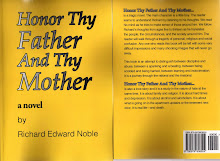
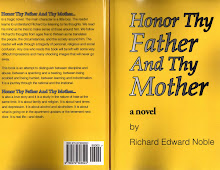
Richard E. Noble has been a resident of Eastpoint for around thirty years now. He has authored two books: “A Summer with Charlie” which is currently listed on Amazon.com and “Hobo-ing America” which should be listed on Amazon in the not too distant future. Most recently he completed his first novel “Honor Thy Father and Thy Mother” which will be published soon.
Wednesday, January 09, 2008
Avicenna (980-1037 A.D.)
Philosopher
By Richard E. Noble
Avicenna (Ibn Sina ... Abu Mi al Husayn ibn Abd-Allah ibn Sina) was born in Bokhara, Persia (Iran) in 980 A.D. He is most famous in the field of medicine. In fact his book, “al-Shifa” (Book of Healing) is the largest encyclopedia of knowledge ever written, and was the main medical source book for over four hundred years.
In physics he is the father of the notion of “momentum”. By age ten he had mastered the religious “sciences” (whatever they are); by sixteen he was a well known physician; and by eighteen had mastered Aristotle, thanks to the commentary of al-Farabi.
Prior to reading al-Farabi, he had read Aristotle’s Metaphysics over forty times and couldn’t understand it. (So, how smart is he? I had to read Aristotle’s metaphysics only once to realize that I couldn’t understand it.)
Avicinna was a Mystic. A Mystic is, in my opinion, a person who begins with the “fact” of God and then tries to prove the universe and all of reality a fiction.
In philosophy Avicinna is most famous for his concern with “quiddity” (essence) and distinguishing between it and existence, and also his arguments distinguishing between necessary and possible beings. An unnecessary existent (us and everything else that is) can exist or not exist, says Avicinna.
Is this true? The fact or truth is, we don’t know. The theist says, in dealing with human existants for example, that when we die our body dies, but our soul (the electricity or force of consciousness and life) goes on.
The atheist says that our bodies are turned to dust, and the force of consciousness of life vanishes. So one denies the immortality of the body and the other denies the immortality of the life force that distinguishes a dead body from a living entity. But the body turns to dust, it doesn’t cease to exist. So then what happens to the soul (the animating life force)?
No one knows. Is there such a thing?
We know there is. It is there when something is alive, and gone when something is dead.
Can anything that is existing at one point ever be non existent? As Einstein once asked, “Did God have a choice in His Own existence?”
We have a theory today that we call the conservation of matter and energy. Matter cannot be created nor destroyed. God, according to Avicinna, is the only necessary being. But one of the qualities of the Necessary Being is that it can not not be ... it must exist. But the law of conservation of matter says that this is true of all existing things. So then, do we conclude that God is all that is or exists, and that what is, is and has always been and will forever be?
Avicinna like all mystics and religious, establishes his philosophy on a weak foundation. He establishes as true, an unfounded assumption (God) and then attempts to coordinate reality to it.
Question: if every known and observable thing in the Universe has a cause, why would anyone assume that the source of all, would be un-caused. The only conclusion that can be reasonably drawn from the fact that every known thing has a cause is that all things yet unknown must have a cause also.
Applying this to a definition of God, we would not conclude that God is uncaused but that He must be an infinity of causes. If all known things are particular and variant, then God could not be One and Whole but multiple and divisible.
Avicinna first believed in God and then the Koran (the revealed word of God). His goal was to establish God as true; revelation, as the Word of God; and all else subject to the knowledge of the two.
Philosopher
By Richard E. Noble
Avicenna (Ibn Sina ... Abu Mi al Husayn ibn Abd-Allah ibn Sina) was born in Bokhara, Persia (Iran) in 980 A.D. He is most famous in the field of medicine. In fact his book, “al-Shifa” (Book of Healing) is the largest encyclopedia of knowledge ever written, and was the main medical source book for over four hundred years.
In physics he is the father of the notion of “momentum”. By age ten he had mastered the religious “sciences” (whatever they are); by sixteen he was a well known physician; and by eighteen had mastered Aristotle, thanks to the commentary of al-Farabi.
Prior to reading al-Farabi, he had read Aristotle’s Metaphysics over forty times and couldn’t understand it. (So, how smart is he? I had to read Aristotle’s metaphysics only once to realize that I couldn’t understand it.)
Avicinna was a Mystic. A Mystic is, in my opinion, a person who begins with the “fact” of God and then tries to prove the universe and all of reality a fiction.
In philosophy Avicinna is most famous for his concern with “quiddity” (essence) and distinguishing between it and existence, and also his arguments distinguishing between necessary and possible beings. An unnecessary existent (us and everything else that is) can exist or not exist, says Avicinna.
Is this true? The fact or truth is, we don’t know. The theist says, in dealing with human existants for example, that when we die our body dies, but our soul (the electricity or force of consciousness and life) goes on.
The atheist says that our bodies are turned to dust, and the force of consciousness of life vanishes. So one denies the immortality of the body and the other denies the immortality of the life force that distinguishes a dead body from a living entity. But the body turns to dust, it doesn’t cease to exist. So then what happens to the soul (the animating life force)?
No one knows. Is there such a thing?
We know there is. It is there when something is alive, and gone when something is dead.
Can anything that is existing at one point ever be non existent? As Einstein once asked, “Did God have a choice in His Own existence?”
We have a theory today that we call the conservation of matter and energy. Matter cannot be created nor destroyed. God, according to Avicinna, is the only necessary being. But one of the qualities of the Necessary Being is that it can not not be ... it must exist. But the law of conservation of matter says that this is true of all existing things. So then, do we conclude that God is all that is or exists, and that what is, is and has always been and will forever be?
Avicinna like all mystics and religious, establishes his philosophy on a weak foundation. He establishes as true, an unfounded assumption (God) and then attempts to coordinate reality to it.
Question: if every known and observable thing in the Universe has a cause, why would anyone assume that the source of all, would be un-caused. The only conclusion that can be reasonably drawn from the fact that every known thing has a cause is that all things yet unknown must have a cause also.
Applying this to a definition of God, we would not conclude that God is uncaused but that He must be an infinity of causes. If all known things are particular and variant, then God could not be One and Whole but multiple and divisible.
Avicinna first believed in God and then the Koran (the revealed word of God). His goal was to establish God as true; revelation, as the Word of God; and all else subject to the knowledge of the two.


Saturday, January 05, 2008
Social Security
Commentary
By Richard E. Noble
Social Security is almost in that category with religion and politics - one should avoid talking about it in mixed company. But of course it is a subject not only important to Eastpointers, both young and old, but to everyone.
I am going to try and avoid getting into the standard debate on this subject and try to come at it from a slightly different perspective.
In reading my history books I have formed some unconventional opinions about the system and it origins and initial supporters.
When we listen to the detractors of Social Security today, it would appear that Social Security is/was some sort of a welfare program that was forced upon the better-off by some sort of conspiracy on the part of the poor and struggling.
This is not true.
Initially all programs designed to assist the workingman and non wealthy were dreamt up by fraternal worker organizations and labor activist from the ranks of the American Communist, Socialist, or other labor groups. These type people seriously freighted Republicans especially - the Democrats had their problems with them also. This is true.
In consequence of this fear and intimidation there were many Republicans who were on the Social Security band wagon in the early days. They were called for the most part “progressives”. But there were even some conservative Republicans who were also in favor of Social Security.
In the early 1930’s and those depression years, who do you think was left with the burden of all these homeless, old, unemployed and disabled? Why the rich, the wealthy and the better off.
Just like good old Scrooge in Charles Dickens’ “A Christmas Carol” someone was always knocking on their door asking for a handout or wanting support for some charity or pressing their nose up against the window overlooking their table at their favorite restaurant, or picking through their trash, or robbing their homes and businesses.
But the old and sick were a particular problem, more depressing than the lazy, dirty, abusive unemployed and their disgusting, obnoxious children - the old brought up that much hated feeling of guilt and social responsibility and Christian brotherhood. You know - what would Jesus do?
There were some real scary liberals out there too - with considerable political support - like Huey Long who had some real harsh ideas.
The Kingfish’s basic plan was to grab up all the rich people by the heals, turn them upside down and shake the heck out of them until all their money fell out of their pockets and their bank accounts. This was very similar to what the poor (Bolshevik - workingman with family) had already done in Russia.
Less radical liberals just wanted the rich to put up the money for the Social Security unemployment and old and disabled insurance plan. But the conservatives in their compassion - bless their hearts - didn’t want to destroy the spirit, independence and self-respect of the poor. They suggested that the poor be forced to put money into a plan for their own benefit. They would be glad to deduct it for their wages and hold it in a safe place for these unfortunates until they needed it.
Believe it or not the legislators compromised on a plan where both the employer and the worker paid into this social insurance plan. And all, both prosperous and not prosperous, would receive benefits in accordance to the amount they paid into it over the course of their lives.
In that way, one day all the old, poor and sick, would hopefully be off the streets and the rich and wealthy would be able to recoup some of their loss and not get the whole financial burden.
So originally the idea was supported by the better off to force some financial responsibility onto the socially less productive. And the better off wanted the system to be mandatory because if any choice were allowed - the poor and financially irresponsible would be the first to drop out.
If the poor were not forced to pay into this program, they would never volunteer or keep up with their payments. The payments were, of course, small enough that the employers and the better off could easily manage their share. And besides, in the end, everybody would get a piece of the action. The employer would even be able to turn a portion of his cost over to the consumer. So everybody paid and everybody got some benefit.
The bottom line - we had an economically feasible and morally fulfilling program that solved numerous inadequacies, social and systemic problems, operating within a system that was being criticized around the world as being cruel and heartless.
Up until this time the Social Security Program, despite all the moaning and groaning, has been one of the best bureaucratically managed and socially beneficial programs ever in the history of this country.
One last interesting and conservatively depressing comment.
Poor working people, middle class and all those who earn less than $80,000 per year pay their proscribed share of the Social Security tax all their lives. And they pay on every dollar they earn.
Those who earn over $80,000, pay only on the first $80,000 of their income. Even if they earn $200,000 or ten million, they only pay on the first $80,000. Percentage-wise the lesser earners pay a greater percentage of their lifetime earnings and get a substantially smaller share.
Many of the better off are collecting premiums as high as two thousand a month and more. While low wage earner who paid on every penny that they ever earned get as little as three and four hundred per month. The better earners who pay more in actual dollars may deserve their higher incomes but actually the lower earners have paid a higher percentage of their earnings over their lifetime for their much smaller share.
I’ve have read that all of the shortfall in the coming baby boomer crunch could easily be compensated for by simply removing this gratuity or wealth-fare benefit to the better off.
So what’s the problem?
Commentary
By Richard E. Noble
Social Security is almost in that category with religion and politics - one should avoid talking about it in mixed company. But of course it is a subject not only important to Eastpointers, both young and old, but to everyone.
I am going to try and avoid getting into the standard debate on this subject and try to come at it from a slightly different perspective.
In reading my history books I have formed some unconventional opinions about the system and it origins and initial supporters.
When we listen to the detractors of Social Security today, it would appear that Social Security is/was some sort of a welfare program that was forced upon the better-off by some sort of conspiracy on the part of the poor and struggling.
This is not true.
Initially all programs designed to assist the workingman and non wealthy were dreamt up by fraternal worker organizations and labor activist from the ranks of the American Communist, Socialist, or other labor groups. These type people seriously freighted Republicans especially - the Democrats had their problems with them also. This is true.
In consequence of this fear and intimidation there were many Republicans who were on the Social Security band wagon in the early days. They were called for the most part “progressives”. But there were even some conservative Republicans who were also in favor of Social Security.
In the early 1930’s and those depression years, who do you think was left with the burden of all these homeless, old, unemployed and disabled? Why the rich, the wealthy and the better off.
Just like good old Scrooge in Charles Dickens’ “A Christmas Carol” someone was always knocking on their door asking for a handout or wanting support for some charity or pressing their nose up against the window overlooking their table at their favorite restaurant, or picking through their trash, or robbing their homes and businesses.
But the old and sick were a particular problem, more depressing than the lazy, dirty, abusive unemployed and their disgusting, obnoxious children - the old brought up that much hated feeling of guilt and social responsibility and Christian brotherhood. You know - what would Jesus do?
There were some real scary liberals out there too - with considerable political support - like Huey Long who had some real harsh ideas.
The Kingfish’s basic plan was to grab up all the rich people by the heals, turn them upside down and shake the heck out of them until all their money fell out of their pockets and their bank accounts. This was very similar to what the poor (Bolshevik - workingman with family) had already done in Russia.
Less radical liberals just wanted the rich to put up the money for the Social Security unemployment and old and disabled insurance plan. But the conservatives in their compassion - bless their hearts - didn’t want to destroy the spirit, independence and self-respect of the poor. They suggested that the poor be forced to put money into a plan for their own benefit. They would be glad to deduct it for their wages and hold it in a safe place for these unfortunates until they needed it.
Believe it or not the legislators compromised on a plan where both the employer and the worker paid into this social insurance plan. And all, both prosperous and not prosperous, would receive benefits in accordance to the amount they paid into it over the course of their lives.
In that way, one day all the old, poor and sick, would hopefully be off the streets and the rich and wealthy would be able to recoup some of their loss and not get the whole financial burden.
So originally the idea was supported by the better off to force some financial responsibility onto the socially less productive. And the better off wanted the system to be mandatory because if any choice were allowed - the poor and financially irresponsible would be the first to drop out.
If the poor were not forced to pay into this program, they would never volunteer or keep up with their payments. The payments were, of course, small enough that the employers and the better off could easily manage their share. And besides, in the end, everybody would get a piece of the action. The employer would even be able to turn a portion of his cost over to the consumer. So everybody paid and everybody got some benefit.
The bottom line - we had an economically feasible and morally fulfilling program that solved numerous inadequacies, social and systemic problems, operating within a system that was being criticized around the world as being cruel and heartless.
Up until this time the Social Security Program, despite all the moaning and groaning, has been one of the best bureaucratically managed and socially beneficial programs ever in the history of this country.
One last interesting and conservatively depressing comment.
Poor working people, middle class and all those who earn less than $80,000 per year pay their proscribed share of the Social Security tax all their lives. And they pay on every dollar they earn.
Those who earn over $80,000, pay only on the first $80,000 of their income. Even if they earn $200,000 or ten million, they only pay on the first $80,000. Percentage-wise the lesser earners pay a greater percentage of their lifetime earnings and get a substantially smaller share.
Many of the better off are collecting premiums as high as two thousand a month and more. While low wage earner who paid on every penny that they ever earned get as little as three and four hundred per month. The better earners who pay more in actual dollars may deserve their higher incomes but actually the lower earners have paid a higher percentage of their earnings over their lifetime for their much smaller share.
I’ve have read that all of the shortfall in the coming baby boomer crunch could easily be compensated for by simply removing this gratuity or wealth-fare benefit to the better off.
So what’s the problem?
Tuesday, January 01, 2008
The Eastpointer
Fish Cages Off-shore
By Richard E. Noble
A number of years past we were introduced to aquaculture here in Franklin County. An introductory experiment was conducted here in our sleepy little fishing village and a good deal of controversy resulted.
The experiment was rejected by the County and “leasing” or the privatization of Apalachicola Bay was prohibited by a 3 to 2 vote of the County Commission at that time.
I really don’t know what has happened since that time around the state of Florida but recently it was announced at a County Commission meeting that the State of Florida was about to approve another experiment in aquaculture in the Gulf - off-shore aquaculture fish raising cages.
I was covering the County Commission at the time of this announcement and I expected to hear a large outcry. But instead there was virtual silence on the matter from the entire fishing community - local environmentalist and fishermen alike.
This silence prompted me to do a little research and the following is a brief exposure to some of the present controversial issues involved in this matter.
Aquaculture is growing all over the world. Its advocates are claiming it as one solution in feeding the poor of the planet. At its current rate of growth it has been reported that it will only be a matter of time before more fish and other editable seafood products are farmed than are caught at sea. The prestigious NOAA organization is predicting $5 billion in aquaculture production, 600,000 jobs and $2.5 billion in goods and services by the year 2025.
But all of this good news is not without an adequate supply of bad news.
Although aquaculture is being established rapidly in third world countries and touted as a cure for poverty, in reality it seems to be producing just the opposite.
Struggling poor coastal fishermen are being put out of their traditional work and replaced by armed guards who are hired to protect the shrimp farms at poverty wages. The farm owners are usually from “big business” who are basically exploiting the poor coastal regions with no concern for the natives or their poverty or prosperity.
For the most part shrimp are being grown in these regions for sale to wealthier nations. The native people growing the shrimp can’t afford to buy them and the small fish that they once caught for their home markets and local consumption are being monopolized by the Big Farmer Corporations as shrimp food. So now the poor indigenous people are out of work, both traditional and otherwise, and their food has been confiscated as feed for the farms. Once again it seems the rich get richer while the poor get even poorer.
But for those who are willing to accept poverty as an inevitable consequence of prosperity, wealth and growth, there are other negatives to consider. One big negative is the consequence to the natural environment.
The negative environmental impacts from coastal shrimp farming and off-shore intensive fish farming are causing many consumer and environmental groups to ask their supporters not to buy ANY farm raised fish or shrimp.
One of the big problems with the fish farms and cages is the negative impacts on the wild fish population. You may have read about the Alaskan Salmon problem - farm raised fish escape from their cages and bring new diseases to the wild populations which the wild fish are not able to overcome. This same problem applies to the farm raised shrimp also.
There is also a problem with quick growth chemicals and anti-biotics used in the intensive farming which add to the other perils already facing the human consumers.
Congested fish raised in cages are polluting the ocean bottom. Fish excretion is high in ammonia, nitrite and nitrate. Overfeeding of the congested fish population fouls the water and pollutes the bottom. Huge areas in Europe where these intensive fish cages are used have miles and miles of sea bottom that is completely dead. The farm shrimp may contain dissolved cobalt and lead - “heavy metal bioaccumulation and lead poisoning in humans is not an exaggeration.”
If you start perusing articles on the Internet concerned with the perils of commercialized seafood farming (capitalist privatization of the oceans) you will come upon other familiar terms such as nitrogen enrichment, algal blooms, red tide, genetic pollution of indigenous stocks, decreased oxygen levels, poor water quality, fish diseases, mangrove forest devastation - epizootic ulcerative syndrome and vibriosis with symptoms such as boils, tail rot etc.
If you have any connection with the seafood industry or you are concerned about world hunger and world poverty, the health of the oceans, bays and the food supply in general, you may want to take a look at some of this.
Actually these off-shore fish cages may even be a concern to some of you sport fisherman. I doubt that you will get your prop tied up in one of them but you may find down the road that your Grouper holes are drying up and the few wild fish that you are catching are starting to look and taste rather peculiar.
This is, of course, pure speculation and a little trust and faith in your fellow man and the free market system may take care of everything. I mean, who knows? It is all a matter of perspective - is the ocean half polluted or half healthy?
Richard E. Noble has been a resident of Eastpoint for around thirty years now. He has authored two books: “A Summer with Charlie” which is currently listed on Amazon.com and “Hobo-ing America” which should be listed on Amazon in the not too distant future. Most recently he completed his first novel “Honor Thy Father and Thy Mother” which will be published soon.
Fish Cages Off-shore
By Richard E. Noble
A number of years past we were introduced to aquaculture here in Franklin County. An introductory experiment was conducted here in our sleepy little fishing village and a good deal of controversy resulted.
The experiment was rejected by the County and “leasing” or the privatization of Apalachicola Bay was prohibited by a 3 to 2 vote of the County Commission at that time.
I really don’t know what has happened since that time around the state of Florida but recently it was announced at a County Commission meeting that the State of Florida was about to approve another experiment in aquaculture in the Gulf - off-shore aquaculture fish raising cages.
I was covering the County Commission at the time of this announcement and I expected to hear a large outcry. But instead there was virtual silence on the matter from the entire fishing community - local environmentalist and fishermen alike.
This silence prompted me to do a little research and the following is a brief exposure to some of the present controversial issues involved in this matter.
Aquaculture is growing all over the world. Its advocates are claiming it as one solution in feeding the poor of the planet. At its current rate of growth it has been reported that it will only be a matter of time before more fish and other editable seafood products are farmed than are caught at sea. The prestigious NOAA organization is predicting $5 billion in aquaculture production, 600,000 jobs and $2.5 billion in goods and services by the year 2025.
But all of this good news is not without an adequate supply of bad news.
Although aquaculture is being established rapidly in third world countries and touted as a cure for poverty, in reality it seems to be producing just the opposite.
Struggling poor coastal fishermen are being put out of their traditional work and replaced by armed guards who are hired to protect the shrimp farms at poverty wages. The farm owners are usually from “big business” who are basically exploiting the poor coastal regions with no concern for the natives or their poverty or prosperity.
For the most part shrimp are being grown in these regions for sale to wealthier nations. The native people growing the shrimp can’t afford to buy them and the small fish that they once caught for their home markets and local consumption are being monopolized by the Big Farmer Corporations as shrimp food. So now the poor indigenous people are out of work, both traditional and otherwise, and their food has been confiscated as feed for the farms. Once again it seems the rich get richer while the poor get even poorer.
But for those who are willing to accept poverty as an inevitable consequence of prosperity, wealth and growth, there are other negatives to consider. One big negative is the consequence to the natural environment.
The negative environmental impacts from coastal shrimp farming and off-shore intensive fish farming are causing many consumer and environmental groups to ask their supporters not to buy ANY farm raised fish or shrimp.
One of the big problems with the fish farms and cages is the negative impacts on the wild fish population. You may have read about the Alaskan Salmon problem - farm raised fish escape from their cages and bring new diseases to the wild populations which the wild fish are not able to overcome. This same problem applies to the farm raised shrimp also.
There is also a problem with quick growth chemicals and anti-biotics used in the intensive farming which add to the other perils already facing the human consumers.
Congested fish raised in cages are polluting the ocean bottom. Fish excretion is high in ammonia, nitrite and nitrate. Overfeeding of the congested fish population fouls the water and pollutes the bottom. Huge areas in Europe where these intensive fish cages are used have miles and miles of sea bottom that is completely dead. The farm shrimp may contain dissolved cobalt and lead - “heavy metal bioaccumulation and lead poisoning in humans is not an exaggeration.”
If you start perusing articles on the Internet concerned with the perils of commercialized seafood farming (capitalist privatization of the oceans) you will come upon other familiar terms such as nitrogen enrichment, algal blooms, red tide, genetic pollution of indigenous stocks, decreased oxygen levels, poor water quality, fish diseases, mangrove forest devastation - epizootic ulcerative syndrome and vibriosis with symptoms such as boils, tail rot etc.
If you have any connection with the seafood industry or you are concerned about world hunger and world poverty, the health of the oceans, bays and the food supply in general, you may want to take a look at some of this.
Actually these off-shore fish cages may even be a concern to some of you sport fisherman. I doubt that you will get your prop tied up in one of them but you may find down the road that your Grouper holes are drying up and the few wild fish that you are catching are starting to look and taste rather peculiar.
This is, of course, pure speculation and a little trust and faith in your fellow man and the free market system may take care of everything. I mean, who knows? It is all a matter of perspective - is the ocean half polluted or half healthy?
Richard E. Noble has been a resident of Eastpoint for around thirty years now. He has authored two books: “A Summer with Charlie” which is currently listed on Amazon.com and “Hobo-ing America” which should be listed on Amazon in the not too distant future. Most recently he completed his first novel “Honor Thy Father and Thy Mother” which will be published soon.
Monday, December 31, 2007
The Dumbest Generation

Commentary
By Richard E. Noble

If we start off with the premise that man is basically a dumb, stupid, ignorant, moronic beast that has somehow evolved over centuries into what he now is, then how one man was able to lead other men off to war is not all that difficult to discern. But if we believe, as many would have us believe today, that man was originally, from the get-go, an intellectual giant among the animal kingdom; part animal, part God; a creature running a close second - with only the angels in heaven and in hell being his chief competition - in all created things, then the question becomes more perplexing.
Why would any intelligent man march off - usually ill-equipped, ill-advised, mismanaged, mistreated and misdirected - to some foreign country where he has the very good chance of being killed?
It seems that back in the days of the kings and Alexander the Great and Genghis Khan the motivation was, for the most part, personal gain. One of the big attractions of war back in those early days was rape, pillage and plunder. I can see that the intelligent male of our present day and age might be encouraged to risk his life with these motivations in mind. In the world that I see today many might be willing for the advantage of rape alone - never mind the pillage and plunder.
In addition to raping, pillaging and plundering in the good old days, slavery was considered a legitimate opportunity. Slaves, especially those acquired during war were universally recognized as a legal and acceptable spoil of any war. No one questioned one man’s right to own slaves way back when, not even the Pope. The One True Church believed that Just Wars and slaves were all a part of God’s plan.
So to return home from a war with a number of slaves at sword point, each carrying a treasure chest of pillage and plunder was a good thing in days of yore.
It wasn’t all that great for the slaves and all those who were raped, pillaged and plundered. But throughout history, and even today, those people do not get a lot of TV time or newspaper column space. We call a lot of that sort of thing today - collateral damage, improper logistical calculations or simply - unfortunate.
But, all of this aside, what is curious to me, is when did men start fighting for nothing - I mean, for free?
Today in our own country we have soldiers who go off to war for very little money. Sometimes their families are left behind to live on charity. What happened to all that rape, pillage and plunder business?
But it has also occurred to me that even in the good old days of slaves, rape, pillage and plunder there were many people who fought for none of these reasons. Those who were being raped, plundered and pillaged for example; they were fighting in self-defense. So there were always soldiers who were fighting in the name of self-defense, patriotism and moral principle. Those that fought for patriotism, self-defense and moral principle, never got paid all that much. The Pirates, Conquistadors, Huns, Vandals and Visigoths and those who promoted aggressive war of one sort of another were the ones who garnered all the pillage and plunder. But in today’s world, it seems to me that neither the soldiers of the plunderer or the plunder-ee get paid very much. Even the German soldiers in World War II didn’t make any really big bucks. And the pay for the mercenaries at the French Foreign Legion, though substantially above the mean for soldiering, has never been what anyone would call extravagant.
Why is that, and how did that happen?
Somewhere along the line, soldiers started working for wages instead of pillage and plunder. That was obviously a bad decision on their part.
If the soldiers of the Greatest Generation had returned from their war and instead of joining the VFW (an organization started by ex-officers and successful businessmen to counter the negative accusations of disgruntled regular soldiers), they had joined the AFL or the ClO, ot the Teemsters, soldiers might be in a much better bargaining position today.
The VFW always seems to be in favor of any war - no matter what the soldier’s pay or benefits might be. They never seem to look ahead to the next war and start negotiating on behalf of their members beforehand.
We should all know by now that war for America is not only inevitable but designed. It has been a basic part of the agenda since Harry Truman and Winston Churchill dropped the Iron Curtain and established the Cold War shortly after World War II ended. We can’t live without it. It is good business and without it, we just won’t be able to maintain the style of life that most of us have become accustomed to. Today it is Baghdad and tomorrow it will be someplace else. It was the Cold War, and now it is the Islamic War or the War on Terror - next it will be the Yellow Peril once again, or maybe we will even bring the Russians back. But you all know as well as I do, there will be War.
But why is it that when it is too late; after everybody is dead or limb-less, the VFW and others of their persuasion always seem to step up and start belly-aching. It never works. It didn’t work for the guys fighting for their back wages after the American Revolution or the Civil War, or for the World War I Bonus Army. The World War II guys did get the GI Bill, but Vietnam and Agent Orange and the Post War Syndrome stuff didn’t seem to whip up a good deal of civilian compassion.
If we are going to have war forever - let’s forget who’s at fault or what the cause - moral or immoral - let’s get paid for it guys. How about it?
The Generals get good money. Is their blood any redder than yours? Baseball players and basketball players are finally getting good money - even if they are black for god’s sake. Arms makers have been making good money ever since war began. No arms manufacture has ever been asked to manufacture bullets for free because its country is at war. I have never read anywhere that an arms manufacturer has donated all of its profit from a war to the VFW or the disabled veterans fund. In fact, the exact opposite has always been the case - investigations into war profiteering, misappropriation of funds by politicians and government agencies - even trading with the enemy for God’s sake. If it is not unpatriotic for all these folks to turn a profit on war what about you poor slugs?
How about it, you guys? When are you guys going to stop taking thank-yous and lOUs and start screaming; SHOW ME THE MONEY! You know, you will either get it, or they will slow down this war business mighty quick.
It could be that your countries are so willing to make war because you are so willing to sell your blood, arms and legs at such a cheap price. Patriotism and good wages are not mutually exclusive in a Capitalistic society as they well could be considered in a Socialist or Communist society.
I can understand a left-wing, liberal, Socialist or Communist society asking its citizens to fight for free or minimum wages and benefits - do it for the Fatherland type thing, but in this individualist, pull yourself up by your own bootstraps, everyman is responsible for his own success, failure, children, family, health, mortgage, loans and credit cards, supply and demand, bottom-line, sorry but we’ve got to downsize culture - I don’t see why a soldier should not “capitalize” on this we-need-you situation. If they won’t pay you when they don’t need you, and you don’t get the money when they do need you - when the hell do you ever expect to make anything?
A third alternative could be more bombs and fewer boots - which is also good. Better more of them than more of you. That’s what Truman said. And he never lost a night of sleep over it either - he said so, himself. He obviously didn’t read John Hersey’s Hiroshima.
Forget the benefits, promises, reasons and motivations; concentrate on the wages? The Generals and officers seem to obviously have a better negotiating team than you soldier types.
They always seem to do all right. Police and firemen seem to have figured something out. Even meter-maids do better than active duty American soldiers.
A civilian right now, driving a truck in a war zone gets some danm good money - if he lives - and I think his chances are better than the average soldier. But a soldier truck-driver gets squat, dead or alive. I think that American truck-driver soldiers should contact a Teamster organizer. The Teamsters might embezzle some of the pension fund, but look at the Government and the Social Security Trust Fund. Do I need to ask; Who’s looking out for you baby?
Florence Nightingale went off to help the wounded soldiers in the Crimean War. Do you know why? Because the British sent off an army to fight in Russia with no medics or nurses or doctors - without any bandages even. Florence got the girls back home together to gather up all of their bed sheets and come and follow her to the war zone. Is it any wonder that we are still talking about Florence and her girls today?
Then, of course, we are still singing the praises of the Charge of the Light Brigade also - “Into the Valley of death rode the five hundred”. Do you know why the five hundred rode into the valley of death? Because they were ordered to do so by a dimwit British General who didn’t know his ass from his elbow. The Charge of the Light Brigade is recorded in nearly every history book as one of the stupidest blunders in the history of war. But, the poem is great. I get all excited every time that I read it - not about war ... about poetry.
If a soldier in the Crimean War got wounded, he most likely bled to death. And if it were not for a couple of new style civilian reporters, William Russell and Thomas Chenery, neither Florence nor the English public would have ever heard about it.
Now, I ask myself, did the British government think that none of their soldiers were going to get wounded when they sent them off to Russia and the Crimea to fight a war? It could have simply been over confidence, I suppose. What do you think? Does that sound stupid to you, or am I just being picky?
Today we have the folks back home chipping in to buy gas masks and body armor for their brave boys and girls. We have soldiers going to the dumps over in Baghdad trying to find steel plates to weld onto their “armored” vehicles. After this war is over - if it ever gets over - we have a whole foreign country that we are going to have to rebuild from the Social Security Trust Fund and the cancellation of the hot lunch program down at the school house. We are going to have another whole army of mentally broken and physically disabled to care for and support. Did our government not think about any of this?
Of course they did, even George Bush’s father - the Mystical Father of Oblivion, the god of war - thought about it. He said so, when they asked him why he didn’t go to Baghdad in the first Bush war.
When we went into Vietnam, even Drop-the-big-one MacArthur said it was stupid; but we did it anyway. Why?
Because America needs War - any war! It can be a Right war or a Left war. It can be a good war or a bad war. We don’t even have to win. We just have to keep it going. One long war or a never ending group of short wars - it don’t matter. Read War and Anti-War by Alvin and Heidi Toffler, or Waging Modern War by Wesley K. Clark for a blue print.
The last generation may go down in the history books as the Greatest Generation - but this generation will undoubtedly be labeled the Dumbest Generation in all of American history.
While huge sums of money are being returned to the richest 1% in America - a group who owns as much or more than the entire lower 95% - while huge multinational corporations pay no taxes and ship their good and bad paying jobs overseas - while aggressive invasions are being euphemized as pre-emptive protective measures; while every domestic program is being raped and ravaged - while the rich get richer and the poor get poorer - our patriotic Republican government in Washington is going to borrow to pay its bills and spread the payment out over milk, bread, and potatoes for all of us 95 percent.
Well, the top five percent will pay more for their bread, butter and potatoes too, but the middle class restaurants where they eat will absorb most of it - they can cut the pay to the dishwashers and waitresses.
This means that the rich not only get their tax money back, but they get to pay lower wages to their foreign employees, collect higher interest on their investments and transfer the cost of the war to the ninety-five percent back home; loan their tax refunds back to the government at interest by buying the treasury bonds being sold by the Federal Reserve in million dollar increments; and the poor, the middle, the brave and the stupid will pay the bill.
The German soldiers and civilians (excluding Jewish Germans) under Adolf Hitler did better than this. Look it up. It’s true. Hitler at least took care of those he thought to be his own kind.
The Greatest Generation, now followed by the Dumbest Generation – we can all stand up and take a bow.
Sunday, December 30, 2007

Mein Kampf
Chapter 11 Part 1
By Richard E. Noble
We are still involved in Adolf’s analysis of the causes of the collapse of his nation and its inferior status after its defeat in World War I. Even the world of the artist must bear its burden of blame, for it too had become Bolshevized, by Cubism, and Dadaism.
“...Sixty years ago an exhibition of so-called dadaistic ‘experiences’ would have seemed simply impossible, and the sponsors would have been sent to the mad house...”
I have the feeling that Adolf would not like a good deal of the art of our day and age. But what is Art but the reflection on, or observation of the world surrounding the artist, and/or possibly his personal inner turmoil in adapting to or confronting or challenging its premises. Do we stifle Art and Artists because we don’t like what they tell us about ourselves, or even themselves? In Art we see not only the beauty and the heights to which that society has aspired, but also its short comings, hysteria, and schizophrenia. Artists have always been stifled by convention.
Today, we have similar arguments concerning what is acceptable in the public art world. There are many today who would not only like to stifle Art and the Artists, but even History and the Historian. But this is also a part of the human history of the beast we are discussing.
Today we have History revisited, or Revisionist History. One group is constantly accusing another group of rewriting History with a personal political slant or bias. Right now you and I are involved in reading Adolf’s interpretations of the events of his time. There is no doubt in my mind, nor in the mind of the world at large, that his interpretation is prejudicial, and ‘revisionist’.
There are forms of Art, movies, music, and theater today that I personally can do without. But the question is, if I had the power, would I ban it to everyone? This is a question in every society, and has been a question throughout history.
It is curious to me that those who seem to be the most ardent defenders of what is called free enterprise or total freedom with regards to money - money above morality, life and limb - are at the forefront of every form of restriction of freedom elsewhere.
We should interpret the art that we see about us and use it for our political and spiritual edification. If the artistic criticism is valid, use it as a guide to improving the society. If it is truly insane and serves no legitimate purpose, the society at large will or at least should reject it.
The work of the artist seems to be much like the traffic lights on our roadways. I think that they can be used to tell us when to stop, because we are heading in the wrong direction; when to use caution because the road ahead may present problems.
Trying to suppress art and the artist would appear to me to be a denial to an outstretched hand. My guess is that the Dadaist and the Cubist movements were active expressions of either a conscious or subconscious awareness of some societal problem. I know very little about this type of art or what it represented.
Today we have problems in the arts; in the theater, in the movie theaters, in books, on the internet. We have problems with drugs, guns, violence, pornography, sexual mores; we have problems in the military, in the business community, in the schools. All of these things should be looked at and analyzed as aides in helping to promote a healthy society.
What are these perversions and anomalies telling us about the people around us, and what wheels can we turn to help change any negative direction that they may be pointing out. These things are all speaking to us. They are telling us about our frustrations, our economics, our education, our immaturities, and our ignorance. But what exactly they are pointing out is the difficult part to determine, and how to correct the problems, even more difficult.
Adolf saw the problems and charted a course; the wrong course; a course lacking in intellect and bent on revenge and destruction. But, obviously, there were many of a like mind in Adolf’s society and the world about him or he simply would have been the laughing stock of his day.
Adolf now goes into his reverence for the past.
“… If, therefore any new idea, a new doctrine, a view of life, or also a political as well as an economic movement tries to deny the entire past, or wants to deride it, and to make it valueless, for this reason alone one has to be extremely cautious and mistrusting … A genuinely blissful renovation of mankind would always and forever have to continue to build in that place where the last foundation ends ...”
With regards to this point, I am today in complete agreement. I am not a revolutionary who seeks to destroy the foundations of the past. I doubt if I would have been a supporter of even the American Revolution. The Notion of “taxation without representation” certainly would not have been a rallying cry to me for the sacrifice of my life or the taking of the lives of others. This point was well within the bounds of negotiation, or even subterfuge as far as my limited reading on the subject is concerned. The tea that was being dumped on Boston at the time by the British or East India Company was even cheaper than the tea currently being sold at market on shore, and that was including the horrid tax.
Today I live in a society where I am certainly taxed without representation. The American government is certainly not represented by the people of my ‘class’ nor are they concerned with the issues that seem most pressing to me. Nor do I have a say in where my money will be spent, or even in our declarations of war, or military interventions, or treaties. I am still hoping to one day live in a Democracy where all of the people of the nation are represented; where the economic concerns of the ‘people’ of the nation are primary; where freedom from fear and freedom from want would also be inclusive of old age, medical treatment, pregnancy and child birth and employment and education. But even with all of these disagreements, I am not ready to go off into the woods and join any revolutionary forces. I have the right to speak my views and deny my participation in what I consider unjust causes. I can join along with others who are in agreement with my point of view, as long as I am willing to accept the consequences of my opposition.
For the most part I think Adolf is once again concerned with his Bolshevik opponents who were even as late as 1923 tearing down the structures of their past and attempting to build an entirely new system - a new system which appeared to be based on the destruction and total opposition to all of what had previously been established.
But, nevertheless, I certainly do agree that much of what was being criticized was justified. Certainly the pursuit of profit without concern for morality, justice, and even human life were justifiable complaints. Somehow Supply and Demand had become a religious principle. It must be obeyed like one of God’s commandments, or a fundamental scientific maxim. Why?
Today, as after World War I, we are still selling guns and weapons to people who shouldn’t have them. The excuse is that, if we don’t somebody else will. Then I suppose that we should be selling children drugs also. If we don’t, somebody else probably will.
After we sell the weapons to the bad guys, we then have to go and get them back at a cost of a million times the profit somebody made in selling them in the first place, not to even mention the cost in human life. Does this make sense? Penny wise and pound foolish, they used to say. Could morality actually be cost effective?
We fight for gun control at home, with handguns and ‘toys’. Then sell nuclear weapons and the like abroad unrestricted.
People who live in countries who have no food to eat and rags on their backs drive around their towns in tanks and sporting machine guns and automatic weapons. Something here is not right.
Adolf’s final comment in this section with regards to art, I think reveals where he is coming from.
“...For if the time of Pericles appears incorporated in the Parthenon, so does the Bolshevistic present in the cubistic grimace...”
But in the cubistic grimace we see not only the picture of the confusion and debate of the culture of the time, but also the artist’s continual search for new methods of expression ... hence creativity. And isn’t this good? Isn’t this exactly what we should expect from art? Adolf is trying to turn his likes and dislikes, his prejudices and opinions into political policy. Adolf is clearly not the kind of a man that we would want to rule a diverse world. His rapture on the German people I can only attribute to their single mindedness as a nation or society. But it does seem by the rise of dictatorships all over the world at the time indicative of a mood greater than simply German nationalism. If cubism presented a ‘grimace’ to Adolf, what would he see in some of our present day rock and rap stars?
Friday, December 28, 2007
After the Beep

The Eastpointer
Plausible Denial or Avoiding Responsibility
After the Beep
By Richard E. Noble

Avoiding responsibility is nothing new, but today, I think, we have finally gone off the deep end. I don’t know where it started but I think it all began with some President and CIA shenanigans.
The President is having trouble with some dictator in Slumbovia. The CIA has the perfect solution. Let’s kill the guy. The President says O.K., but I don’t want to know anything about it. Do whatever you have to do but don’t tell me poop about it. The CIA runs off and blows up Slobadumb Heissabum. But then when the committee on “let’s cover everything up” appears on TV, the President says . . .What bombing? Who got killed? I know nothing.
This tactic is called the art of Plausible Denial. It seems to be working well for government, so now private enterprise has gotten in on the act.
You may have just heard about the lady who lives in Guatemala or Malaysia who may be hired at two cents a month to take your order at the local fast food drive-through for a quarter-pounder with cheese in the near future. This is all going to be accomplished by the Internet or satellite or something. But, whether or not, I’m sure you will be familiar with the following - which is, more or less, what I consider an actual description of the way it always seems to turn out these days.
The garbage truck passes by your little business’s dumpster for the nineteenth time this month. Your dumpster is supposed to be dumped once each week. You have garbage all over your parking lot and today the wind is just perfect and the garbage is actually being blown right in your front door. So you get out your United Hurryup Dumpster Service card, and call the emergency number on the back.
“Al-ohhh? Dees ees dee Ory-yap Dumpster Ser-veese.”
“Yeah, well, your darn truck just zoomed by me once again. Do you think that you clowns are going to be able to pick up my garbage some time this year?”
“What corn-tree are you call-ling from?”
“What country? I’m calling from the United States of America, the home of the free - the land of the brave.”
“Hold on please ... beep, buzz, puff, puff ... Hello this is George. I’m the U.S. representative for the Hurryup Dumpster Service. How may I help you?”
“Yeah, George, the truck just zoomed by me again. In fact, I can see the darn thing right out my window. He’s about a block down the road and it looks like he is going to forget me one more time. I’ve got garbage everywhere. I should think at six thousand dollars a month, you blank-blanks should be able to get a can or two of mine into your lousy truck a couple of times a year, anyway. Can I talk to somebody in charge or are all your executives still in the Federal Penitentiary?”
“What state are you calling from, sir?
“This is Billy Bob’s Heavenly Hog Bar-b-que, and I’m calling from that great state of Florida. Our delegation is proud to cast all of our four million uncounted votes for anybody. Is there anybody out there, for crying outloud?”
“Thank you. I will connect you to your state ... beep, beep whirl ... (music) ... lots of time later ... Hello? This is Kathy, your Florida state representative and on behalf of the Hurryup Dumpster Service may I be the first …”
“Yeah, yeah, yaaaa. Listen sweetheart. I have been waiting here now for two hours. I want to talk to somebody about my garbage.”
“What county are you calling from, sir?”
“Oh my goodness! I’m calling from Franklin County, Florida which is located in the United States of America ... And …”
“One moment, sir; I’ll connect you ... beep beep ... screech beep ... beep ... Good after-noon. If you are calling about paying your bill, press one. If you are a new customer, press two. If you need service, press three.”
(After pressing three) Beep beep ... “Al-oh? what corn-tree are you calling from?”
Richard E. Noble has been a resident of Eastpoint for around thirty years now. He has authored two books: “A Summer with Charlie” which is currently listed on Amazon.com and “Hobo-ing America” which should be listed on Amazon in the not too distant future. Most recently he completed his first novel “Honor Thy Father and Thy Mother” which will be published soon.
Wednesday, December 26, 2007
A Skeptic's Faith
In the Spirit of Christmas
A Skeptic’s Faith
Richard E. Noble

I have noticed for the first time in my life that philosophical skepticism is on the rise. Billy Graham recently testified on national television that he had no explanation for God’s creation of “evil”. Mother Teresa wrote in her diary that all of the evil, suffering and disease in the world has often led her to have doubts with regards to the true existence of God. On TV recently I listened to a famous commentator ask a group of ministers if all of the evil in the world did not give them pause in their beliefs that a charitable, loving God truly exists.
As an amateur philosopher I have been pondering this question since my teens. I have probably read every philosophical attempt to substantiate, rationally the notion of a good God. My conclusion has been on the skeptical side. I have found no satisfactory explanation.
But in the spirit of the season and in celebration of the birth of the prophet of peace and love, I offer my personal rather humble defense for the cause of peace on earth and love and goodness as an objective truth.
Bertrand Russell the infamous skeptic and philosopher gave the following explanation for his lack of belief in the traditional theology of God. He said that since objective “evil’ can be substantiated in the world (famine, flood, disease, death, pain, suffering etc.) the notion of an all good God can not be established. And since a God that is both good and evil is not theologically, philosophically, and rationally sound – he would chose not to believe in the concept of God entirely.
This argument left me pondering a very depressing follow-up: If evil can be objectively substantiated, then unless objective goodness could also be substantiated there would exist the possibility that there may be in fact a God – but this God is “evil”.
So then what is there in this life and this universe that like the tornado or the hurricane could be classified as “objectively good”?
You might say, well a rainbow is beautiful. But beauty is in the eye of the beholder. It is “subjective”. Nothing is objectively beautiful.
Pain is objectively evil. It makes living things suffer. Disease, death and dying are objectively evil. Even “salvation” and a reward for suffering and cruelty does not compensate or justify the infliction of cruelty and suffering. The offering of an ice cream cone after an unwarranted beating does not redeem the fact of the unwarranted beating. What is there that is objectively good?
Well, I have my first rather self-centered egotistical argument.
The most obvious thing that I recognize as objectively good is me.
Inside me there exists a positive desire to established goodness, justice, love and peace in the world.
You might say that this is not objective but subjective. It would only be objective if all people felt the same or if my personal desires in this regard could be substantiated by all who observe me and my actions.
So then what is there in all living things, not just me, that is positive and good?
Love.
All living things love, as far as we know. Wolves love other wolves. Pigs love other pigs. Human animals love other human animals and even other non human animals.
So could we not say that the human’s desire to love others and to be loved by others is universal and objective?
On the side of objective goodness could we not list some of the following: laughter, happiness, music, charity, the desire to do good, loneliness (which is basically a craving for the companionship of other living things); kindness, the desire to see peace in the world, hope, joy, forgiveness, compassion, tears, understanding and the desire to learn, brotherhood, fraternity, science, medicine (the desire to alleviate suffering), philanthropy, creativity (the desire to bring about love, joy, beauty, understanding, kindness etc.), the rule of law (the desire to eliminate social chaos and discourage cruelty and injustice), generosity, music in general (symphony, rock & roll, jazz or whatever variety), moral conscience (guilt for being unkind or immoral), the desire to see and do good in the world, and hope – the innate desire to believe that all of the above are universal and objective things.
This, of course, does not establish the theological contention of an all good God but it does counter the equally possible notion that all is evil.
This may not be much but this may be as close to heaven as a skeptic can get.
A Skeptic’s Faith
Richard E. Noble

I have noticed for the first time in my life that philosophical skepticism is on the rise. Billy Graham recently testified on national television that he had no explanation for God’s creation of “evil”. Mother Teresa wrote in her diary that all of the evil, suffering and disease in the world has often led her to have doubts with regards to the true existence of God. On TV recently I listened to a famous commentator ask a group of ministers if all of the evil in the world did not give them pause in their beliefs that a charitable, loving God truly exists.
As an amateur philosopher I have been pondering this question since my teens. I have probably read every philosophical attempt to substantiate, rationally the notion of a good God. My conclusion has been on the skeptical side. I have found no satisfactory explanation.
But in the spirit of the season and in celebration of the birth of the prophet of peace and love, I offer my personal rather humble defense for the cause of peace on earth and love and goodness as an objective truth.
Bertrand Russell the infamous skeptic and philosopher gave the following explanation for his lack of belief in the traditional theology of God. He said that since objective “evil’ can be substantiated in the world (famine, flood, disease, death, pain, suffering etc.) the notion of an all good God can not be established. And since a God that is both good and evil is not theologically, philosophically, and rationally sound – he would chose not to believe in the concept of God entirely.
This argument left me pondering a very depressing follow-up: If evil can be objectively substantiated, then unless objective goodness could also be substantiated there would exist the possibility that there may be in fact a God – but this God is “evil”.
So then what is there in this life and this universe that like the tornado or the hurricane could be classified as “objectively good”?
You might say, well a rainbow is beautiful. But beauty is in the eye of the beholder. It is “subjective”. Nothing is objectively beautiful.
Pain is objectively evil. It makes living things suffer. Disease, death and dying are objectively evil. Even “salvation” and a reward for suffering and cruelty does not compensate or justify the infliction of cruelty and suffering. The offering of an ice cream cone after an unwarranted beating does not redeem the fact of the unwarranted beating. What is there that is objectively good?
Well, I have my first rather self-centered egotistical argument.
The most obvious thing that I recognize as objectively good is me.
Inside me there exists a positive desire to established goodness, justice, love and peace in the world.
You might say that this is not objective but subjective. It would only be objective if all people felt the same or if my personal desires in this regard could be substantiated by all who observe me and my actions.
So then what is there in all living things, not just me, that is positive and good?
Love.
All living things love, as far as we know. Wolves love other wolves. Pigs love other pigs. Human animals love other human animals and even other non human animals.
So could we not say that the human’s desire to love others and to be loved by others is universal and objective?
On the side of objective goodness could we not list some of the following: laughter, happiness, music, charity, the desire to do good, loneliness (which is basically a craving for the companionship of other living things); kindness, the desire to see peace in the world, hope, joy, forgiveness, compassion, tears, understanding and the desire to learn, brotherhood, fraternity, science, medicine (the desire to alleviate suffering), philanthropy, creativity (the desire to bring about love, joy, beauty, understanding, kindness etc.), the rule of law (the desire to eliminate social chaos and discourage cruelty and injustice), generosity, music in general (symphony, rock & roll, jazz or whatever variety), moral conscience (guilt for being unkind or immoral), the desire to see and do good in the world, and hope – the innate desire to believe that all of the above are universal and objective things.
This, of course, does not establish the theological contention of an all good God but it does counter the equally possible notion that all is evil.
This may not be much but this may be as close to heaven as a skeptic can get.
Newspaper Man

I’m a Freelance Writer
[This is a story I found in my archive satirizing my early career with Tom Hoffer and the Franklin Chronicle. I thought that if Tom were alive today he might get a kick out of it. It has been a year now since Tom passed. All of us here at the Chronicle miss him. We think of him often and we are all rooting for our new publisher, Russell Roberts. We hope that he is able to fulfill Tom’s journalistic and entrepreneurial dream. This newspaper was a big dream for Tom and it is no doubt an even bigger challenge for Mr. Roberts.]
By Richard E. Noble
Who would have believed it, at sixty-three it’s me Walter Cronkite, Peter Jennings and all the rest of them. I’ve been reading the memoirs of Walter, Dan, Peter and all of my slightly better known peers, but I’m finding that my first experiences in journalism are more in line with the early careers of Mark Twain, William Sydney Porter and Ben Franklin.
Although I think of myself as a very serious and intense individual, my life experiences always seem to turn out to be along the line of the Three Stooges or the Marx brothers.
Tom Hoffer is the owner/publisher of the newspaper that I’m working for. He started the paper about fifteen years ago. It started out as a little, local, biweekly, twelve to fourteen page nothing-very-important kind of a paper. Today it has grown to a local, biweekly, never more than ten pages, nothing-very-important kind of a paper.
I’m really not a good judge of newspapers, because I don’t read newspapers. I’ve always prided myself on never reading a newspaper. I’ve always considered the phrase “Gossip Columnist” for the Such & Such Herald to be a redundant statement. Well at sixty-three I decided to pursue my avocation in life.
I began my career as a writer by filling an entire spiral binder with my name when I was ten years old. I wrote Richard E. Noble several thousand times and filled the entire notebook with my name written over and over. I don’t know what significance you might see in this, but I have always interpreted this as the first budding of a famous and successful writer. What could be more important to a famous, successful writer than possessing a huge ego? I felt that this propensity to write my name over and over was a primary sign.
I started my retirement avocation career as a writer by self-publishing my life story. Now you might ask yourself who wants to read the life story of Richard E. Noble. That is a good question. If only I had asked myself that question before I spent all my money publishing that book. But nevertheless, I brought a copy of my book down to Tom Hoffer to see if I could get him to include it in his local “Bookshelf” section of his paper. He was very impressed. Not by the book; he didn’t read it - but by the fact that I had the ego required to do such a thing. He asked me who edited my book and I told him that I had edited it myself.
“Wow,” he said in total admiration. “Are you looking for a job? I need somebody to edit my newspaper.”
So there you go! I’m in the newspaper business. I’m getting paid, not to write, but, at least, to read. That’s good, I figure.
The entire staff at the Chronicle consisted of me, Tom Hoffer, Diane Dyal who does just about everything and her husband, Andy Dyal who does all that’s left.
Tom is a classic. He is a retired college professor. He loves history - ancient history. He’s an antiquarian book collector. He wants to sell antiquarian books someday to other antiquaries.
His newspaper comes out every two weeks, but the news in it may be older. I’ve heard some journalistic, pundits proclaim that journalism is tomorrow’s history - today. I suppose then, in a way, that makes today’s newspaper just another type of history.
To a history professor, I suppose, history is history. Old history, new history, today’s history, tomorrow’s history - it’s all just history. So if all news is history, what difference does it make if today’s news is yesterday’s history or tomorrow’s history? News is history and history is history.
In any case, a story does not have to be current to get into this week’s Chronicle. As a reporter though it does make it rather difficult to get a scoop.
On yeah, I am now a reporter besides being the copy editor. Tom Hoffer’s number one reporter (himself) has not been feeling all that well of late. So I cover the local County Commission meetings.
Tom’s selections are often very unique. Last week he printed the entire Economic Recovery Act from the FDR administration. We got a lot of calls from people who wanted to know if they had a chance of getting onto the WPA, or when were they planning to start construction on that TVA project. Tom had no idea what these people were talking about.
Last month we had the Stamp Act - and let me tell you people were really unhappy to find out about all of that. We got letters from little old ladies who said that they would never go to the Post Office again.
I would say that this newspaper is not all that great, but as I told you earlier, I have never read any newspapers.
Tom trained me to cover the County Commission. The meetings always start at nine in the morning. I get there at eight-thirty and Tom is always sitting there in the first row waiting. He has this huge mug, like with a gallon of coffee in it - and he is rolling. Before the meeting starts he is buzzing everywhere. He has questions for the County Planner, the Clerk of Courts, the County Attorney, passers-by, pedestrians, the Mosquito Control Man, the Road Department man, the Airport guy, the boss from the County Dump - anybody and everybody.
Then the meeting starts. We stand up; the preacher/County Commissioner says the prayer; and then we all pledge our allegiance to the flag. We sit down and Tom immediately falls asleep. He’s out like a light. He’s gone.
One week, as he slumped there in the first row snoozing, Senator Allen Boyd stepped up to the podium. The cameras began flashing. Tom, the instinctive journalist that he is, woke up instantly. He grabbed his camera. His camera is strapped together with that grey hundred mile an hour tape. It must have been one of Tom’s favorite things. Tom saved all of his “favorite” things.
Just as he was about to snap the Senator’s picture, the flash apparatus tumbled forward and dangled there in front of the lens.
Tom then sat down and tried to tape his camera back together.
I said, “They just don’t make that hundred mile an hour tape like they used to.”
“It ain’t the tape,” Tom said. “This camera was not engineered properly. I am going to send it back to the company with a full analysis.”
“You can write in Chinese?” I asked.
Last week he was wearing red suspenders, a pair of light blue Bermuda shorts, a faded green, white collared shirt, a pair of tan ribbed argyle socks that went up to his knees, sandals and one of those K-Mart Alpine hats with a little sparrow feather in the brim. He looked like the Ricola man. I suppose that if he wasn’t a well known local newspaper owner the Commission police attendant would have arrested him as a vagrant.
Tom is a Republican. He thinks Republican means frugal. He “shops” for gasoline. He thinks Jack Benny was a Republican and exemplified Republican values. The other day he had me put in three dollars worth of gas at a “price gouging” gas station so that we had enough gas to get us to a cheaper more “American” gas station up the road. I put in the three dollars worth. He said you couldn’t have, the gauge didn’t move. I said, yeah . . . right.
He edits everything I write to make sure that I don’t say anything bad about Richard Nixon, or Ronald Reagan. He can spot the word Reagan or Nixon in a sixteen page document. Just to keep him sharp and on his toes, I toss in the word Nixon in the middle of a random paragraph here and there. He crosses it out and then gives me a lecture on how Nixon was misunderstood. I tell him so was Willie Sutton, the Bird Man of Alcatraz and Charles Manson.
He is always trying to quote Ronald Reagan, but just like Reagan, he can never remember exactly what Reagan actually said.
He also told me that Herbert Hoover “redeemed” himself for what he had done as president of the United States during the Depression. I said what did Hoover do, commit suicide? He said no, he helped feed all the starving people in Europe after World War II. That’s great, I said, too bad he couldn’t figure out how to feed all the starving people in America when he was the president of the United States.
Even though Mr. Hoffer sells very few of his newspapers every week, he feels that everybody in town reads it – even if they won’t admit it. I guess he figures that the few people who do buy a copy, pass their copy around to everybody else.
I’m trying to make a name for myself by writing for the local newspaper - just like all the advisors on how to become a professional writer tell you to do. There are only ten thousand people in this County. I have been working for the paper for almost two years now. I ask people that I know if they saw my story in last week’s paper. They say; what paper? I say; the Chronicle. They say; who publishes that? I say; Tom Hoffer. They say: Heffner? I say; no, Hoffer. They say; never heard of him.
I told Tom that nobody in this town knows who the heck he is. He said; I know but they are going to learn.
See what I mean ... ego. Talent can only get you to the fifty yard line, but ego gets you into the end zone. And with a big enough ego, it is still a touchdown, even if the game is over.
Tom has a tape recorder and tapes the entire County Commission meeting. But I’ve noticed when he is back at the office listening to the tape and trying to transcribe a story - he is usually sleeping. He can’t stay awake even for the tape. He told me the other day that he has trouble sleeping at night. I told him that he should attend fewer County Commission meetings.
He didn’t get it.
A jet fighter plane from the nearby air force base crashed about a block from his home out in the gated community on our barrier island. I heard it on the local radio station on my way to work. When I came into the building on the Compound, (he’s an ex-military guy and he calls his property “a compound”) I said enthusiastically; “Hey Tom, did that jet plane hit your house?”
“What plane?” he asked unconcerned.
“That jet fighter plane that a pilot ejected out of while over the Gulf of Mexico. It crashed into the Island out in your neighborhood and buried itself one hundred and forty feet into the swamp out there.”
“Oh God,” Tom moaned. “Not more darn news. I’ve got this week’s issue all full.”
“Well, take out the suffragette story and put in the jet plane crash story.”
“I can’t do that - suffragettes were important. The jet plane will just have to wait until the next issue.”
“Well, like I’ve always said - there’s no news like the Old News. Hey Tom, why don’t you re-name your paper “The Old News”.”
“Huh? Why the heck would I want to do that?” he said.
[What do you think? Is this the way Edward R. Morrow started out?]
Thursday, December 20, 2007
The Roosevelt War Years
Franklin Delano Roosevelt
The Roosevelt War Years
By Richard E. Noble

The majority of Americans were not in favor of going to war. Anne Morrow Lindbergh writes in defense of her husband’s activities that up until the day before Pearl Harbor ninety percent of Americans were not in favor of the war in Europe. There were pacifists, isolationist and those who couldn’t decide. The Germans had considerable American support, but the majority supported aid to the British. Most Americans seemed to know enough about Adolf that they didn’t want the U.S. to be a subsidiary. But minding our own business, building up our borders and enhancing our military seemed a very good option. But on December 7, 1941, the day that will live in infamy, everyone’s mind was made up for them. The Japanese had decided to attack Pearl Harbor, and shortly thereafter Adolf had decided to declare war on the U. S.
This is another of Adolf s moves that I don’t understand. Why not just keep your mouth shut and let the Japanese keep us busy in the South Pacific, while Germany continued with its efforts in Europe? The American Government would certainly have had to stretch to convince the American people that assisting England was of a higher priority than defending ourselves against the Japanese.
There was definitely something wrong with Adolf Dunkirk was stupid. The pact with Russia over the division of Poland in 1939 was insane and against all of Adolf s popular advertisements, going all the way back to his book, Mein Kampf, written in the early twenties. Attacking England before conquering Russia, even if militarily possible or achievable, was stupid from a propaganda point of view. And propaganda was Adolf s business. Adolf had considerable support in England, ranging from Kings, Prime Ministers, and bank presidents to regular folks. All that he had to do was attack the evil Bolsheviks in Russia, and he could have had a free ride.
If he had held off on declaring war against the U.S., and attacked Russia before attacking England, things may have gone fine. Even taking on Poland and Russia simultaneously, should have been successful. In his War with Russia England may have turned out to be one of his allies, and so too the U.S.A. Certainly they both would have been silent partners to such a cause.
There is the theory that Rudolf Hess went to England to cut just such a deal. Rudolf was the co-author, if you will, of Mein Kampf. He knew the Adolf philosophy from the start. If he didn’t go to England as a legitimate emissary, but on his own, it very well could have been his attempt to put his buddy back on course. Convince the British that attacking them was all just a bad mistake, and now Adolf had seen the error of his ways. Let’s once again be friends and join in a positive war against a mutual enemy, Russia.
This seemed to be the original plan? So why the attack on England? Why the pact with Russia? Why declare war on the U.S.? It just doesn’t make sense to me.
Adolf was obviously hearing voices, or following the stars. He had completely lost his direction. If he had kept his proper course, he, no doubt, may have been the world’s latest Alexander the Great. But instead, his actions had now united his enemies. Now England, the United States, and Russia were all on the same side.
Either, by this time, he was out of his mind, or he was so over-confident that he felt anything, and any course of action would be successful.
F.D.R. now got the American War Machine rolling. Just as he had tried anything and everything to turn the tide of the economic depression, he did the same for the War effort.
I find it strange that there are people, even with academic credentials, who claim that it was not Roosevelt’s Keynesian economics that saved the world from the Economic depression, but the war.
And what is war, but excessive government spending? There could be no bigger government spending WELFARE program than going to war. Whether the war be justified or not, it is government spending in the most unproductive, non-Capitalistic, Socialistic, Federalized manner, greater than the grandest dictator in history could have devised.
Even building a pyramid would be higher on the priority list of any practical minded economist, or positive constructionist. Of all the wasteful, non-productive things for a government to spend money on, war has to be first on the list.
If destroying things for the sake of then rebuilding them after-wars makes economic sense then why don’t we just destroy things in a controlled, peaceful manner, without all the human tragedy? There are lots of places in the U.S. that I have seen with my own eyes that could be destroyed with very little regret on the part of anyone. We could then destroy and rebuild to our hearts content. Our whole nation could be the new Las Vegas.
The big complaint with government spending is that it precipitates inflation. But couldn’t inflation be looked at and attacked from the other end?
In other words, could we not define inflation not as an excess of available capital but an under supply of things consumable, primarily in “variety” of goods and services, not quantity. Counteract inflation with production of “new” desirable goods and services. In other words, the government can not spend in one area at the expense of the other. While government is increasing social spending, thus putting more money into circulation, it must also invest in new home start ups, and new consumer goods to purchase, or entire new industries as markets for the new dollars plus reasonable increases in those goods and services currently being produced.
In the capitalist theory we say that we must wait for the entrepreneur, but could this not be looked at as Hooverism; waiting for things to get better, instead of taking action to make them better.
Thomas Edison mass produced creativity. Today no one sits and waits on genius, research institutions have taken their place. Government and industry could establish research institutes for creating new products and new markets. Or government could support private enterprises with this goal. Government spending to not only stabilize current output, but to promote entrepreneurship and genius could be used to counteract inflation.
It is conceivable that even without increases in population, inflation could be countered by making more, and better, things available to the current population. Investing government spending on both the business and the consumption end, might also tend to eliminate the chief obstacle to such government “intervention” - the successful themselves.
As inflation rises, production must be increased. With more and varied products available, wouldn’t prices remain stable?
Inflation is caused by more money for the same supply of products. To counteract inflation, increase the variety and quantity of products available. Now the same dollars won’t be competing for the same quantities or types of products. More choices for the consumer’s increased dollars means more consumer goods for everybody and continued stable prices for the goods that were previously available. Certainly consumers could have more things along side all of their other things. More, in addition to, and not instead of, being the key.
Roosevelt had taken on the impossible task of turning the tide of depression and now he was given the task of turning the tide of Nazism, and Fascism.
Roosevelt, Churchill and Stalin; a democrat, a royalist, and a dictator - a very unlikely alliance. Once America was attacked the majority of doubts and deliberations were put aside. The vast majority of Americans were at last, rolling in the same direction.
Nevertheless, there were those who questioned the legitimacy of Pearl Harbor. Had Roosevelt actually allowed the event to happen in order to avoid breaking his solemn promise to the American people that he would not send their young men off to another foreign war?
This question is still being argued today in the streets, in intellectual circles, and by historians.
The “traitors” in this instance of questioning the righteousness of their government, being for the most part, conservative Republicans and not Liberal Democrats.
My investigations tell me that not only did Roosevelt and others know about the incoming attack, so to, had the joint leaders at Pearl Harbor. Roosevelt was told by Marshall that the leaders at Pearl Harbor were not only informed but had been advised to take the proper protective actions. Why they took the wrong protective action is a study in the inadequacies of the military bureaucracy.
Marshall summed it all up in his testimony before a congressional investigating committee. They asked him, if he had been in charge at Pearl Harbor would the same devastation have occurred.
“No,” he replied.
“Why?” they asked.
“Because I know how to read,” he suggested.
The inference being, that any commander who was not aware that Pearl Harbor was in danger of attack obviously wasn’t abreast of even the general news, never mind any private, secret military information.
The more I read about the Roosevelt years, the more impressed I am with the caliber of Mr. Roosevelt. He was not only a pragmatist in economic policy he was also very pragmatic in all other aspects of government.
In his cabinet he had both those who were sympathetic to our allies and those who were sympathetic to our enemies. He had Nazi sympathizers as well as Communist sympathizers. He used both to his advantage. When each side told him of the other’s presence and intrigues, he thanked them and told them to please keep him abreast of what they were up to. It is better not to expose our enemies he told them. Exposure would just chase them underground. This way we can keep an eye on whatever they are doing. He had a similar response when it was brought to his attention that there were prosperous American businesses that were trading with the enemy. Better to know what they were up to, and where, to whom, and by what means they were conducting
their nefarious transactions, than to force them into greater secrecy and intrigues.
Strangely enough the Government had more Nazi sympathizers than Communists which is probably the reason behind the eventual McCarthy period. Roosevelt was a master a juggling both ends to justify the middle. How he kept it all in the air was a miracle of political craftsmanship.
After Franklin died, poor Harry was left in a dilemma. In which direction was Roosevelt heading? What were his goals? Did he have a plan? Harry was obviously not the type of man that Roosevelt was. The buck stops here said Harry. Unlike F.D.R., Harry was incapable of juggling both ends in favor of the middle. He had to choose a side. F.D.R., like his cousin Teddy, knew how to play the game of the rich against the poor, the left against the right, the middle against the ends.
The Roosevelt War Years
By Richard E. Noble

The majority of Americans were not in favor of going to war. Anne Morrow Lindbergh writes in defense of her husband’s activities that up until the day before Pearl Harbor ninety percent of Americans were not in favor of the war in Europe. There were pacifists, isolationist and those who couldn’t decide. The Germans had considerable American support, but the majority supported aid to the British. Most Americans seemed to know enough about Adolf that they didn’t want the U.S. to be a subsidiary. But minding our own business, building up our borders and enhancing our military seemed a very good option. But on December 7, 1941, the day that will live in infamy, everyone’s mind was made up for them. The Japanese had decided to attack Pearl Harbor, and shortly thereafter Adolf had decided to declare war on the U. S.
This is another of Adolf s moves that I don’t understand. Why not just keep your mouth shut and let the Japanese keep us busy in the South Pacific, while Germany continued with its efforts in Europe? The American Government would certainly have had to stretch to convince the American people that assisting England was of a higher priority than defending ourselves against the Japanese.
There was definitely something wrong with Adolf Dunkirk was stupid. The pact with Russia over the division of Poland in 1939 was insane and against all of Adolf s popular advertisements, going all the way back to his book, Mein Kampf, written in the early twenties. Attacking England before conquering Russia, even if militarily possible or achievable, was stupid from a propaganda point of view. And propaganda was Adolf s business. Adolf had considerable support in England, ranging from Kings, Prime Ministers, and bank presidents to regular folks. All that he had to do was attack the evil Bolsheviks in Russia, and he could have had a free ride.
If he had held off on declaring war against the U.S., and attacked Russia before attacking England, things may have gone fine. Even taking on Poland and Russia simultaneously, should have been successful. In his War with Russia England may have turned out to be one of his allies, and so too the U.S.A. Certainly they both would have been silent partners to such a cause.
There is the theory that Rudolf Hess went to England to cut just such a deal. Rudolf was the co-author, if you will, of Mein Kampf. He knew the Adolf philosophy from the start. If he didn’t go to England as a legitimate emissary, but on his own, it very well could have been his attempt to put his buddy back on course. Convince the British that attacking them was all just a bad mistake, and now Adolf had seen the error of his ways. Let’s once again be friends and join in a positive war against a mutual enemy, Russia.
This seemed to be the original plan? So why the attack on England? Why the pact with Russia? Why declare war on the U.S.? It just doesn’t make sense to me.
Adolf was obviously hearing voices, or following the stars. He had completely lost his direction. If he had kept his proper course, he, no doubt, may have been the world’s latest Alexander the Great. But instead, his actions had now united his enemies. Now England, the United States, and Russia were all on the same side.
Either, by this time, he was out of his mind, or he was so over-confident that he felt anything, and any course of action would be successful.
F.D.R. now got the American War Machine rolling. Just as he had tried anything and everything to turn the tide of the economic depression, he did the same for the War effort.
I find it strange that there are people, even with academic credentials, who claim that it was not Roosevelt’s Keynesian economics that saved the world from the Economic depression, but the war.
And what is war, but excessive government spending? There could be no bigger government spending WELFARE program than going to war. Whether the war be justified or not, it is government spending in the most unproductive, non-Capitalistic, Socialistic, Federalized manner, greater than the grandest dictator in history could have devised.
Even building a pyramid would be higher on the priority list of any practical minded economist, or positive constructionist. Of all the wasteful, non-productive things for a government to spend money on, war has to be first on the list.
If destroying things for the sake of then rebuilding them after-wars makes economic sense then why don’t we just destroy things in a controlled, peaceful manner, without all the human tragedy? There are lots of places in the U.S. that I have seen with my own eyes that could be destroyed with very little regret on the part of anyone. We could then destroy and rebuild to our hearts content. Our whole nation could be the new Las Vegas.
The big complaint with government spending is that it precipitates inflation. But couldn’t inflation be looked at and attacked from the other end?
In other words, could we not define inflation not as an excess of available capital but an under supply of things consumable, primarily in “variety” of goods and services, not quantity. Counteract inflation with production of “new” desirable goods and services. In other words, the government can not spend in one area at the expense of the other. While government is increasing social spending, thus putting more money into circulation, it must also invest in new home start ups, and new consumer goods to purchase, or entire new industries as markets for the new dollars plus reasonable increases in those goods and services currently being produced.
In the capitalist theory we say that we must wait for the entrepreneur, but could this not be looked at as Hooverism; waiting for things to get better, instead of taking action to make them better.
Thomas Edison mass produced creativity. Today no one sits and waits on genius, research institutions have taken their place. Government and industry could establish research institutes for creating new products and new markets. Or government could support private enterprises with this goal. Government spending to not only stabilize current output, but to promote entrepreneurship and genius could be used to counteract inflation.
It is conceivable that even without increases in population, inflation could be countered by making more, and better, things available to the current population. Investing government spending on both the business and the consumption end, might also tend to eliminate the chief obstacle to such government “intervention” - the successful themselves.
As inflation rises, production must be increased. With more and varied products available, wouldn’t prices remain stable?
Inflation is caused by more money for the same supply of products. To counteract inflation, increase the variety and quantity of products available. Now the same dollars won’t be competing for the same quantities or types of products. More choices for the consumer’s increased dollars means more consumer goods for everybody and continued stable prices for the goods that were previously available. Certainly consumers could have more things along side all of their other things. More, in addition to, and not instead of, being the key.
Roosevelt had taken on the impossible task of turning the tide of depression and now he was given the task of turning the tide of Nazism, and Fascism.
Roosevelt, Churchill and Stalin; a democrat, a royalist, and a dictator - a very unlikely alliance. Once America was attacked the majority of doubts and deliberations were put aside. The vast majority of Americans were at last, rolling in the same direction.
Nevertheless, there were those who questioned the legitimacy of Pearl Harbor. Had Roosevelt actually allowed the event to happen in order to avoid breaking his solemn promise to the American people that he would not send their young men off to another foreign war?
This question is still being argued today in the streets, in intellectual circles, and by historians.
The “traitors” in this instance of questioning the righteousness of their government, being for the most part, conservative Republicans and not Liberal Democrats.
My investigations tell me that not only did Roosevelt and others know about the incoming attack, so to, had the joint leaders at Pearl Harbor. Roosevelt was told by Marshall that the leaders at Pearl Harbor were not only informed but had been advised to take the proper protective actions. Why they took the wrong protective action is a study in the inadequacies of the military bureaucracy.
Marshall summed it all up in his testimony before a congressional investigating committee. They asked him, if he had been in charge at Pearl Harbor would the same devastation have occurred.
“No,” he replied.
“Why?” they asked.
“Because I know how to read,” he suggested.
The inference being, that any commander who was not aware that Pearl Harbor was in danger of attack obviously wasn’t abreast of even the general news, never mind any private, secret military information.
The more I read about the Roosevelt years, the more impressed I am with the caliber of Mr. Roosevelt. He was not only a pragmatist in economic policy he was also very pragmatic in all other aspects of government.
In his cabinet he had both those who were sympathetic to our allies and those who were sympathetic to our enemies. He had Nazi sympathizers as well as Communist sympathizers. He used both to his advantage. When each side told him of the other’s presence and intrigues, he thanked them and told them to please keep him abreast of what they were up to. It is better not to expose our enemies he told them. Exposure would just chase them underground. This way we can keep an eye on whatever they are doing. He had a similar response when it was brought to his attention that there were prosperous American businesses that were trading with the enemy. Better to know what they were up to, and where, to whom, and by what means they were conducting
their nefarious transactions, than to force them into greater secrecy and intrigues.
Strangely enough the Government had more Nazi sympathizers than Communists which is probably the reason behind the eventual McCarthy period. Roosevelt was a master a juggling both ends to justify the middle. How he kept it all in the air was a miracle of political craftsmanship.
After Franklin died, poor Harry was left in a dilemma. In which direction was Roosevelt heading? What were his goals? Did he have a plan? Harry was obviously not the type of man that Roosevelt was. The buck stops here said Harry. Unlike F.D.R., Harry was incapable of juggling both ends in favor of the middle. He had to choose a side. F.D.R., like his cousin Teddy, knew how to play the game of the rich against the poor, the left against the right, the middle against the ends.
Wednesday, December 19, 2007
Cheer Up, It's Christmas

IT’S CHRISTMAS, CHEER UP!
By Richard E. Noble
There are only two kinds of people in the world - those that love Christmas and those that hate Christmas. I have always been a born and bred, true blue, Christmas hater. And I have very good, rational justification for my adherence to such an attitude. But as fate will have it and just to break my chops and bust my bubble, the all-knowing messengers from the above; the designers of the expanding universe; that impossible infinite brain who controls all the planets - sent me a bride whose birthday just happens to fall on ... December 25th.
What do you think of that? You’ve heard of the odd couple? How about a situation comedy with Ebenezer Scrooge and Santa Claus living in the same apartment?
It happens every year at about this time. My mind starts to search the dark and dingy corners of my bleak, unhappy childhood for all those tales of misery and neglect that linger like scar tissue on my inner personality and my wife starts bouncing around like a little elf, putting up Christmas lights, doing red and green needlepoint things, and playing Dean Martin’s “I’ll be home for Christmas” around September. That’s when I dig out my Edgar Allen Poe, and start making my annual inquires to the suicide hot line number to see if they are taking on any extra help.
I’ve always figured that I have the perfect attitude to talk to potential suicide candidates. First, I would listen to their terribly depressing story, and then, I’d say; “Well, sounds to me that you have a perfectly good reason for committing suicide BUT ... let me ask you this. If God could do all of this to you, what makes you think that He is going to lighten up if you commit suicide? You must realize that you are a person who is on God’s pooh-pooh list - if you know what I mean. Did you ever figure that it ain’t gonna get no better than this, and that maybe being a hopeless alcoholic is going to be the high point of your eternity? He put you here and did this to you – do you really want to find out what He has planned next?
THINK ABOUT THAT!
To tell you the truth, for the first five years or so of our marriage, just looking at my wife’s bubbling smile and rosy cheeks at this time of the year, gave me chronic morning sickness. In fact, this year, I’ve sent for my own home pregnancy test kit. Boy, that’s all that I need.
But enough of this fun and games, I’ve sat down here today to make all of you cry - after all, this is Christmas. But first, I have to get you all in the mood.
Tell me, do you have any retarded children? Anybody in your immediate family have an incurable disease? Did you ever back up out of the drive, over one of your own children? Come on, THINK! You couldn’t have lived through all of these Christmases without being miserable at least once in your life. Didn’t you ever say, “So what if our little Nancy got bit by a strange dog. How does anybody really know if that was actual saliva foaming around its mouth? And besides, this tetanus shot business is just another plot by Doctors to make themselves a bunch of extra bucks.”
So, are you getting into a crying mood yet? No? Then let’s think - cancers? terminal brain tumor? unemployment? bankruptcy? stock market crash? hunger? pestilence? poverty? starvation? nuclear fallout? war? Global warming? experimental research on the Easter Bunny? That’s not a lump, Honey, it is just a little fat - too many kielbasa sandwiches, more than likely.
But can you believe this! Do you see what’s happening? That’s right - my wife is starting to rub off on me. She is beginning to win the battle. I sat down here today to write something depressing. I hoped to make everyone cry, or, at least, get sick to their stomachs and puke. But, instead, all that I can come up with is this light hearted dribble about disease and suicide. I’ll tell you; this makes me want to barf! I’m disgusted with myself. I might just as well go write a Christmas list, or hang some silver tinsel.
I’d really like to tell all of you little kids out there that Santa Claus is really dead. But, I have recently read that he was a secret witness for the FBI. Seems that he was involved in some political gift-giving bribery scam and the FBI has issued him a new identity. He is presently living under an assumed name in some remote sheep herding village in northern Argentina. Don’t expect him this year, boys and girls.
So, you see, nothing is working out for me today. I really don’t think that I could depress anyone. Everything that I write about is positive. I think that I will just scrap this whole article, and ask my wife to write something cheery about how it feels to be sixty. I mean, she is the one who was born on December 25th, not me. Oh well, happy birthday, honey.
So, tell me, has anyone in your family ever lived long enough to collect Social Security? And I mean lived! Being tied to a chair for fifteen years, back in the laundry room of some Jamaican nursing home in Miami because you abused your refrigerator privileges, doesn’t count.
Well, the heck with this – everything that I think of sounds just too Rudolph-like. I guess that I am just going to resign myself to directing my feet to the sunny side of the street and decking the halls with bombs of holly – I mean balls ... that’s balls … I mean boughs of holly.
So okay, have a Merry Christmas.
Richard E. Noble has been a resident of Eastpoint for around thirty years now. He has authored two books: “A Summer with Charlie” which is currently listed on Amazon.com and “Hobo-ing America” which should be listed on Amazon in the not too distant future. Most recently he completed his first novel “Honor Thy Father and Thy Mother” which will be published soon.
Tuesday, December 18, 2007
Saint Augustine
“Saint” Augustine (354- 430 A.D.)
Philosopher
By Richard E. Noble

As far as I can see it took a lot of nerve to make Hogie Augie a Saint. It takes equal hyperbole to call this guy a philosopher, but yet there he is.
If you are a man and you had to be re-born a “religious” in ancient times, you would want to have been born The Holy Hogie Augie. This holy man’s big curse in his early life was an infinite erection.
In his “Confessions” he admits to trying to have sex with everything that didn’t move or run away from him. He loved the girls. But ... but having sex with everybody’s mother, sister and granddaughter made him feel guilty. He often fell down on his knees and prayed to God to relieve him of this cross of a perpetual erection. But just before he got up off his knees, he confesses, he would offer this ejaculation:
“But God please don’t remove this curse before I have had my fill...”
And it seems that Holy Hogie Augie got his fill right up until he was in his thirties or forties, and then one can only presume that he became impotent or his dickie fell off.
My problem has always been that if something made me feel guilty, I couldn’t do it; and if I did do it, some sort of retribution on my part was required. “Saint” Augustine obviously didn’t have this problem. He seems to have been like a good many of the Catholic boys that I grew up with. Making a good “confession” every Friday night was penance enough for them, and then in the week to follow it was fun and games as usual. And if any unfortunate happened to get pregnant ... it wasn’t theirs.
When I think of “Saint” Augustine, a rich and prominent individual for all of his life, I presume, I wonder if any of the numerous bastard children that he must have left behind in his sexual wake, ever received a check in the mail; or maybe a little card at “Christmas” time; how about a ball game once a month? How about a scholarship to Catholic U.?
And what about the girls? Some of them must have fallen in love with him? In his confessions does he write even one passage of remorse and sorrow for the lives that he ruined and for the poor tender hearts that he may have broken? A little poem, even, about; Oh how sorry I am to have hurt poor tender hearted little Lulu? He
cries about sins that he committed in the crib and goes on for hundreds of pages about stealing an apple, but I don’t recollect or have I yet found any mention of breaking any poor girl’s heart, or even apology to any known or unknown fatherless child.
No, Hogie Augie spends his redemption here on earth advising “evil” women to remain virgins and to stop bringing divinely condemned children with the stain of Original Sin on their souls into the world.
Augie paid his earthly debts to his heavenly father, rather than write a check in the here and now to the individuals he owed. I only wish today that American Express would accept the same type payment plan, and then maybe one day I could be a “Saint” too.
Philosopher
By Richard E. Noble

As far as I can see it took a lot of nerve to make Hogie Augie a Saint. It takes equal hyperbole to call this guy a philosopher, but yet there he is.
If you are a man and you had to be re-born a “religious” in ancient times, you would want to have been born The Holy Hogie Augie. This holy man’s big curse in his early life was an infinite erection.
In his “Confessions” he admits to trying to have sex with everything that didn’t move or run away from him. He loved the girls. But ... but having sex with everybody’s mother, sister and granddaughter made him feel guilty. He often fell down on his knees and prayed to God to relieve him of this cross of a perpetual erection. But just before he got up off his knees, he confesses, he would offer this ejaculation:
“But God please don’t remove this curse before I have had my fill...”
And it seems that Holy Hogie Augie got his fill right up until he was in his thirties or forties, and then one can only presume that he became impotent or his dickie fell off.
My problem has always been that if something made me feel guilty, I couldn’t do it; and if I did do it, some sort of retribution on my part was required. “Saint” Augustine obviously didn’t have this problem. He seems to have been like a good many of the Catholic boys that I grew up with. Making a good “confession” every Friday night was penance enough for them, and then in the week to follow it was fun and games as usual. And if any unfortunate happened to get pregnant ... it wasn’t theirs.
When I think of “Saint” Augustine, a rich and prominent individual for all of his life, I presume, I wonder if any of the numerous bastard children that he must have left behind in his sexual wake, ever received a check in the mail; or maybe a little card at “Christmas” time; how about a ball game once a month? How about a scholarship to Catholic U.?
And what about the girls? Some of them must have fallen in love with him? In his confessions does he write even one passage of remorse and sorrow for the lives that he ruined and for the poor tender hearts that he may have broken? A little poem, even, about; Oh how sorry I am to have hurt poor tender hearted little Lulu? He
cries about sins that he committed in the crib and goes on for hundreds of pages about stealing an apple, but I don’t recollect or have I yet found any mention of breaking any poor girl’s heart, or even apology to any known or unknown fatherless child.
No, Hogie Augie spends his redemption here on earth advising “evil” women to remain virgins and to stop bringing divinely condemned children with the stain of Original Sin on their souls into the world.
Augie paid his earthly debts to his heavenly father, rather than write a check in the here and now to the individuals he owed. I only wish today that American Express would accept the same type payment plan, and then maybe one day I could be a “Saint” too.
Monday, December 17, 2007
Fall Is Here
The Eastpointer
Fall Is Here!
By Richard E. Noble

Ahh yes, once again it is fall. The robins are heading south with all of their little friends. The birds are all a-flutter, the cypress trees are shedding, the grape vine leaves are turning yellow and “I’m as giddy as a kitten up a tree”.
Don’t you just love fall – everything dying or hiding and going into hibernation. It is just like real life in the world today.
You might think that I have fall fever - if you didn’t hear me cursing every morning as I gather up all the broken egg shells, coffee grounds and gooey garbage that had been strewn about my front yard by the raccoons and black bears that are now an integral part of this - the Franklin County Wildlife Preserve.
Yesterday, a little past twilight, as I sat on my screened-in porch, I happened to notice that a fourteen or fifteen hundred pound Black Bear was standing there on my septic tank mound. Naturally I was somewhat apprehensive, so I did what any man would do - I called my wife. She took one look at the bear standing on our septic tank and ran out into the yard to confront the bear. She clapped her hands several times and yelled; shoo, shoo you bad old bear – just like she was talking to the neighbor’s cocker spaniel.
I was, of course, still inside the house. I decided that since this was just a big, old, dumb animal in my back yard, I would take some intelligent thoughtful action. “Honey, are you out of your mind!” I screamed.
While my wife continued to play patty-cake with the two thousand pound Black Bear, I called the Florida Fish and Wildlife. I told the man on the phone that there was a bear in my yard. He chuckled.
I said, “What do you suggest I do?”
He said, “Stay indoors until the bear goes away.”
I was expecting something a little more than that response.
“Yeah, but what if the bear decides to come inside and join me?”
“Oh wow! That would be something wouldn’t it,” he said laughing.
“Right now my wife is out in the yard clapping her hands and shoo-ing it.”
“Yeah, lots of people have been doing that.”
“Is that a good thing to do?”
“I wouldn’t say so. I heard about this lady who rubbed peanut butter on her arm and tried to get a Black Bear to lick it off.”
“Oh my god!”
“Yeah, she didn’t do well. I saw some pictures.”
“Well the only weapon I have is a BB gun. Do you think I should shoot it with my BB gun?”
“Oh, don’t do that!”
“Why, does that make the bear mad?”
“No, but you could hit the bear in the eye or something and then you might find yourself before the County Judge getting a stiff fine.”
“Really?”
“Oh yeah. You hurt the bear and you could be in big trouble.”
“Well, what if the bear eats my wife?”
“You shouldn’t allow your wife to harass the bear.”
“Honey, honey!” I yelled. “The wildlife guy says you should stop harassing the bear.”
“But the bear is stepping on my daffodils.”
“Yes, but if the bear eats you and then develops heart problems and dies from having too much cholesterol in its arteries, I could be prosecuted, fined or imprisoned or both.”
Eventually, my wife chased the bear out of her daffodils, but I sat her down and gave her a good talking to. I said: “You know honey, I took a vow “to death do us part” and it has always been my intention to honor that commitment. Not only that but as the alpha male in this “herd”, I have always considered it my responsibility to love and protect you from all harm. But, I must say that if a two thousand pound bear decides to eat you, there really isn’t that much I can do about it. Nevertheless, you have my word that I will remove your mangled body from on top of the septic tank - after the bear is gone.”
“Thank-you,” my wife responded. “You have always been my hero - the wings beneath my feet - I’ll cherish your concerns and sentiment.”
In any case, if you have a two thousand pound bear in your daffodils, you too can call “the bear guy”. He is a lot of fun - not a lot of help - but very funny.
Richard E. Noble has been a resident of Eastpoint for around thirty years now. He has authored two books: “A Summer with Charlie” which is currently listed on Amazon.com and “Hobo-ing America” which should be listed on Amazon in the not too distant future. Most recently he completed his first novel “Honor Thy Father and Thy Mother” which will be published soon.
Fall Is Here!
By Richard E. Noble

Ahh yes, once again it is fall. The robins are heading south with all of their little friends. The birds are all a-flutter, the cypress trees are shedding, the grape vine leaves are turning yellow and “I’m as giddy as a kitten up a tree”.
Don’t you just love fall – everything dying or hiding and going into hibernation. It is just like real life in the world today.
You might think that I have fall fever - if you didn’t hear me cursing every morning as I gather up all the broken egg shells, coffee grounds and gooey garbage that had been strewn about my front yard by the raccoons and black bears that are now an integral part of this - the Franklin County Wildlife Preserve.
Yesterday, a little past twilight, as I sat on my screened-in porch, I happened to notice that a fourteen or fifteen hundred pound Black Bear was standing there on my septic tank mound. Naturally I was somewhat apprehensive, so I did what any man would do - I called my wife. She took one look at the bear standing on our septic tank and ran out into the yard to confront the bear. She clapped her hands several times and yelled; shoo, shoo you bad old bear – just like she was talking to the neighbor’s cocker spaniel.
I was, of course, still inside the house. I decided that since this was just a big, old, dumb animal in my back yard, I would take some intelligent thoughtful action. “Honey, are you out of your mind!” I screamed.
While my wife continued to play patty-cake with the two thousand pound Black Bear, I called the Florida Fish and Wildlife. I told the man on the phone that there was a bear in my yard. He chuckled.
I said, “What do you suggest I do?”
He said, “Stay indoors until the bear goes away.”
I was expecting something a little more than that response.
“Yeah, but what if the bear decides to come inside and join me?”
“Oh wow! That would be something wouldn’t it,” he said laughing.
“Right now my wife is out in the yard clapping her hands and shoo-ing it.”
“Yeah, lots of people have been doing that.”
“Is that a good thing to do?”
“I wouldn’t say so. I heard about this lady who rubbed peanut butter on her arm and tried to get a Black Bear to lick it off.”
“Oh my god!”
“Yeah, she didn’t do well. I saw some pictures.”
“Well the only weapon I have is a BB gun. Do you think I should shoot it with my BB gun?”
“Oh, don’t do that!”
“Why, does that make the bear mad?”
“No, but you could hit the bear in the eye or something and then you might find yourself before the County Judge getting a stiff fine.”
“Really?”
“Oh yeah. You hurt the bear and you could be in big trouble.”
“Well, what if the bear eats my wife?”
“You shouldn’t allow your wife to harass the bear.”
“Honey, honey!” I yelled. “The wildlife guy says you should stop harassing the bear.”
“But the bear is stepping on my daffodils.”
“Yes, but if the bear eats you and then develops heart problems and dies from having too much cholesterol in its arteries, I could be prosecuted, fined or imprisoned or both.”
Eventually, my wife chased the bear out of her daffodils, but I sat her down and gave her a good talking to. I said: “You know honey, I took a vow “to death do us part” and it has always been my intention to honor that commitment. Not only that but as the alpha male in this “herd”, I have always considered it my responsibility to love and protect you from all harm. But, I must say that if a two thousand pound bear decides to eat you, there really isn’t that much I can do about it. Nevertheless, you have my word that I will remove your mangled body from on top of the septic tank - after the bear is gone.”
“Thank-you,” my wife responded. “You have always been my hero - the wings beneath my feet - I’ll cherish your concerns and sentiment.”
In any case, if you have a two thousand pound bear in your daffodils, you too can call “the bear guy”. He is a lot of fun - not a lot of help - but very funny.
Richard E. Noble has been a resident of Eastpoint for around thirty years now. He has authored two books: “A Summer with Charlie” which is currently listed on Amazon.com and “Hobo-ing America” which should be listed on Amazon in the not too distant future. Most recently he completed his first novel “Honor Thy Father and Thy Mother” which will be published soon.
Saturday, December 15, 2007
Annoyance Stores
The Eastpointer
“Annoyance Stores”
By Richard E. Noble

Interestingly enough, I was actually living before the “Supermarket Age”. Yes, yes I was actually raised in the “Age of the Corner Store”.
The Corner Store had a little bell above the door that rang to wake up the retired old person who lived in a room in the back of the store. Everything in the Corner Store was overpriced - but nobody knew that until the Supermarket came to town. The complaint of the Corner Store owners who went out of business due to the arrival of the Supermarket was that the American people would rather stand in line to save a dime than to support one of their friends and neighbors in that little corner store. Corner store owners were bitter and didn’t understand “progress” or “marketing” or supply and demand or technology or economics.
With the arrival of the supermarket the Corner Store vanished - but not for long. Suddenly came the “Convenience Store”.
The “Convenience Store” was the corporate version of the Corner Store. The motto of the Convenience Store was “why stand in line to save a dime when you can give us that dime and be on time.”
Unfortunately for the general public that dime has turned into a quarter and the quarter into fifty cents and that fifty cents into a dollar.
I went into a Convenience Store the other day. I don’t think it was a chain or corporate type but a privately owned version. I was standing in line with my $2.00 wilted green pepper that I had forgotten to buy on my last trip to the grocery store and there was a fellow in front of me with a gallon of milk.
He was obviously a young working man - a laborer. He had the boots and the wardrobe to prove it. He had three one dollar bills in his hand.
The lady behind the cash register rang up the young man’s gallon of milk and then announced the price. I think the price was something like $5.35 which seemed considerably more than what milk was selling for at the supermarket. But this was not a supermarket: this was a “Convenience Store”.
The young man was somewhat startled by the cashiers announcement, but without a word he dipped back into his wallet and pulled out three more one dollar bills.
As he was standing there waiting for his change he mumbled to no one in particular; “Boy, I’m sure glad I ain’t got four young ones at home. Kids need and drink a lot of milk. A working man could go bankrupt at these prices today.”
The lady behind the register said; “Don’t worry about them, they have WIC and welfare. The Social Services take good care of them kind of people.”
The young man took his change and left the store.
The cashier lady then turned to me and said; “If he can’t afford it why don’t he just shop some place else - we’re not a Discount Store; we’re a Convenience Store.”
Well, to be honest, I’m in agreement with the young man. I also feel sorry for those young working people who must buy $5.00 a gallon milk for their kids. And young, non-college graduates, working not-so-great jobs in America represent 80% of the younger work force. Interestingly enough many of those who do have good jobs and college degrees are in their late twenties and early thirties and still living at home with good old mom and dad - they can’t afford their own home or even an apartment. What is going on here?
Today in America there are 38 million people who, by our American standards, are classified as living in poverty. That’s the entire country of Colombia.
There are another 58 million who are classified as nearly poor. These 58 million are living on the edge of “getting by” and falling into poverty. If one of the workers in these nearly poor families loses his or her job or gets sick, they are over the cliff and tumble into poverty.
Thirty-eight million poor and 58 million almost poor - that is 96 million people.
Right now we have almost 1/3 of our nation living in poverty or almost in poverty. During the depression of 1929 we had 40% of our nation living in these conditions (though even worse) - but we only had 100 million people in those days.
I think somebody should start being concerned.
I can afford to go to that convenience store to buy a $2.00 wilted green pepper if I choose to - but I’m not going to. That lady turned my convenience into an annoyance. I dislike being annoyed even more that I crave convenience. I won’t forget my green peppers at the supermarket in the future and they will no longer see me at the “Annoyance Store”.
Richard E. Noble has been a resident of Eastpoint for around thirty years now. He has authored two books: “A Summer with Charlie” which is currently listed on Amazon.com and “Hobo-ing America” which should be listed on Amazon in the not too distant future. Most recently he completed his first novel “Honor Thy Father and Thy Mother” which will be published soon.
“Annoyance Stores”
By Richard E. Noble

Interestingly enough, I was actually living before the “Supermarket Age”. Yes, yes I was actually raised in the “Age of the Corner Store”.
The Corner Store had a little bell above the door that rang to wake up the retired old person who lived in a room in the back of the store. Everything in the Corner Store was overpriced - but nobody knew that until the Supermarket came to town. The complaint of the Corner Store owners who went out of business due to the arrival of the Supermarket was that the American people would rather stand in line to save a dime than to support one of their friends and neighbors in that little corner store. Corner store owners were bitter and didn’t understand “progress” or “marketing” or supply and demand or technology or economics.
With the arrival of the supermarket the Corner Store vanished - but not for long. Suddenly came the “Convenience Store”.
The “Convenience Store” was the corporate version of the Corner Store. The motto of the Convenience Store was “why stand in line to save a dime when you can give us that dime and be on time.”
Unfortunately for the general public that dime has turned into a quarter and the quarter into fifty cents and that fifty cents into a dollar.
I went into a Convenience Store the other day. I don’t think it was a chain or corporate type but a privately owned version. I was standing in line with my $2.00 wilted green pepper that I had forgotten to buy on my last trip to the grocery store and there was a fellow in front of me with a gallon of milk.
He was obviously a young working man - a laborer. He had the boots and the wardrobe to prove it. He had three one dollar bills in his hand.
The lady behind the cash register rang up the young man’s gallon of milk and then announced the price. I think the price was something like $5.35 which seemed considerably more than what milk was selling for at the supermarket. But this was not a supermarket: this was a “Convenience Store”.
The young man was somewhat startled by the cashiers announcement, but without a word he dipped back into his wallet and pulled out three more one dollar bills.
As he was standing there waiting for his change he mumbled to no one in particular; “Boy, I’m sure glad I ain’t got four young ones at home. Kids need and drink a lot of milk. A working man could go bankrupt at these prices today.”
The lady behind the register said; “Don’t worry about them, they have WIC and welfare. The Social Services take good care of them kind of people.”
The young man took his change and left the store.
The cashier lady then turned to me and said; “If he can’t afford it why don’t he just shop some place else - we’re not a Discount Store; we’re a Convenience Store.”
Well, to be honest, I’m in agreement with the young man. I also feel sorry for those young working people who must buy $5.00 a gallon milk for their kids. And young, non-college graduates, working not-so-great jobs in America represent 80% of the younger work force. Interestingly enough many of those who do have good jobs and college degrees are in their late twenties and early thirties and still living at home with good old mom and dad - they can’t afford their own home or even an apartment. What is going on here?
Today in America there are 38 million people who, by our American standards, are classified as living in poverty. That’s the entire country of Colombia.
There are another 58 million who are classified as nearly poor. These 58 million are living on the edge of “getting by” and falling into poverty. If one of the workers in these nearly poor families loses his or her job or gets sick, they are over the cliff and tumble into poverty.
Thirty-eight million poor and 58 million almost poor - that is 96 million people.
Right now we have almost 1/3 of our nation living in poverty or almost in poverty. During the depression of 1929 we had 40% of our nation living in these conditions (though even worse) - but we only had 100 million people in those days.
I think somebody should start being concerned.
I can afford to go to that convenience store to buy a $2.00 wilted green pepper if I choose to - but I’m not going to. That lady turned my convenience into an annoyance. I dislike being annoyed even more that I crave convenience. I won’t forget my green peppers at the supermarket in the future and they will no longer see me at the “Annoyance Store”.
Richard E. Noble has been a resident of Eastpoint for around thirty years now. He has authored two books: “A Summer with Charlie” which is currently listed on Amazon.com and “Hobo-ing America” which should be listed on Amazon in the not too distant future. Most recently he completed his first novel “Honor Thy Father and Thy Mother” which will be published soon.
Subscribe to:
Posts (Atom)